
Somewhere in a Swedish lake right now, a salmon is having the time of its life. It is swimming farther than its friends and exploring territory it has no business exploring. It has not made any questionable decisions at a house party. Yes. It has simply been living downstream from human civilization, absorbing whatever we have been putting into the water, and then swam enthusiastically in the wrong direction. We have all been there.
A study published in Current Biology by researchers at the Swedish University of Agricultural Sciences has confirmed what we have all suspected if you have spent a reasonable amount of time in a European capital: illicit substances are in the water. But what about the critters in the contaminated water? Are they having a good time, too?
The answer was damning, and opened a whole new can of tuna. Because last weekend’s lines are not the only thing in there, and the fish are not the only ones affected. The further you pull on this particular thread, the less funny it gets.
What researchers found when they actually looked at what our rivers are doing to the animals in them should set off major alarm bells, and probably cause you to delete your dealer’s number.
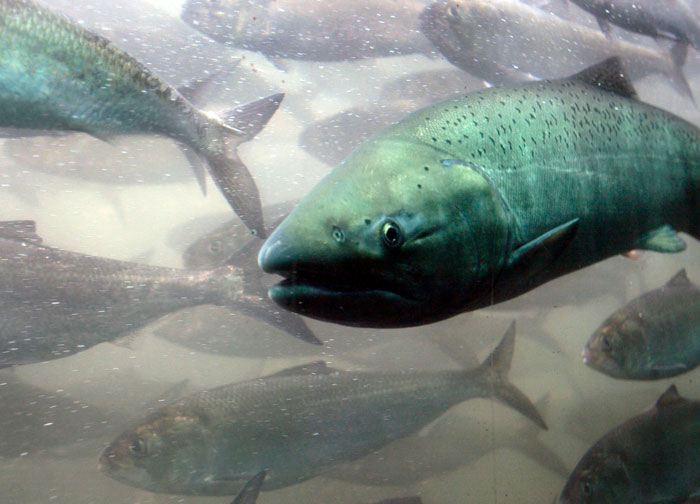
Yes, we gave fish cocaine just to see what happens
The research team, led by behavioral ecologists Jack Brand and Michael Bertram, had a problem. You cannot exactly ask a salmon whether it has been exposed to cocaine, because it will deny it. So they did the next logical thing: surgically implant small devices into two-year-old Atlantic salmon that slowly released chemicals at doses equivalent to those the fish would encounter in heavily polluted water.
Thirty-five fish received implants containing cocaine. Another group got implants with benzoylecgonine, which is the main breakdown product of cocaine, aka the thing your body produces when it is done with the cocaine, and which is found in waterways in even greater quantities than the drug itself. A third group received control implants containing nothing, which made them the most boring fish in the lake and also the most scientifically useful. All of them were tagged so the researchers could track their movements across two months in Lake Vättern in Sweden.
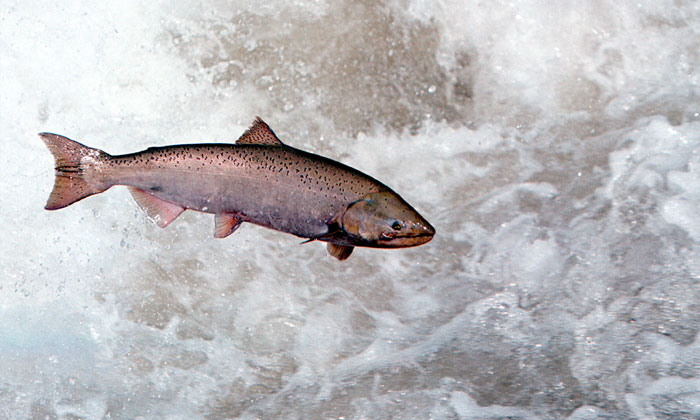
Young hatchery salmon tend to explore enthusiastically when first released and then gradually settle as they learn their environment. The control fish followed this pattern, calming down and congregating around 20 kilometers from their release point by the end of the study. The cocaine-exposed salmon roamed somewhat farther.
The benzoylecgonine fish, however, had dispersed roughly 32 kilometers from where they started, swimming up to 1.9 times farther each week than the control group. Researchers concluded that the metabolite has a greater effect than the drug itself, persists longer in fish tissue, and is present in rivers in greater quantities.
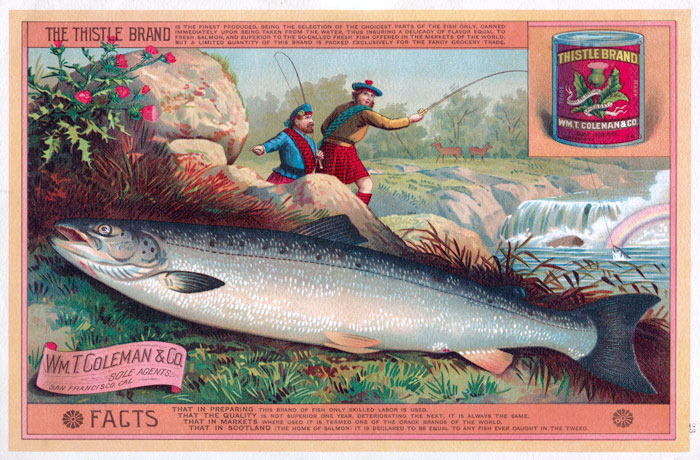
Transcendental Graphics / Getty Images
But we have known for a while; we just chose to party on
The presence of cocaine in freshwater systems is not a recent discovery. It is not even particularly surprising to the scientists who study it. Cocaine and its metabolites have been detected in rivers and lakes across Europe, North America, South America, and beyond, a consequence of the straightforward biological fact that what goes in must come out, and what comes out goes somewhere.
That somewhere is the sewage system, which leads to water treatment facilities designed to remove bacteria and conventional pollutants and that, when they were built, did not anticipate the birth of Pablo Escobar or the cultural impact of Studio54.

The European Monitoring Center for Drugs and Drug Addiction conducts annual wastewater analysis across dozens of European cities, testing sewage for drug metabolites to estimate consumption patterns. The results are published annually and consistently show that cocaine is among the most widely detected substances in urban European waterways. London’s Thames has been found to contain some of the highest cocaine concentrations of any river in Europe. But it only takes a few hours in SoHo to realize that.
The Thames also contains traces of ketamine, MDMA, pharmaceuticals including antidepressants and blood pressure medication, caffeine enough for a weak cold brew, and lidocaine, a cutting agent commonly mixed with cocaine. The river has become a very diluted pharmacological survey of what everyone upstream has been doing on a Friday night.
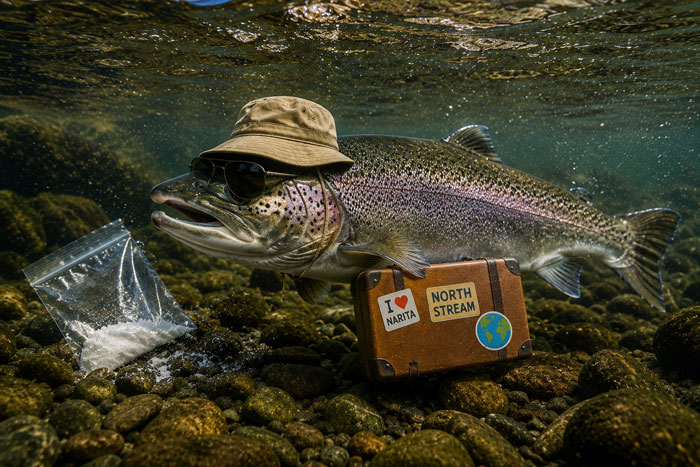
It’s not just coke we should be worried about
Fish are swimming on a whole spectrum of chemicals these days. European eels, which are critically endangered, have been found in Italian rivers with cocaine concentrations high enough to cause measurable physiological changes. A 2019 study found that eels exposed to cocaine for fifty days showed muscle damage, hormonal disruption, and hyperactivity, and were found to have stored cocaine in their tissues, which means the eels were not just absorbing the drug but accumulating it.
Antidepressants are turning up in fish brains. A 2017 study published in Science found that perch exposed to oxazepam, an anti-anxiety medication commonly found in Swedish waterways, became bolder, less social, and ate faster, behavioral changes that could affect their survival and their role in the ecosystem.
Shrimp exposed to fluoxetine, the active ingredient in Prozac, have been observed swimming toward light rather than away from it, which is a problem for a creature whose survival strategy depends substantially on avoiding predators that are attracted to the same light. Caffeine exposure has been shown to alter the development of zebrafish embryos. Hormones from contraceptive pills have been feminizing male fish in rivers across Europe and North America for decades, a phenomenon first documented in the 1990s. This is not leftist propaganda.

What does this science mean?
The finding that benzoylecgonine had larger behavioral effects than cocaine itself is very telling. This is counterintuitive if you are thinking about this from a human pharmacology perspective. Cocaine is the active drug, and benzoylecgonine is what your body produces in the process of getting rid of it. In fish, the metabolite persists longer in tissue and accumulates differently than the parent compound.
This matters because benzoylecgonine is also present in waterways in greater quantities than cocaine itself, partly because it is what the human body excretes and partly because it is more stable in water. The chemical that water treatment facilities are least equipped to remove and that accumulates most effectively in fish tissue is also the one producing the most significant behavioral changes. This fact should be keeping you up at night, more so than the 2 lines you did in your experimental phase.
Mark Servos, an ecotoxicologist at the University of Waterloo who reviewed the research, warns us that this is an urgent matter. “We need to carefully understand and manage all of the diverse chemicals society uses that can end up in our waterways.” This is a polite way of saying, “stop putting stuff up your nose!”
Wanderlusting fish could mean fewer salmon benedict for you
Young salmon dispersing farther from their release point than the control group means young salmon entering territory they are less familiar with. They are encountering predators they have less experience avoiding and competing for resources in areas where they have no established relationship with the food supply. And at the end of their life cycle, they are potentially failing to return to spawning grounds because the homing instinct that guides salmon back to their natal rivers depends on chemical memory laid down during exactly this early exploratory phase.
A salmon that spent its formative weeks wandering chemically induced distances from its release point may simply be navigating from a different internal map than the one evolution intended it to have. Whether any of this is actually happening to wild salmon populations is something the researchers are clear they cannot yet say.
The study used hatchery-raised fish, which are known to behave less cautiously than wild-born salmon, and the long-term consequences of the observed dispersal patterns will require a lot more research to establish. What is established is that the behavioral changes are real and are brought on by concentrations of cocaine and its metabolite that are found in rivers. The experiment was not exposing fish to hypothetical quantities. It was exposing them to what they are already swimming through.
So this is where we need to come clean
The cocaine in the water did not arrive by accident. It was a straightforward chain of people taking drugs, their bodies processing it, and the resulting excretions traveling through sewage systems that were not designed to catch them.
The antidepressants came from people taking antidepressants. The contraceptive hormones came from people using contraception. The caffeine came from a continent that has decided it cannot function before its second coffee. Every pharmaceutical and recreational chemical detected in European and North American waterways is there because humans put it there, indirectly but unavoidably, through the simple act of existing in bodies that process chemicals and excrete the results.
This is not an argument against medication, or contraception, or coffee, or even, if we are being honest about the limitations of prohibition as a policy tool, cocaine. It is an argument for taking the downstream consequences of pharmaceutical and chemical use seriously at a regulatory and infrastructure level, which means investing in water treatment technology capable of removing these compounds, monitoring aquatic systems for behavioral and physiological changes in wildlife, and accepting that the river does not end at the water treatment plant.
The fish are, collectively and involuntarily, participating in the longest-running pharmacological study ever conducted, with no consent forms signed and no debrief scheduled. The salmon will probably keep fervently denying any drug use, but their grinding jaws and dilated pupils tell a different story. This is an intervention.
Fin.