In addition to being America’s largest automaker by sales, General Motors is becoming a burgeoning energy company.
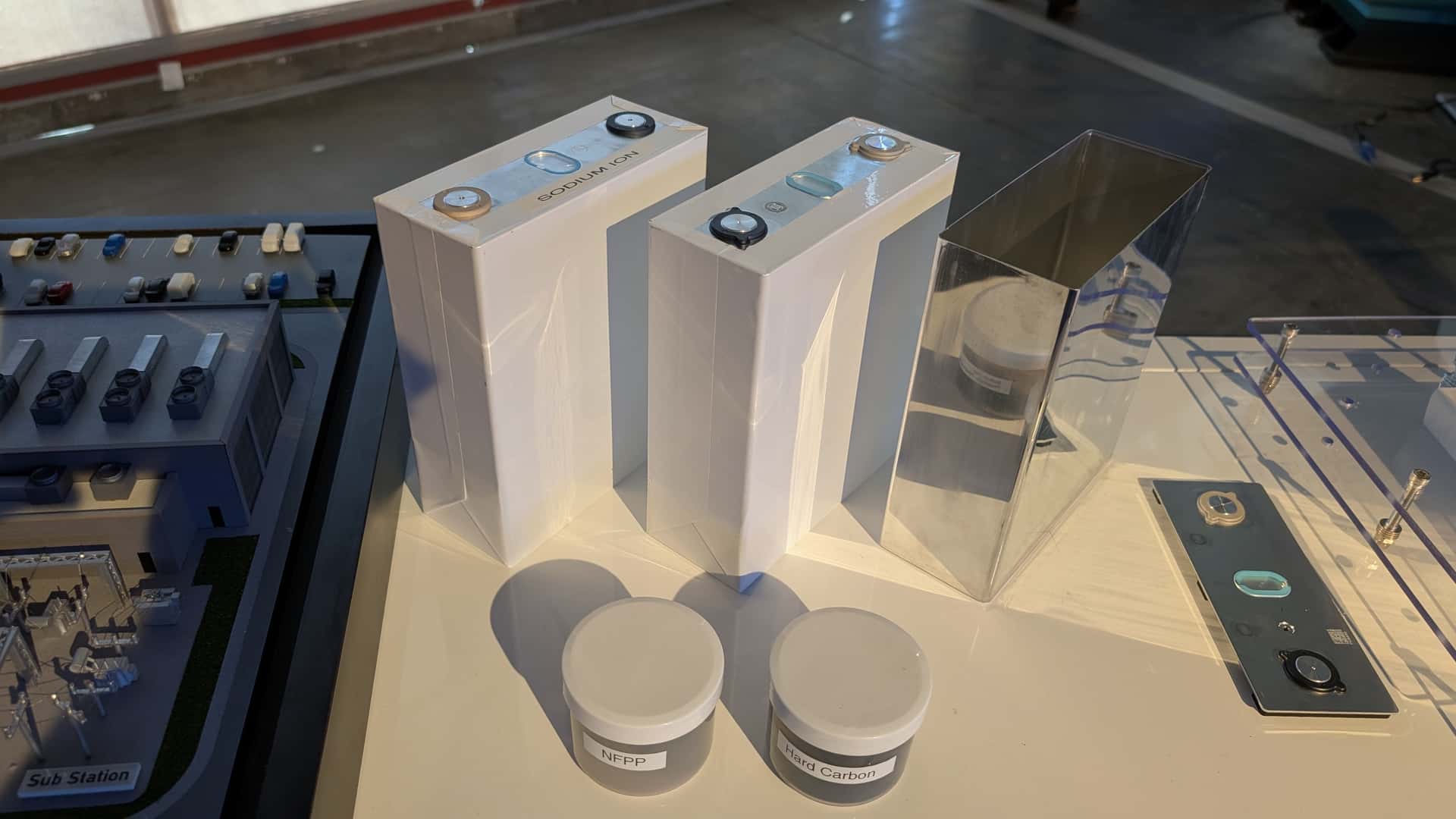
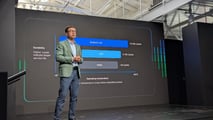
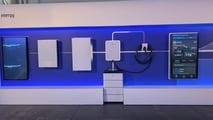
At an event in San Francisco I attended on Tuesday, GM said it's developing sodium-ion batteries for energy storage systems (ESS). It also wants to connect 52,000 EVs to the grid by the end of the decade and make EV charging dramatically simpler for owners with a new tool called Energy Pass, which consolidates charging and payments across major networks into a single app.
GM's Bet On Sodium-Ion Batteries
But first, let’s talk about sodium-ion. GM's broader battery strategy has branched out under Kurt Kelty, a Tesla veteran who serves as the automaker’s vice president of battery and sustainability.
Gallery: GM Empower


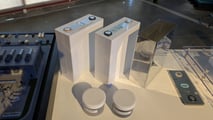
It has lithium iron phosphate (LFP) for affordable EVs like the Chevy Bolt and near-term energy storage projects, traditional high-nickel (NMC) cells for most current models, and the upcoming lithium-manganese-rich (LMR) chemistry to bring down costs on big electric trucks and SUVs. Sodium-ion is the newest addition to that lineup.
“We believe that you have to have the right battery for the right application,” Kelty told me in an interview.
Why Car Companies Are Getting Into Energy Storage
EV sales have cooled in the U.S. now that federal tax credits have expired, and automakers that poured billions into domestic EV battery production are looking for somewhere else to put that capacity to work. Grid-scale energy storage is the obvious answer. Demand is enormous, driven largely by power-hungry AI data centers.
ESS batteries can store surplus renewable energy and release that energy when demand spikes. In this market, the race is on to deliver the best battery at the lowest cost, with minimal maintenance and a long service life.
Before diving deep, here are some sodium-ion battery basics. GM will co-develop the cell with U.S. startup Peak Energy, which has already been conducting pilot programs with multiple U.S. companies. The prismatic cells require no active cooling, making the pack less complex and lower cost. They will also be able to endure extreme temperatures without performance loss. They will cost 20% less over their lifespan than LFP batteries, the dominant ESS chemistry currently.
But zooming out, my conversation with Kelty revealed something bigger. The automaker wants to kill North America's dependence on Chinese battery supply chains.
“We happen to have fabulous reserves here,” Kelty said of the raw materials required for sodium-ion batteries. “Ultimately, this should be a North American battery.” He’s got a point. Research shows sodium is 1,000 times more abundant than lithium and carries a far smaller environmental footprint.
The automaker has committed $900 million to battery research alone. "We've got to bring that supply chain back to North America," Kelty said, arguing it's both a hedge against geopolitical shocks and a smart long-term investment in its own right.
Connecting EVs To The Grid
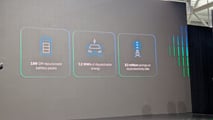
Sodium-ion isn't the only way GM is thinking about helping the grid. The automaker also wants its EVs to double as rolling power banks. GM says it has roughly a quarter million EVs on the road in the U.S. If all of them were connected to the grid, they could theoretically power 120,000 homes for up to a week.
GM EVs already support vehicle-to-home bidirectional charging, which owners can activate with specialized equipment GM will install in your home for an added cost. With an upcoming firmware update, those EVs will also be able to send power back to the grid.
The automaker is now working with Pacific Gas & Electric to bring 52,000 of its EVs online for exactly that purpose. Cars spend most of their time parked in driveways doing nothing. That idle energy capacity could help owners lower their energy bills and give utilities a new weapon against power outages and the increasing demands of AI data centers.
GM also wants to make charging less of a headache. This week it introduced Energy Pass, which integrates all charging functions directly into the myChevrolet, myCadillac, and myGMC apps. That will let owners charge seamlessly across Electrify America, ChargePoint, Ionna, EVgo, and the Tesla Supercharger networks. Model year 2027 GM EVs will all also come with a native NACS charging port, plus Plug & Charge capability at those stations.
It isn’t alone. For years, Tesla has sold Powerwall and Megapack batteries to residential and commercial customers, respectively. Ford is spinning up its own energy storage business too.
GM booked $7.1 billion last year in charges linked to the pullback of its EV ambitions. Now in a down year for EV sales, the automaker is positioning itself as an energy company as well. Whether that turns into a meaningful new revenue stream or just a smart hedge against a slowing EV market is something we’ll find out with time.
Contact the author: suvrat.kothari@insideevs.com