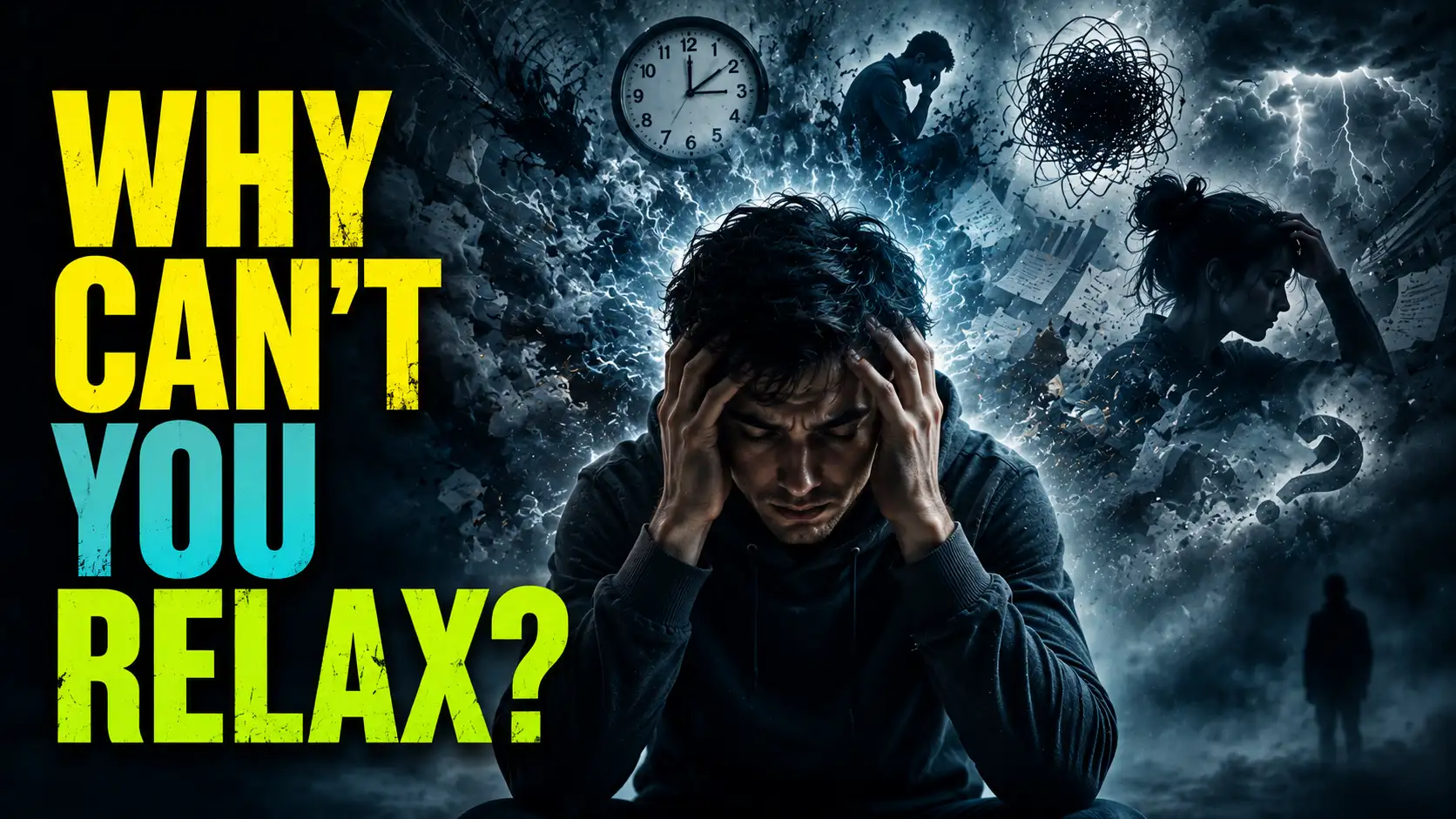
Most people think anxiety is simply overthinking. They imagine someone lying awake at night, worrying about the future or replaying awkward conversations from the past. But psychology says anxiety is far more complex than that.
Anxiety is not just something that happens in the mind. It can influence emotions, attention, sleep, physical health, relationships, and everyday decision-making. In many cases, people experience the effects of anxiety long before they recognize what is happening.
Research suggests that anxiety is often the brain's attempt to protect us from potential threats. The problem is that the brain cannot always distinguish between a real danger and an imagined future problem. As a result, the body's stress system may remain activated even when no immediate threat exists.
This is why anxiety can feel exhausting. The mind is trying to solve problems that have not happened yet while the body reacts as if danger is already present.
The Brain Is Constantly Looking for Threats
One explanation comes from what psychologists call the threat detection system. The human brain evolved to identify risks quickly. Thousands of years ago, this ability helped people survive predators, natural disasters, and physical dangers.
Today, however, the threats are often psychological rather than physical. A job interview. A financial concern. An important exam. A relationship conflict.
The brain may respond to these situations in ways that are surprisingly similar to how it responds to physical danger. Psychologists refer to this as the fight-or-flight response, a survival mechanism that prepares the body to react to perceived threats.
Why Uncertainty Feels So Uncomfortable
One of the strongest triggers of anxiety is uncertainty. Research in cognitive psychology has found that many people struggle more with uncertainty than with negative outcomes themselves.
For example, waiting for medical test results can feel more stressful than receiving the results.
Waiting to hear back from a potential employer can feel worse than receiving a rejection. This is because the brain naturally seeks predictability. When answers are unavailable, the mind often tries to fill the gap by imagining possible scenarios. Unfortunately, anxious minds tend to focus on worst-case possibilities.
Anxiety Does Not Stay in the Mind
Many people are surprised to learn that anxiety can affect the entire body. When stress hormones such as cortisol and adrenaline remain elevated for long periods, physical symptoms may appear.
Common examples include: Difficulty sleeping. Muscle tension. Headaches. Digestive problems. Fatigue. Rapid heartbeat.