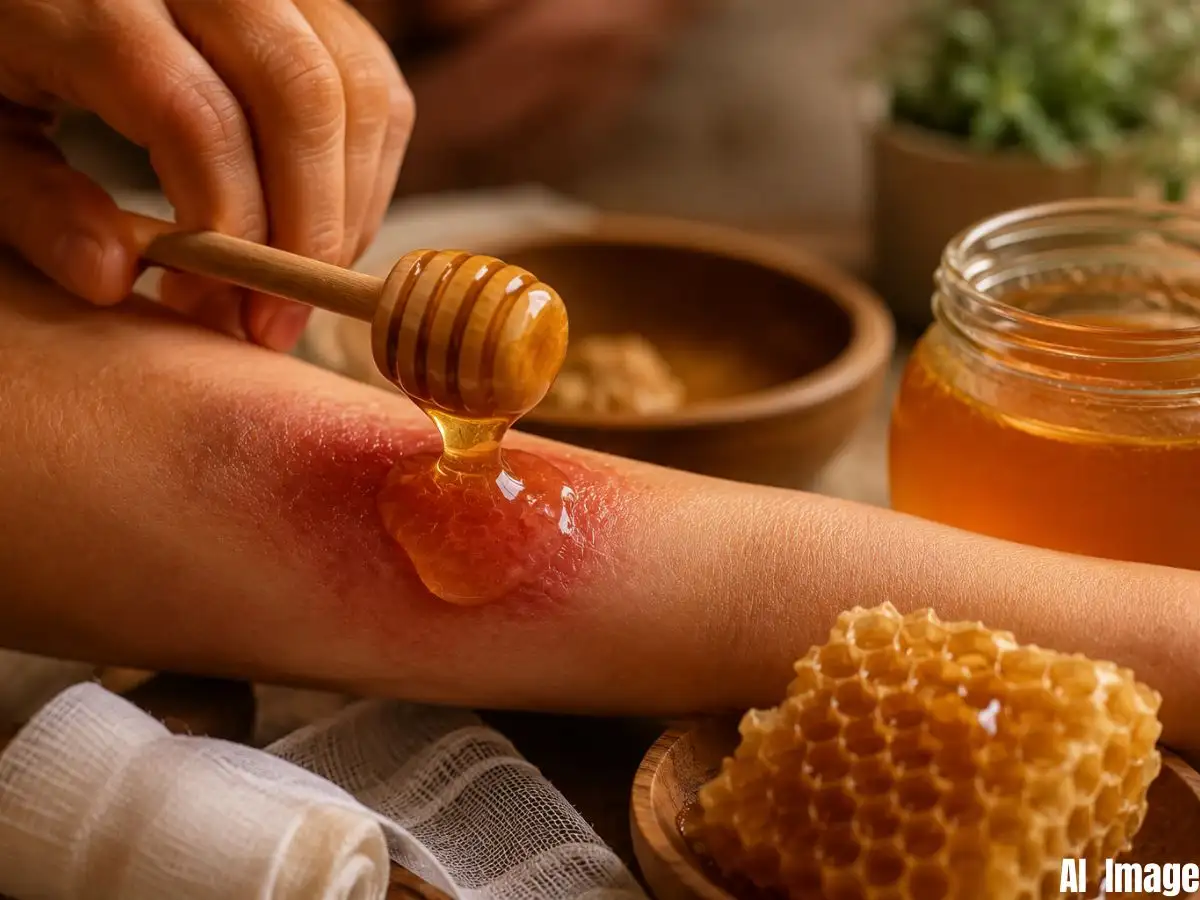
There's a jar of honey sitting in almost every kitchen, the kind grandmothers swear by for coughs, cuts, and cold winter mornings. Nobody thinks twice about it going off. And here's the thing: it basically never does. Archaeologists have pulled honey out of Egyptian tombs that's thousands of years old and still edible. Doctors back then were already smearing it on wounds. Turns out they were onto something that modern hospitals are only now catching up to, quite literally , with honey-based dressings sitting on pharmacy shelves next to antiseptic creams. So what's actually going on inside that sticky jar?
It Starves Bacteria Before They Even Get Started
Think of honey as a fortress built out of sugar. Roughly 80 percent of it, by weight, is pure sugar, which leaves almost no free water lying around for bacteria to feast on. Bugs need water to multiply, and honey's sugar-heavy makeup literally pulls moisture out of any microbial cell unlucky enough to land in it. It's the same trick your mother uses when she makes jam or pickle, load it with sugar or salt, and nothing survives long enough to spoil it.
Also Read: Humans have a 'third eye' in the brain: Study links it to a 600-million-year-old Cyclops ancestor
Then there's the acid angle. Honey typically sits at a pH somewhere between 3.2 and 4.5, properly sour, in chemistry terms, even if it doesn't taste that way. Most bacteria that cause wound infections would much rather live somewhere closer to neutral. Drop them into something this acidic and they simply don't thrive.
Bees Basically Brew Their Own Antiseptic
This is where it gets genuinely clever. Bees add an enzyme called glucose oxidase into honey. As long as the honey stays thick and undisturbed, this enzyme just sits there quietly. But the moment honey touches water, say, wound fluid, or moisture from a cut, the enzyme wakes up and starts releasing small, steady amounts of hydrogen peroxide, the same stuff in your medicine cabinet's antiseptic bottle. Not a big harsh dose all at once, but a slow, controlled trickle. Researchers studying this, including a well-cited 2016 review on the subject, describe it as a layered defence, sugar, acid, and homemade peroxide, all working together rather than any single trick doing the job alone.
And for a few honey varieties, there's a bonus weapon. A honey, made by bees feeding on a shrub found mainly in New Zealand and Australia, contains a compound called methylglyoxal, or MGO for short. Unlike the peroxide trick, this one doesn't fade, it keeps working even after the peroxide effect wears off. The catch is that MGO levels swing wildly from batch to batch, which is exactly why nobody can just scoop honey out of a kitchen jar and call it medical-grade.
Why The Honey At A Hospital Isn't The Same As The One On Your Shelf
Here's an important distinction people often miss: the honey used to treat a wound in a clinic and the honey drizzled on your morning toast are not the same product, even if both came from a beehive. Regular table honey isn't sterile, it can carry bacterial spores that are harmless to eat but risky on an open wound. Medical-grade honey goes through a completely different process. It's usually treated with gamma irradiation, a method that wipes out those spores without weakening the honey's antibacterial punch, and then packed into specially designed gels and dressings.
Also Read: In 1943, US built an entire city, and it didn't exist on a single map
In fact, this isn't some fringe alternative therapy anymore. In the United States, honey-based wound products have been formally cleared as medical devices, MEDIHONEY, a manuka-based dressing, got the nod from American drug regulators back in 2007. Today, doctors use these products under proper clinical supervision for select burns, stubborn ulcers, and wounds that refuse to heal the usual way.
But It's Not A Miracle Cure, Let's Be Honest About That
Here's where a dose of caution is needed. A widely cited 2015 review of existing research found honey seemed to speed up healing for certain burns compared to some standard dressings, but for many other wound types, the supporting evidence was shaky at best. A newer 2024 analysis pooling data from eight chronic-wound studies found honey dressings again edged ahead on healing speed and wound closure, yet the researchers themselves flagged the evidence quality as very low, and found no real advantage when it came to complete healing or how fast infections cleared up.
Promising, not proven beyond doubt. And definitely not a reason to raid the kitchen jar for a nasty cut or a burn that's more than superficial. Anything serious still needs a doctor or a trained wound-care professional, not a spoonful of shelf honey and hope.
What's genuinely remarkable, though, is the arc of the story itself. An idea old enough to have been written down by ancient Egyptian physicians quietly fell out of fashion for centuries, and has now walked back into modern medicine wearing a lab coat, sterilised, regulated, and studied in clinical trials. The honey hasn't changed one bit. Everything we've built around it has.
(Disclaimer: This article is intended for general information and awareness only and does not constitute medical advice. Honey, including medical-grade or manuka honey, should not be used as a substitute for professional treatment of wounds, burns, or infections. Readers are advised to consult a qualified doctor or wound-care specialist before using any honey-based product for therapeutic purposes, especially in the case of diabetic wounds, deep burns, or infected injuries. )