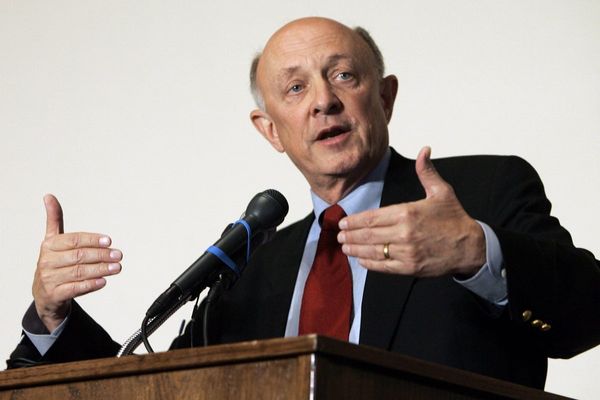
Democratic congressman Joaquín Castro has accused the Trump administration of pursuing "oil, power and graft" in Venezuela, saying billions of dollars in oil revenue are being controlled by the White House "without transparency or safeguards".
His remarks, given to the Financial Times, land as fresh analysis shows only a fraction of the money has reached the country it was meant to help.
The Financial Times found that Washington has collected more than $13bn (£10.3bn) from Venezuelan oil sales since seizing control of the country's exports in January 2026, according to an analysis of US Customs and export data. Venezuela's own tracker has recorded just a single transfer, worth $300m, arriving back from the United States.
Castro said: 'Trump's invasion of Venezuela has been about oil, power, and graft from the very beginning, with billions of dollars in Venezuelan oil revenue being controlled by the Trump administration without transparency or safeguards.'
The Texas Democrat is one of a growing number of lawmakers pressing the White House to explain where the money has gone. Oil exports account for roughly a quarter of Venezuela's GDP, making the scale of the gap significant far beyond Washington politics.
Castro is not alone. Republican congresswoman María Elvira Salazar has also pushed for disclosure, telling a congressional hearing this month that transparency over the destination of the funds was important.
White House Insists $13bn Oil Revenue 'Will Benefit American and Venezuelan People'
The White House has offered limited detail on the arrangement. An executive order issued shortly after Maduro's capture stated that the oil funds would remain Venezuelan property, to be held by the US in a "custodial capacity".
Trump has previously said the US is "making a lot of money" from the oil sales, while the Department of Energy has said the funds "will be disbursed for the benefit of the American people and the Venezuelan people".
A State Department official, who spoke on condition of anonymity, earlier said around $3bn had been transferred to Venezuela and promised regular updates. That figure is more than ten times higher than what Venezuela's own tracker shows has arrived — a discrepancy neither government has explained. The Trump administration has not responded to Castro's specific accusation of 'graft'.
A casi un mes de los terremotos de 7,2 y 7,5 que devastaron #Venezuela, familiares y voluntarios en las zonas más afectadas, como La Guaira, continúan removiendo escombros con la esperanza de recuperar los cuerpos de sus seres queridos. Según el Gobierno venezolano, hasta ahora… pic.twitter.com/Szfs8TrPpo
— Cristian Crespo F. 🇨🇺 (@cristiancrespoj) July 22, 2026
Earthquake Aftermath Overshadows $300m Transfer as Caracas Counts $37bn in Damage
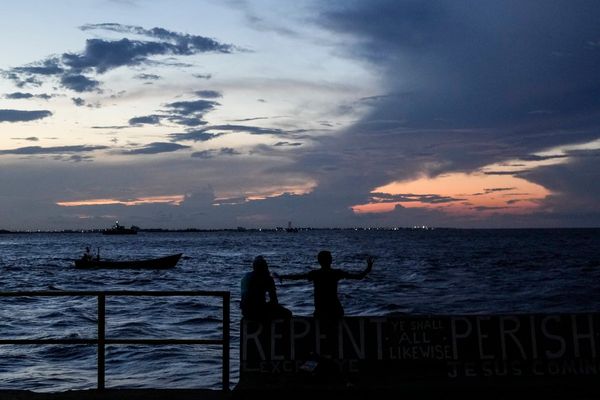
The stakes have risen since the twin earthquakes that struck Caracas and the surrounding region on 24 June. The UN Office for Disaster Risk Reduction estimated direct physical damage at around $37bn, made up of roughly $24bn in damage to homes, businesses, schools and hospitals, and a further $13bn in infrastructure.
Venezuela's government has reported a death toll of more than 3,340 people, with over 16,700 injured and around 17,000 left homeless. Dozens of transitional camps have opened in stadiums and sports centres to house those displaced.
Oil revenue was central to the Trump administration's stated case for easing sanctions on Venezuela in the first place. With reconstruction costs now dwarfing the funds Caracas has actually received, the gap between what was collected and what has arrived carries far heavier consequences than an accounting dispute.
Castro has not detailed what response, if any, he has received from the administration.
Expert Warns Discrepancy 'Unprecedented in Sovereign Asset Seizures'
David Clark, an economist specialising in Latin American energy markets at the Council on Foreign Relations, told IBTimes UK the gap between funds collected and funds delivered raised serious questions.
"When the US seizes sovereign assets in a custodial capacity, there is normally a clear accounting trail," Clark said. "A gap of this magnitude — with only $300m of $13bn publicly accounted for — is unprecedented in sovereign asset seizures. It demands an explanation, regardless of the political context."
Castro's accusation adds a pointed voice to a wider oversight fight over how a foreign government's oil wealth is being managed inside the US financial system, with almost no public accounting so far.
For Venezuelans still living in transitional camps months after the earthquakes, the question of where the revenue has gone is not abstract. It bears directly on how much support reaches a population the US itself cited as a reason for controlling the oil exports in the first place.