Thailand must accelerate its transition to renewable energy if it is to reduce dependence on imported oil and gas and avoid repeating the painful consequences of global conflicts, according to Praipol Koomsap, economist at Thammasat University and former assistant to ex‑energy minister Narongchai Akrasanee.
Mr Praipol said even if peace negotiations between the US and Iran succeed in stabilising crude oil prices at around US$70-80 per barrel by late 2025, refined oil prices are expected to remain high.
For Thailand, this means relying solely on fossil fuels will continue to expose households and businesses to volatility.
"Increasing the use of renewable energy in both the transport and electricity sectors is the long‑term solution if similar conflicts occur again," he said.
Accidents disrupting petroleum production facilities, refineries, storage depots or liquefied natural gas plants could also trigger supply shortages, said Mr Praipol. If Thailand builds sufficient capacity in clean power and biofuels, he said the impact would be far smaller.
"Renewable energy is like having a fuel reserve. When oil and gas supplies are interrupted, there are still domestic sources to use as substitutes," Mr Praipol said.
Thailand once considered creating a massive state‑owned strategic petroleum reserve, a project that would have required enormous investment to build and operate. He said such a costly scheme is unnecessary if the country commits to expanding renewable energy.
According to the International Energy Agency, renewable power and biofuels accounted for 15.2-17.5% of Thailand's total energy consumption in 2025. The government aims to raise this share to more than 50% by 2037.
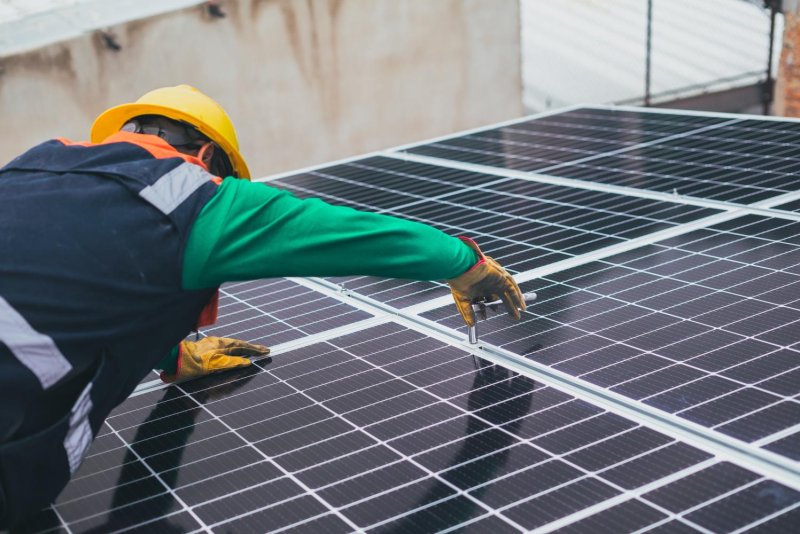
To achieve this, the Energy Ministry is finalising a programme to encourage households to install rooftop solar panels and sell excess electricity back to the grid. Authorities plan to allocate part of a 200‑billion‑baht loan to support the scheme, which will purchase up to 500 megawatts from households.
In the transport sector, officials are stepping up promotion of biofuels.
Ethanol derived from sugar cane and cassava as well as palm oil‑based methyl ester is blended with gasoline and diesel to produce gasohol and biodiesel.
The government is subsidising B20 diesel, which contains 20% methyl ester, to make it five baht cheaper than B7 diesel, which has only 7% methyl ester. The policy is designed to lift sales and reduce reliance on imported oil.
Industry leaders have pushed for clean energy infrastructure to be expanded quickly.
Sarath Ratanavadi, chief executive of Gulf Development Plc, Thailand's largest energy company by market value, said speeding up construction of renewable projects coupled with technologies that enhance system stability will be critical. He touted smart grids, battery energy storage systems and pumped hydro storage as tools that can help balance supply and demand.
Mr Sarath emphasised private sector investment will be essential, given the enormous capital required.
"Investing in this infrastructure demands vast resources, while the government budget is limited. Encouraging private participation is a reasonable solution," he said.
Diversifying fuel sources to ensure multiple suppliers will also mitigate external risks, said Mr Sarath.