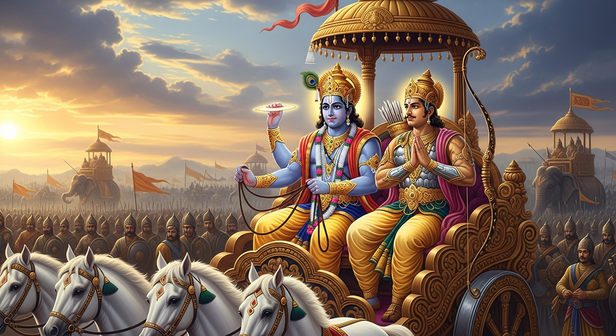
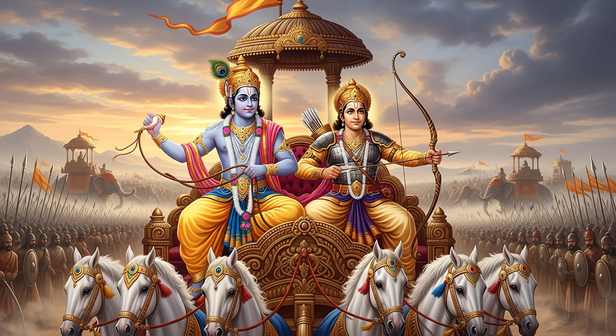
Fear today rarely comes from real danger. From lived experience and scriptural study, it is clear that fear grows from overthinking, expectations, emotional overload, and a restless mind. The Bhagavad Gita offers timeless guidance for this modern struggle. In Chapter 2, Krishna speaks to Arjuna at the peak of panic and confusion. Instead of pushing action, he first reveals the nature of inner peace. This shloka explains that fear fades when the mind becomes steady, uncluttered, and free from attachment. Ancient wisdom and modern psychology agree that calm awareness, not control, restores mental balance and lasting emotional strength.
This Shloka Appears
<p> The moment when inner clarity begins before action</p>
This verse comes from Chapter 2 of the Bhagavad Gita, known as Sankhya Yoga, where Lord Krishna addresses Arjuna’s inner crisis with deep psychological insight. Arjuna is gripped by fear, grief, and confusion as his mind races through imagined losses and moral doubts. From lived spiritual experience and classical commentary, this moment shows Krishna’s wisdom as a guide of the human mind. Before speaking about duty or action, he explains emotional stability and inner clarity. This shloka is not a rule to obey but a reflection to understand oneself. Krishna heals the mind first, establishing trust, balance, and calm awareness before any external action begins.
The Inner Problem Krishna Is Addressing
<p>Fear grows where attachment and expectation dominate</p>
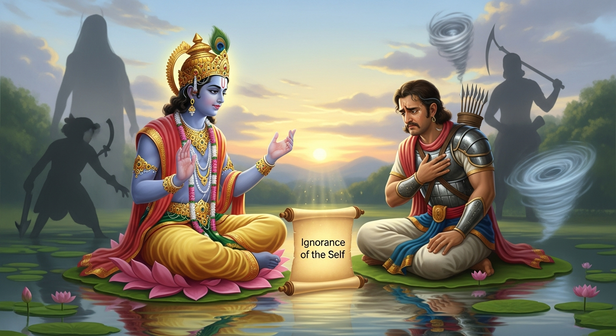
Krishna explains fear with deep psychological clarity. Fear never exists alone. From lived experience and timeless wisdom, it grows from attachment, expectation, and suppressed anger. When the mind clings to pleasure and resists pain, it becomes fragile. Mental clutter increases because the mind demands certainty in a world that constantly changes. According to the Bhagavad Gita, suffering is not created by situations but by inner dependence on outcomes. When happiness becomes something to chase and sorrow something to escape, restlessness follows. By reducing attachment and accepting uncertainty, the mind regains balance. This teaching remains trustworthy, practical, and deeply relevant even today.
What Steadiness of Mind Truly Means
<p>Balance does not mean emotional coldness</p>
The Bhagavad Gita teaches that true strength comes from emotional balance, not emotional denial. When Krishna describes a mind that is calm in sorrow and free from craving in pleasure, he points to resilience, not detachment from life. Pain still appears, but the heart does not break. Happiness still comes, but the mind does not cling. From lived experience and timeless wisdom, this teaching shows that inner freedom grows when dependence on outcomes reduces. A steady mind allows life to move naturally. Such balance brings peace, clarity, and lasting confidence without trying to control the world outside.
Fear Is Released at Its Root
Krishna explains that the mind is disturbed by three forces: attachment, fear, and anger. From lived experience and timeless wisdom, fear often grows when we cling too tightly to people, results, or identity. When expectations feel threatened, anger naturally follows. A mind that grips tightly becomes fragile and restless. A mind that loosens begins to feel light and calm. According to the Bhagavad Gita, fear does not disappear through control or suppression, but through clear understanding. When emotional dependence reduces, the mind breathes freely. This insight remains authoritative and trustworthy, offering practical guidance for emotional balance, inner peace, and mental clarity in modern life.
Mental Clutter and the Modern Mind
Today, mental clutter appears as nonstop thinking, comparison, anxiety, and the pressure to instantly react. From lived experience and spiritual study, this inner noise weakens emotional balance. The Bhagavad Gita offers a trusted solution through Krishna’s teaching. Peace is not achieved by stopping thoughts, but by not identifying with each one. When the mind observes instead of clings, experiences pass naturally without becoming burdens. This state is called sthita-dhīḥ, a wisdom that remains stable beneath changing emotions. Ancient philosophy and modern psychology both affirm this truth. A steady mind builds clarity, resilience, and lasting inner peace., wisdom that is firmly rooted and not shaken by surface movement.
The Quiet Strength of Inner Freedom
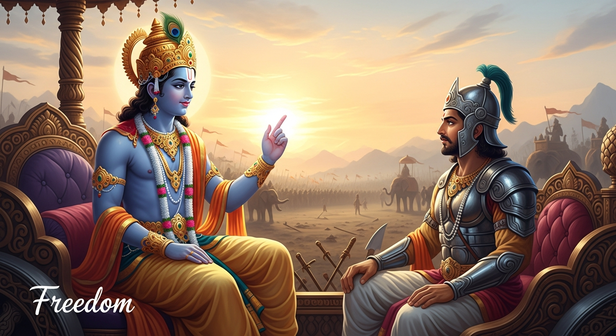
Krishna describes the muni as a person who stays engaged in life yet remains calm within. From lived experience and timeless wisdom of the Bhagavad Gita, this teaching shows that fear is not weakness but a signal of mental overload and attachment. When desires and expectations pile up, the mind begins to shake. True mental clarity does not come from running away or suppressing emotions. It grows through awareness and understanding. As the mind learns to release its grip, restlessness fades naturally. In that quiet inner space, fear softens, leaving balance, confidence, and steady strength that supports everyday life.
Unlock insightful tips and inspiration on personal growth, productivity, and well-being. Stay motivated and updated with the latest at My Life XP.
Frequently Asked Questions (FAQs)
1. What is the core message of Bhagavad Gita 2.56
It teaches emotional balance. A steady mind stays calm in pain and does not cling to pleasure. This balance reduces fear and mental confusion.
2. Does this shloka promote detachment from life
No. It promotes inner stability. One can live fully, love deeply, and work sincerely without being shaken inside.
3. How does this verse help with fear and anxiety
Fear comes from attachment and overload. This shloka shows that awareness and reduced clinging naturally calm the mind.
4. Who is called a muni in this verse
A muni is not a hermit but a wise person who remains inwardly peaceful while living an active life.
5. Is this teaching relevant today
Yes. In a world of stress and overthinking, this verse offers practical guidance for mental clarity and emotional strength.
Sign up to read this article
Read news from 100's of titles, curated specifically for you.