Every year, millions of students place their future in the hands of board examinations. They trust that every answer they write will be evaluated fairly and accurately. But what happens when that trust is suddenly shaken? That is exactly what happened when Class 12 student Vedant Shrivastava claimed that the answer sheet shown to him during the revaluation process did not belong to him. What started as a student's complaint soon snowballed into a much larger controversy involving answer-sheet mix-ups, cybersecurity concerns, political allegations, and demands for an independent investigation. The incident has sparked an important question: Was this merely a technical glitch, or does it reveal deeper problems in the system meant to protect students' futures?
When One Student Refused To Stay Silent
A revealing chat with my fellow “anti-national Soros agents.”
Vedant and his friends are brilliant, brave young Indians who asked CBSE and the Modi government simple questions - but got insults instead of answers.
They deserve a bright and secure future. We will make sure they… pic.twitter.com/5InBxgJv1B
— Rahul Gandhi (@RahulGandhi) May 31, 2026
For many students, questioning examination authorities can feel intimidating. Yet Vedant Shrivastava chose to speak up after discovering what he believed was someone else's Physics answer sheet during the revaluation process. His concern quickly gained attention online, encouraging other students to come forward with similar complaints. What made the situation remarkable was not just the alleged error itself but the courage shown by students who demanded answers. Their voices transformed a personal grievance into a public conversation about accountability, fairness, and the need for stronger safeguards within India's examination system.
The Discovery That Triggered A National Debate
#WATCH | Ranchi, Jharkhand | A class 12th student, Sarthak Sidhant, says, “…I have written a blog that compares the tender documents of CBSE. I have uploaded and published it… There were at least 15 discrepancies, as per my blog. I would like to highlight three or four of them.… pic.twitter.com/TtL7DgOe9M
— ANI (@ANI) May 30, 2026
As discussions intensified, government sources acknowledged that around 20 answer-sheet mix-up cases had been identified following the rollout of the On-Screen Marking System. While officials described these as scanning-related issues, the revelation alarmed students and parents alike. Board examinations often determine college admissions and future opportunities, making even a small number of mistakes significant. The controversy raised concerns about whether the new digital evaluation process was introduced before all safeguards were fully tested. For many families, confidence in the examination system suddenly became a pressing concern.
Rahul Gandhi's Meeting Changed The Conversation
#WATCH | Delhi: On the controversy where a Class 12 CBSE student, Vedant’s Physics CBSE answer sheet was allegedly switched with another candidate's, the student's brother, Siddhant Srivastava, says, “The problem was that his answer sheet was exchanged with someone else's, and… pic.twitter.com/QoWroqqyYq
— ANI (@ANI) May 26, 2026
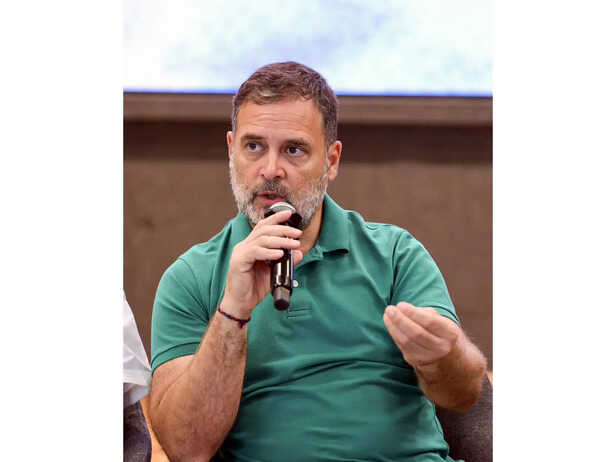
The issue gained even greater visibility when Rahul Gandhi met Vedant and other students involved in raising concerns. During the discussion, attention shifted from answer sheets alone to the treatment students received after speaking out. Gandhi highlighted allegations that critics were labelled negatively instead of receiving clear explanations. His remarks brought the controversy into the political arena, ensuring that the debate reached a much wider audience. The meeting transformed the story from an education issue into a broader discussion about transparency, accountability, and how institutions respond to public criticism.
Inside The Questions Surrounding The OSM System
The On-Screen Marking System was introduced to modernize and streamline evaluation. However, reports that approximately 13,000 answer sheets required manual assessment raised questions about implementation readiness. Experts often note that large-scale technological transitions can expose weaknesses that remain hidden during testing phases. While digital systems promise greater efficiency, they also demand robust security, accurate scanning, and effective quality checks. The controversy has highlighted the importance of ensuring that technological upgrades in education are accompanied by rigorous monitoring and transparent communication with students.
Why Trust Matters More Than Ever
Beyond politics and technical explanations lies a much larger issue: trust. Students spend years preparing for board examinations, often viewing them as life-changing milestones. Any uncertainty regarding evaluation can create anxiety and undermine confidence in the process. Experts believe that addressing concerns quickly, transparently, and fairly is essential for restoring faith. Whether the reported cases represent isolated mistakes or broader procedural gaps, the response from institutions will play a crucial role in shaping public perception and protecting the credibility of future examinations.
The Bigger Lesson From The Controversy
Every major controversy leaves behind an important lesson. In this case, the lesson is not only about technology or politics but also about listening to students. The concerns raised by Vedant and others demonstrate why transparent grievance mechanisms are essential in education. As authorities continue investigating and addressing reported issues, many believe this moment could become an opportunity for meaningful reforms. Stronger verification processes, improved digital safeguards, and faster complaint resolution systems may help ensure that future students never face similar doubts about their hard-earned results.
Unlock insightful tips and inspiration on personal growth, productivity, and well-being. Stay motivated and updated with the latest at My Life XP.
Frequently Asked Questions (FAQs)
1. Who is Vedant Shrivastava?Vedant Shrivastava is a Class 12 student who gained national attention after claiming that the answer sheet provided to him during the CBSE revaluation process was not his own.
2. What is the CBSE answer-sheet controversy?
The controversy began when students reported alleged mismatches in answer sheets shared through CBSE's On-Screen Marking System (OSM) during the revaluation process.
3. What did CBSE say about the issue?
CBSE stated that it contacted affected students, provided the correct answer sheets where necessary, and prioritized the resolution of all reported complaints.
4. How many answer-sheet mix-up cases were reported?
According to government sources, around 20 answer-sheet mix-up cases were identified after students accessed their answer sheets through the OSM portal.
5. What is the On-Screen Marking System (OSM)?
OSM is a digital evaluation system introduced by CBSE to assess answer sheets electronically instead of relying entirely on traditional manual processes.