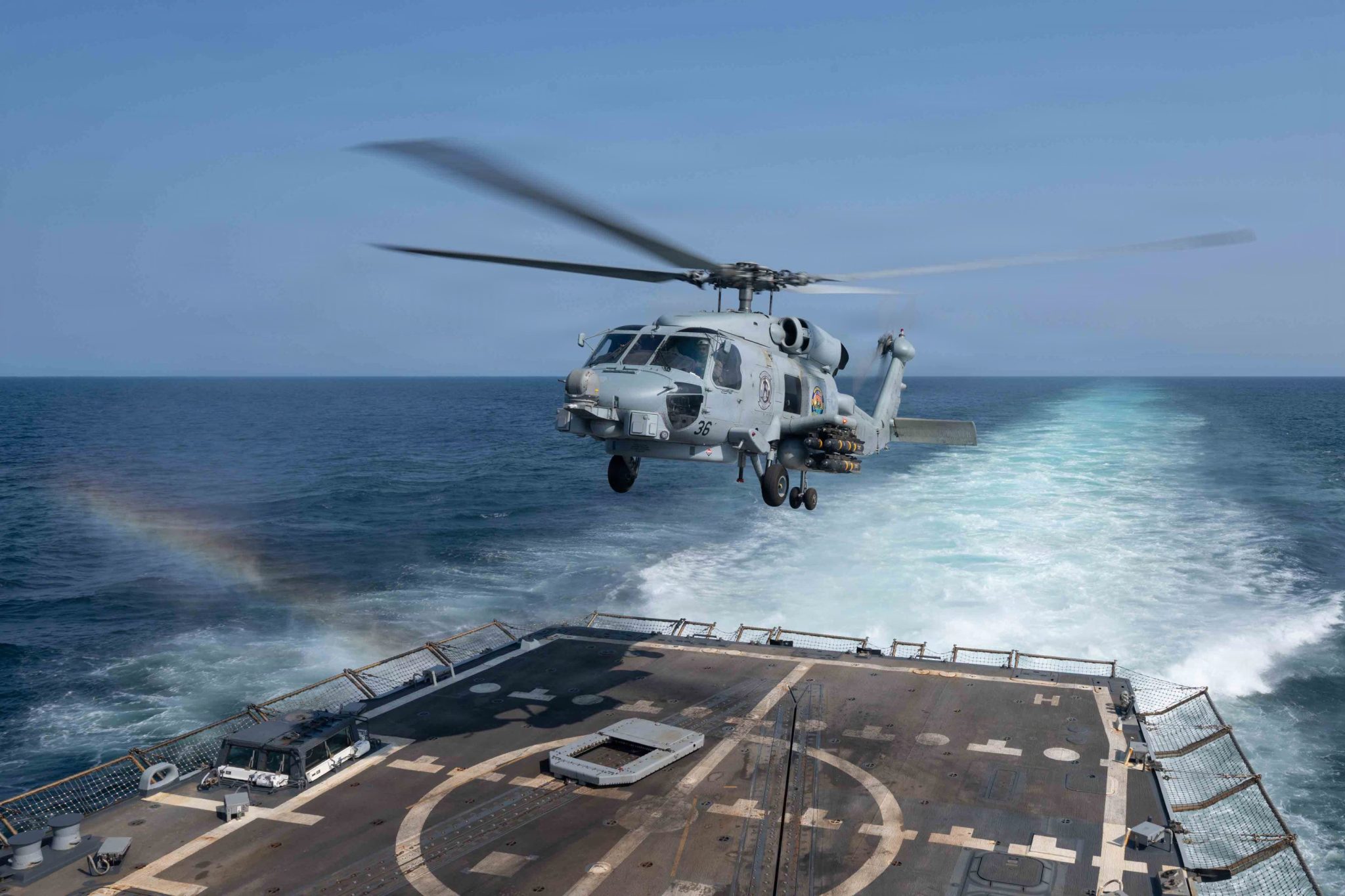
The U.S. blockade on ships entering or departing from Iranian ports went into effect on Monday, as President Donald Trump seeks to pressure Iran by cutting off its oil revenue.
The Iranian economy was already in shambles before the U.S. and Israel launched their war on the Islamic republic more than six weeks ago, and reports indicate the relentless bombing has pushed the regime to the brink.
Despite heavy losses Iran’s military has suffered, it still has enough missiles and drones to effectively close off the Strait of Hormuz while allowing its own oil tankers to go through. Tehran’s control of the narrow waterway is its most potent weapon as global energy markets reel from shortages, but a U.S. blockade could turn the tables.
“Leaning on this money machine sends the economy into a tailspin, giving the mullahs much needed motivation to negotiate in earnest,” Robin Brooks, senior fellow at the Brookings Institution, wrote in a Substack post on Monday.
That’s after U.S.-Iran talks in Pakistan broke down over the weekend, putting a fragile two-week ceasefire in doubt, as both sides appeared unwilling to budge.
Meanwhile, the market’s reaction to the blockade has been muted, with the S&P 500 and Nasdaq largely flat while oil prices have pared gains.
Brooks acknowledged the regime may not be bothered by the economic hardship the Iranian people suffer owing to the blockade, adding it’s uncertain how many weeks it must be in effect to spur Tehran on talks.
“But what I do know is this: As Iran’s oil exports collapse, there’ll be no cash for imports, so activity implodes, the currency goes into a devaluation spiral, and hyperinflation ensues,” he predicted.
In fact, hyperinflation may be imminent. Residents of Tehran and other cities told Reuters some prices have shot up around 40% since the war began, as the rial has plunged 8% against the dollar on the black market.
The economic consequences of a blockade are so dire Brooks declared: “There’s no doubt in my mind” the regime will reengage in talks.
To be sure, stopping the flow of Iranian oil could cause further disruption in energy markets. But he pointed out Iran is a relatively small supplier of oil, and cutting it off shouldn’t lift Brent crude futures much above $120 a barrel. On Monday, the benchmark price was up 6% to $100.88 after surging 8% earlier.
Overall, the blockade has more pros than cons, and its effect on oil is a manageable risk, he added: “The goal is to end this war more quickly by bringing the mullahs to the negotiating table in good faith.”
Brooks has been calling for a naval blockade since Iran closed off the Strait of Hormuz. Others have also touted it as a preferred option over deploying U.S. ground troops to seize control of the strait.
The blockade also stops well short of Trump’s prior apocalyptic threats to bomb Iran “back to the Stone Ages” and to wipe out its civilization.
Miad Maleki, a senior fellow at the Foundation for Defense of Democracies and a former Treasury Department official, calculated the U.S. naval blockade will cost Iran about $435 million a day in economic damage, or $13 billion per month.
“The rial enters terminal collapse. Iran’s alternatives outside the strait can replace less than 10% of Gulf throughput. The blockade makes continued resistance economically impossible,” he posted on X.