
The electric vehicle transition has become a springboard for startups of all kinds, all trying to carve out a space for themselves in an increasingly competitive landscape.
One is California-based Karma Automotive. Born from Fisker Automotive’s bankruptcy in 2014, Karma is now planning to launch several new electrified models over the next few years. At least one of them will use a form of solid-state batteries, the company said Thursday.
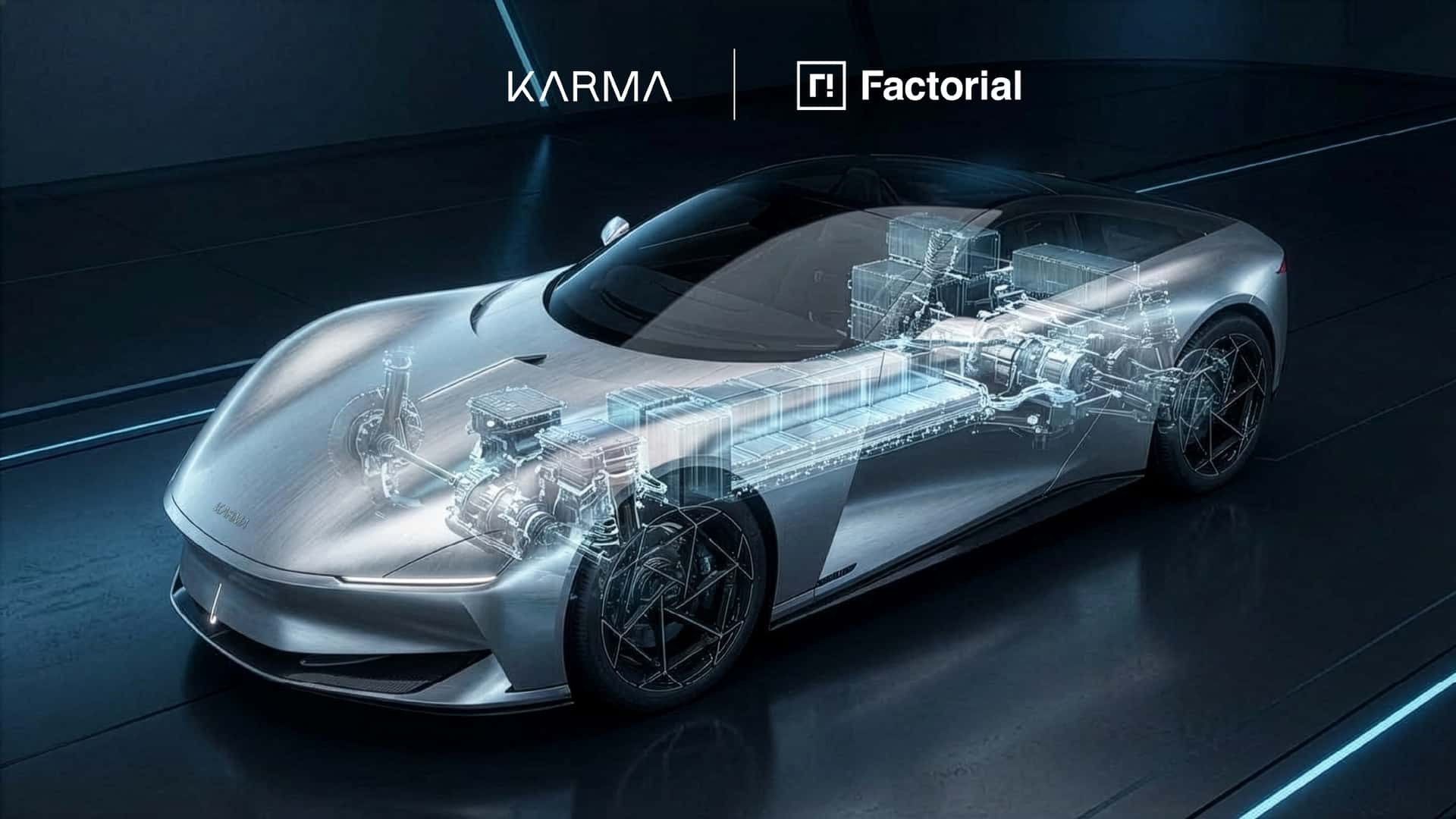
Karma says its first fully electric vehicle, the Kaveya, will arrive in 2027 and use semi-solid-state battery cells from Massachusetts-based Factorial Energy.
Solid-state batteries are widely seen as the holy grail of battery tech, and most car companies don't anticipate incorporating them until at least the end of this decade. But semi-solid-state batteries are just barely getting off the ground too, and there aren't any cars on sale in the U.S. that use them yet.

It may sound like an unexpected place for these bleeding-edge batteries to debut in the U.S.—not with Porsche or the like but with a relatively obscure, niche EV company. Karma CEO Marques McCammon told InsideEVs that the company's high-end, extremely low-volume positioning should help it be an enabler for solid-state tech.
“We’re a three to five thousand unit per year type of manufacturer, and that’s the perfect place to pilot new technologies,” he said.
Before we get deeper into the company's EV plans and the Kaveya, it’s worth stepping back and explaining what exactly Karma Automotive is.
When Fisker Automotive went bankrupt in 2014, Chinese conglomerate Wanxiang bought its assets and rebranded the company as Karma. This should not be confused with the much more recent bankruptcy of Fisker Inc., which was Henrik Fisker’s second attempt at breaking into the EV market with the Ocean SUV.
Over the years, Karma has sold several iterations of its Revero extended-range electric vehicle (EREV). The four-door sedan looks nearly identical to the original Fisker Karma, though it features revised body panels and a different powertrain. Notably, it ditched the original GM-sourced EREV system in favor of one supplied by BMW.
The Revero, at least to this pair of eyes, still looks striking. Its final version rolled off Karma’s production line in Moreno Valley, California, in December. The company says all of its vehicles are designed, engineered and built in the U.S., with a small engineering team in Detroit as well. None of the powertrain technology comes from China, McCammon said, even though the company is backed by a Chinese parent.
In its final form, the Revero used an onboard 1.5-liter gas engine to power a 28-kilowatt-hour battery, delivering a total range of 360 miles. Two more models using a similar powertrain are slated for this year: the Gyesera and the Amaris. The former is a four-door GT that effectively replaces the now-discontinued Revero, while the latter is a two-door coupe.
Next up will be the Kaveya. The EV is expected to offer more than 250 miles of range, over 1,000 horsepower, and a top speed exceeding 200 miles per hour. It looks Ferrari-esque, with gullwing doors and a yoke steering inside. McCammon said it will use a “dog bone” architecture, where the battery is arranged in a bone-shaped layout—with two horizontal sections in the front and rear connected through a central tunnel.
This helps keep the seat positioning low and sporty, similar to the battery layout on the new Jaguar Type 00 and the Rimac Nevera. “With the solid-state technology, I have a lighter-weight platform and the cells are smaller, which means I've got a lot more efficiency in packaging,” McCammon said.
Factorial is already into an advanced stage of battery development with Mercedes-Benz. An EQS prototype hit public roads last year and even managed to cover 749 miles on a single charge. Stellantis is also expected to install a Factorial battery in a Dodge Charger Daytona EV prototype sometime this year.
The startup says its semi-solid-state batteries can deliver meaningful improvements in both weight and range. A 90-kilowatt-hour pack, for instance, could deliver anywhere from 500 to more than 600 miles of range while weighing roughly 580 pounds, according to the company.
Karma, for its part, says it has no interest in becoming a volume player like Rivian or Lucid. McCammon said the company has sold about 1,000 cars since its founding across North America and Europe, and that it produced 146 Reveros last year. Several are listed in its dealer inventory for well over $150,000.
Several other solid-state battery start-ups are working to bring the technology to mass market vehicles, including QuantumScape and Solid Power. But if you're looking for solid-state batteries in a more widely available car, you may have to wait a little longer.
Contact the author: suvrat.kothari@insideevs.com