
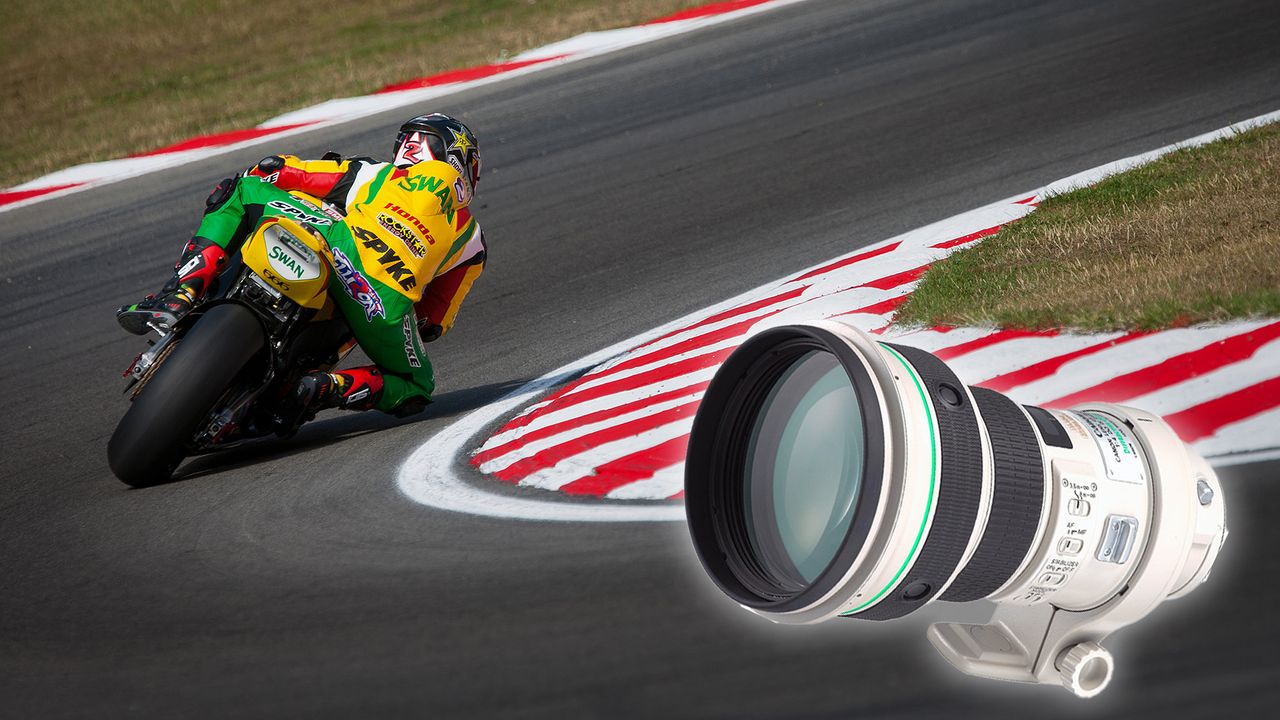
The revolutionary Canon EF 400mm f/4 DO IS USM was launched in 2001 and was a compact telephoto prime lens that was way ahead of its time – and was the shape of smaller lens technology to come with Canon’s RF range of smaller, more compact telephoto zooms we see today.
It’s been 25 years since the Canon EF 400mm f/4 DO IS USM stunned and intrigued the photographic community, as the world’s first super telephoto lens incorporating the exclusive Canon-developed multi-layer Diffractive Optics (hence DO in lens title).
Interestingly, although it was the L-series grey colour and pro build quality, the Canon EF 400mm f/4 DO IS USM didn’t get the L in its name or the red ring of approval - instead Canon gave these special DO lenses a green ring to signify the technology.
The Diffractive Optics element, which incorporates light diffraction, was a major technological breakthrough at the time, and featured an ability to correct chromatic and spherical aberrations and render high-quality images.
As Canon says: “By including this optical element in the lens design, the lens has achieved tremendous savings of 26% in overall length and 36% in weight compared to comparable lenses incorporating only conventional refractive optical elements. The size and weight advantage comes at no cost to image quality, with the EF 400mm f/4 DO IS USM delivering performance equivalent to conventional models in its class.”
The Canon EF 400mm f/4 DO IS USM was impressively compact for a pro-grade f/4 telephoto zoom lens, being a feather-weight at only 1940g and measuring just 128 x 233mm (without lens hood).
Whereas the original Canon EF 400mm f/2.8L IS USM (from 1999) weighed over 2.5 times more at an arm-busting 5370g and measured 163x349mm (without lens hood).
But how does the Canon EF 400mm f/4 DO IS USM compare against newer lenses? Well, the 2014 Canon EF 400mm f/2.8L IS III USM weighs 2840g (about half the weight of the original lens) but measures 163 x 343mm.
And the latest Canon RF 400mm F2.8L IS? It’s VERY similar in size to the EF 400mm f/2.8L IS III USM at 2890g and 163 x 367mm. But that’s still 135mm longer and nearly 1kg heavier than the 25-year-old EF 400mm f/4 DO IS USM!
In fact, the Canon EF 400mm f/4 DO IS USM is still the smallest 400mm f/4 lens a quarter of a century later (the Nikon NIKKOR Z 400mm f/4.5 VR S doesn't count as it's f/4.5).
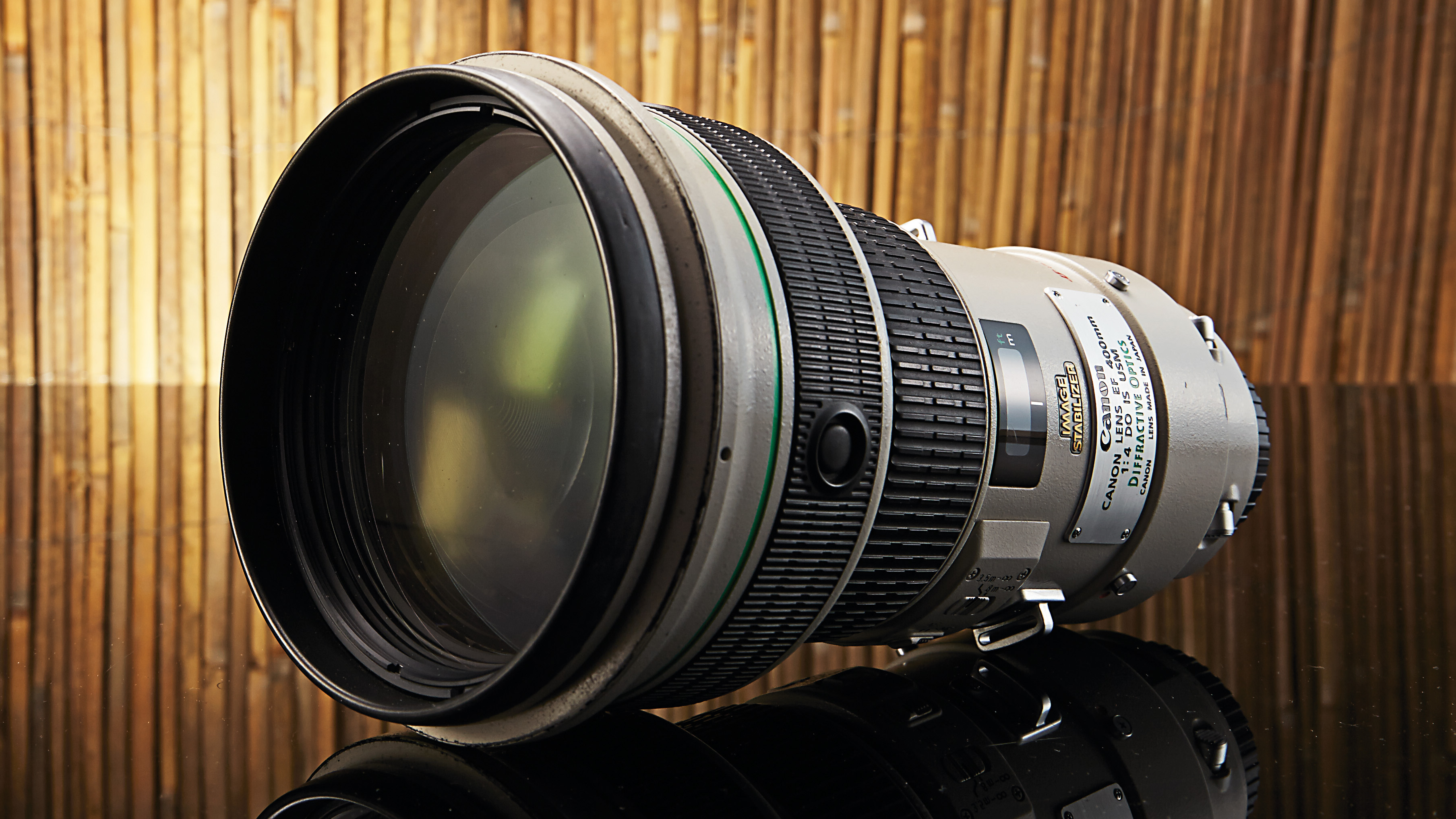
So did Canon bring out more DO lenses? The Mark II of the lens followed a long time later – it wasn’t until 2014 the Canon EF 400mm f/4 DO IS II USM appeared.
As Canon says, it addressed some of the issues of the first EF 400mm DO lens: “The new EF 400mm f/4 DO IS II USM incorporates aspherical and UD (Ultra-low Dispersion) lens elements to achieve a level of imaging performance that exceeds Canon’s previous-generation EF 400mm f/4 DO IS USM. The new model’s dual-layer DO lens reduces the occurrence of ring-shaped flaring caused by bright light sources to approximately one-fourth the level of the earlier model.
"Furthermore, because the DO lens’s placement is in a position where it is not subject to exposure from light sources located outside of the image frame, the new super-telephoto lens also reduces the occurrence of backlight flaring".
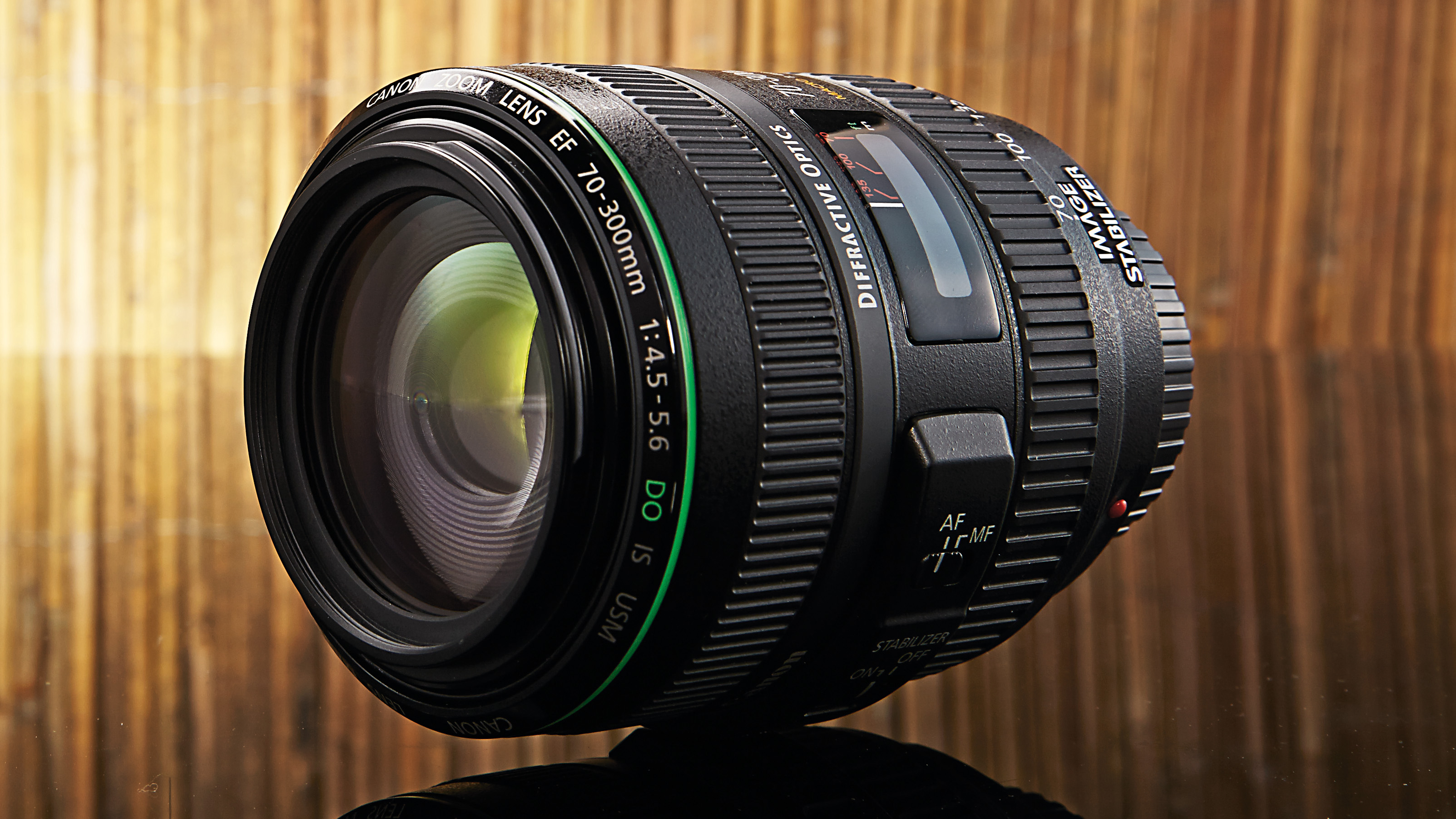
Sadly, Canon only ever made three EF-mount Diffractive Optics (DO) lenses spanning across a 13-year span, and these were:
• EF 400mm f/4 DO IS USM (2001)
• EF 70-300mm f/4.5-5.6 DO IS USM (2004)
• EF 400mm f/4 DO IS II USM (2014)
So why did Canon stop making these DO lenses? Mainly due to high manufacturing costs for the specialized optical elements compared to traditional refracting glass elements, and due to lack of demand as the EF 400mm f/4 DO IS USM was very expensive at $6,899 in 2001 – almost identical to the price of the faster ‘proper L-series’ EF 400mm f/2.8L IS USM, which was $6,799 in 1999.
As a photographer, do you want to pay the same for a slower f/4 lens even if it’s much smaller and lighter? Apparently not, action and wildlife photographers still wanted faster f/2.8 lenses, and would (literally) shoulder the difference in weight.
Of course, Canon also switched focus in 2018 from EF lens designs to the new RF mount lenses for the new EOS R mirrorless system cameras. And the radical DO lenses were relegated to the back of the R&D cupboard.
Check out the best Canon RF lenses around today and the best Canon telephotos