Disney has created some of the most memorable animated characters in the world, from Mickey Mouse to Moana. But in recent years, some fans have been suggesting that the studio's creativity in character design may be stagnating.
From the live-action remakes to the most recent controversy over the Hexed character designs, Disney movies have been sparking comments about the similarities between characters. Some have begun saying that the human leads, particularly female characters, are suffering from what's been dubbed 'same-face syndrome'.
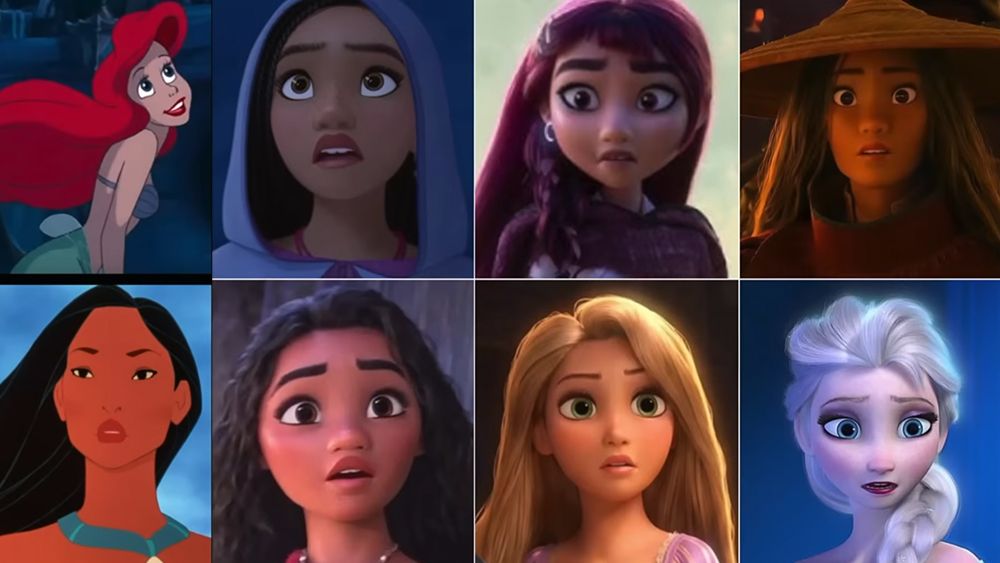
Artists have compared the characters to test the theory, and it seems to bear out: Disney's main characters have become more uniform in terms of facial shapes. But is this really the problem?
hi, artist here!! the reason many people think Disney faces look so similar is because of angles and proportions.most of their protagonists all end up with the same proportions, with round upturned eyes and upturned noses. I lined some examples to better explain my point https://t.co/u5Q8PFuL4K pic.twitter.com/3WHWHj8BOlJune 19, 2026
'Same-face syndrome' is an ailment that's been diagnosed by the fans of entertainment franchises from Overwatch and Tekken 8 to Marvel Rivals. The symptoms take the form of different characters that look almost identical except for hair, clothing or skin colour.
It can happen in any form of art, sometimes due to an artist's muscle memory or a particular standard of beauty. In game development, it sometimes happens because the same base 3D models are used for different characters.
But can Disney be included in the list of victims that have fallen to the illness? The Brazilian artist Craftofreak suggests it can.
In a post on X (above), he compares the countenances of various modern lead Disney characters, including Asha from Wish, Elsa from Frozen and Billie from Hexed. The artist shows that they have similar facial proportions, "with round upturned eyes and upturned noses".
With the exception of Mirabel from Encanto, deviations from this standardised face shape tend to be reserved for villains or more minor characters, the artist says.
So is this a recent development, or has Disney always made similar-looking lead characters?
The Toronto-based digital artist and YouTuber SamDoesArts investigates that question in the video above. He compares modern Disney characters with designs from the Disney Renaissance and finds that lead characters from the decade of releases running from The Little Mermaid in 1989 to Tarzan in 1999 had much more variation in the shapes of their faces.
Of course, a big technological and stylistic change occurred between those two periods. Disney Renaissance movies were made using hand-drawn 2D animation. With Chicken Little in 2005, Disney made a shift to CG 3D animation (2011's Winnie the Pooh was its last 2D film to date).
Nevertheless, similar faces is not intrinsically a limitation of 3D animation. Disney leads seem to show more homogeneity in their features when compared against characters from other animated movies and series.
For many fans, the diagnosis is confirmed. But is Disney's same-face syndrome the real problem, or is there a deeper issue?
Sam points out that people don't tend to complain if Studio Ghibli characters look similar stylistically, yet fans are picking apart every aspect of Disney's latest releases, even the composition of the Hexed trailer. The real issue might be not one of aesthetics but of appeal. People are no longer connecting with Disney characters because they're not finding anything to empathise with or aspire to, and that could be harder to correct.
For more Disney news, see the story of the original Moana movie. We also have an illustrated guide to the Disney rules of animation.