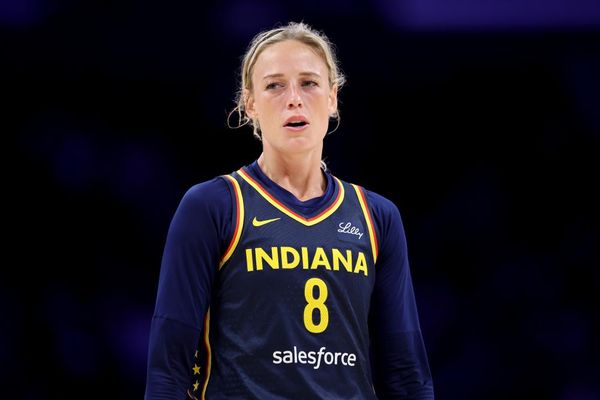
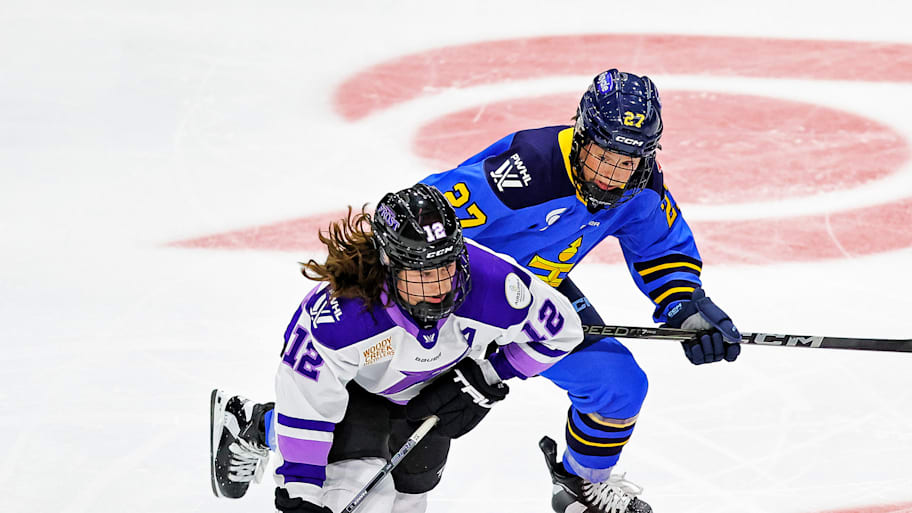
When Kelly Pannek got a call in September 2023 to join PWHL Minnesota, everything was finally falling into place.
The launch of the Professional Women’s Hockey League had been announced just a few days earlier, and the first puck was set to drop in four months. There were six franchises (Minnesota, Boston, Montreal, New York, Ottawa and Toronto) but no team nicknames. No other players had signed on yet. Minnesota didn’t even have a coach. But Pannek did not hesitate to become the first player to officially ink a contract with the league. This is what she and hundreds of other women’s hockey players had been working toward for years. “It felt like a no-brainer,” Pannek says. “Minnesota’s been a huge part of my life. It’s where I’m from, and it’s where I’ve grown up. Then to continue my professional career in Minnesota—that’s something I never was able to dream of.”
When Pannek graduated from the University of Minnesota in 2019, becoming a pro wasn’t a given. At that time the Canadian Women’s Hockey League (CWHL) had just folded. There was the National Women’s Hockey League (NWHL), but more than 200 players were boycotting it because they weren’t earning livable wages. Instead, players created the Professional Women’s Hockey Players’ Association (PWHPA), which played exhibition games to garner support for establishing a united and sustainable North American league.
After four years of sacrificing their pro careers, there was finally a league that checked all the boxes for Pannek and her peers thanks to a hefty financial commitment from Dodgers owner Mark Walter, the counsel of Billie Jean King and an eight-year collective bargaining agreement the players worked on. It wasn’t easy to get the league off the ground in a matter of months. But now with its third season set to start on Nov. 21—with team names given to those original six franchises; sell-out crowds showing up across the U.S. and Canada; and expansion teams set to join in Seattle and Vancouver—the PWHL has swiftly established that there is an appetite for professional women’s hockey.
“We tend to do things quickly around here,” says Jayna Hefford, the PWHL’s executive vice president of hockey operations. But what is being accomplished at a rapid pace is something many had spent years—or even decades—preparing for.
Hefford was one of the lucky ones. During her playing days in the mid-1990s and 2000s, she didn’t have to have a day job. She coached at camps, did some speaking events and had a few endorsements. She was one of the few true professionals in the sport. “The majority of my teammates were teachers or lawyers or whatever else during the day,” Hefford says.
There have been several iterations of competitive women’s hockey leagues in North America over the last several decades. Most notable were the NWHL, the CWHL, a second NWHL, which turned into the Premier Hockey Federation (PHF) before selling off its assets to Walter in 2023. Some of these leagues competed with each other, and none of them had any real staying power.
The first league to actually pay its players salaries was the second iteration of the NWHL. When it was founded in 2015, players were paid from $10,000 to $26,000 a season. But that didn’t last long, with player wages getting cut up to 50% in the league’s second year. After the CWHL shuttered, the NWHL was the only pro option left on the continent. The game’s top players decided there was too much bad blood to continue, with mistrust around everything from laughable salaries to having to pay for their own travel to facilities that didn’t have … adequate facilities. Players didn’t always have access to a locker room or bathroom during practice and thus had to relieve themselves in a trash can. “You’re playing in a glorified beer league,” U.S. Olympian Hilary Knight said in 2020.
Hefford, who was interim commissioner of the CWHL in its final season, was asked to join the PWHPA as an operations consultant. Players initially hoped their boycott of the NWHL would last just a year. But it wasn’t until the PWHPA joined forces with Walter and King in 2022 and officially unionized in ’23 that they were finally able to make meaningful progress. “We committed all along that this was going to be a player-first league,” Hefford says. “That collaboration between the players’ union and the league is unlike any other league.”
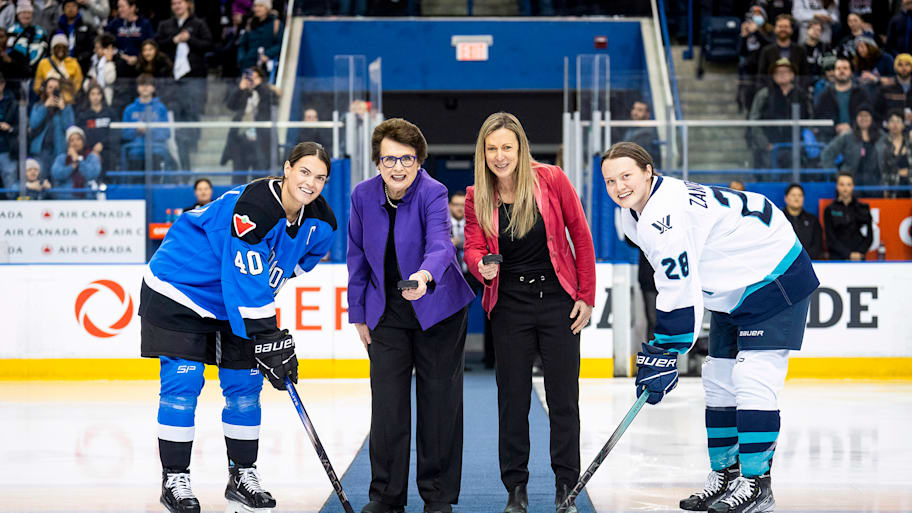
A 62-page CBA was signed in July 2023, setting minimum salaries at $35,000 and requiring teams to pay at least six players $80,000 for the first season. And then things moved quickly. The league was officially announced that August with players signing contracts in September. Training camps started in November and the first puck dropped on New Year’s Day ’24. On Day 1, there were 2,537 fans watching at a sold-out Mattamy Athletic Centre for Toronto vs. New York while 2.9 million viewers watched on TV in Canada alone. On Day 2, Ottawa set a pro women’s hockey attendance record of 8,318 at TD Place. On Day 6, Minnesota set a new one with 13,316 at Xcel Energy Center. They took things on the road with neutral-site games in Pittsburgh and Detroit, where another attendance record was set. And this trend continued throughout the league’s 72 regular-season games and into the playoffs.
Year 2 was much of the same, as teams like Montreal and Toronto moved to larger venues and the league had nine neutral-site games to reach new fans. This past offseason, Emily Clark signed a record-setting contract with the Ottawa Charge, joining eight other players to reportedly be making six figures. PWHL executive vice president of business operations Amy Scheer told the Associated Press earlier this year that the league’s sponsorships had grown by 50% and merchandise sales had doubled.
This wasn’t just a novelty. And it certainly didn’t hurt that the league hit the ice smack dab in the middle of a women’s sports movement, with more eyes on the WNBA and NWSL than ever before.
“I think you have to pay attention to it,” Pannek says. “I think it’s really exciting to add to it with the PWHL, right? What’s really cool is that those leagues are 10, 20 years ahead of us and we’re still keeping pace with some of the norms in the workplace and professionalism in women’s sports. To be able to kind of see the parallels and see the differences and also see where, O.K., that’s where they got in 10, 20 years. Where can we get in 10 or 20 years?”
Already in the first phase of expansion, the PWHL is cruising past its own expectations. The Seattle Torrent and Vancouver Goldeneyes are adding a new time zone to the league. And the 2025–26 Takeover Tour will see 16 neutral-site games across 11 cities outside of the established markets. There is talk of adding more franchises in the near future, though Hefford says the league first wants to see how the new additions fare in the first half of this season.

It’s not lost on Hefford how different this is from not just her playing days—when it was mostly friends in family in the stands and practices were held at 9 p.m., after work—but also from her initial days as an executive.
“When I was with the CWHL, we had five people working for the league, and that was an international league that had teams in Canada, the U.S. and China at the time,” Hefford says. “You look at where we are, and it’s just amazing. You really understand the importance of the investment that needs to be made to get this off the ground.
“The players have a CBA, they have some certainty, they understand what they will get in return, and they understand what they need to provide. As a league, just the growth of having a marketing department, having an officiating department, having groups of people that every day focus on growing the league, it’s just a really exciting time. We know there’s so much growth ahead and we’re going to look different in a couple of years than we look right now.”
Not every team has been an instant success, though.
Casey O’Brien grew up in New York City and remembers going to New York Liberty games at Madison Square Garden, when the team averaged 10,000 fans. The rookie center is hoping her new team, the New York Sirens, can find a way to reach that level.
In Year 1, New York played most of its home games in Bridgeport, Conn., with four games played at UBS Arena in Elmont, N.Y., home of the New York Islanders. The team’s average attendance was 2,496, which was less than half of what the PWHL averaged as a whole that year, and it finished dead last in the standings. Year 2 wasn’t much better. This time playing at Prudential Center in Newark, the Sirens’ average attendance barely budged to 2,584 while the rest of the league saw much higher increases. They again finished at the bottom of the standings.
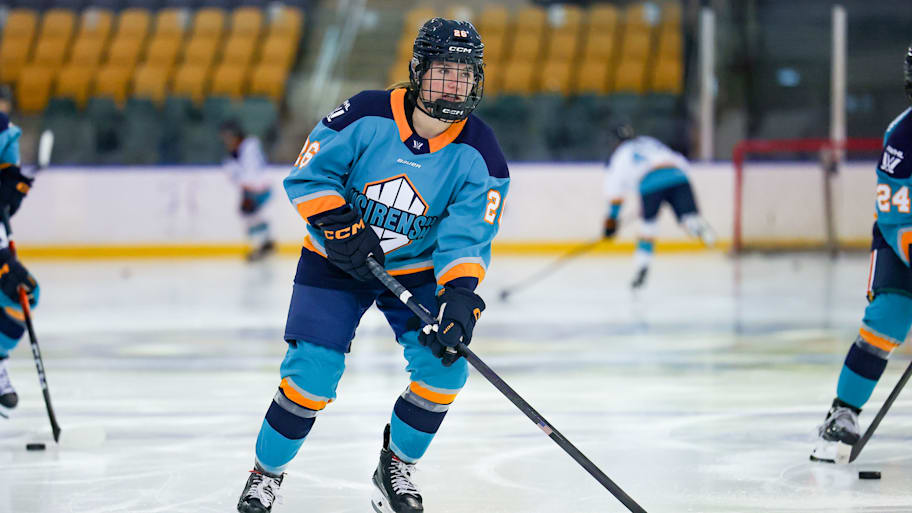
“[New York has] obviously struggled, but I see that as more of an opportunity rather than a setback,” says O’Brien, who was drafted third out of Wisconsin by the Sirens in June.
New York was always going to be a tough sports market to break into, Hefford admits. There were 13 major pro teams in the metropolitan area before the Sirens came to town. Building a successful new franchise takes time with grassroots efforts at local kids’ camps and finding other ways to reach fans who don’t automatically gravitate toward hockey, like they do in Canadian markets.
As the league grows, Hefford says there’s still a focus on making sure original franchises, like the Sirens, improve their vitality. “Our job is to maintain the competitive balance,” Hefford says. “I think it’s one of our greatest strengths.”
To keep the on-ice product entertaining, the PWHL has deviated from what women’s hockey has looked like in the past. The league allows a hybrid bodycheck, which is more physical than what fans might be used to seeing at the collegiate level. It has also implemented the “jailbreak” rule, which allows a player to be freed from the penalty box when their team scores shorthanded. In Year 2, it added the “no escape” rule, which restricts a penalized team from changing lines after a penalty is called. And goal scoring increased from 4.8 to 5.02 per game year over year.
As the league grows—expansion has added 46 roster spots and 30 more games—Hefford says it’s going to be hard to predict what happens in Year 3. But Pannek, whose Minnesota Frost won the first two PWHL titles, has big expectations for this season.
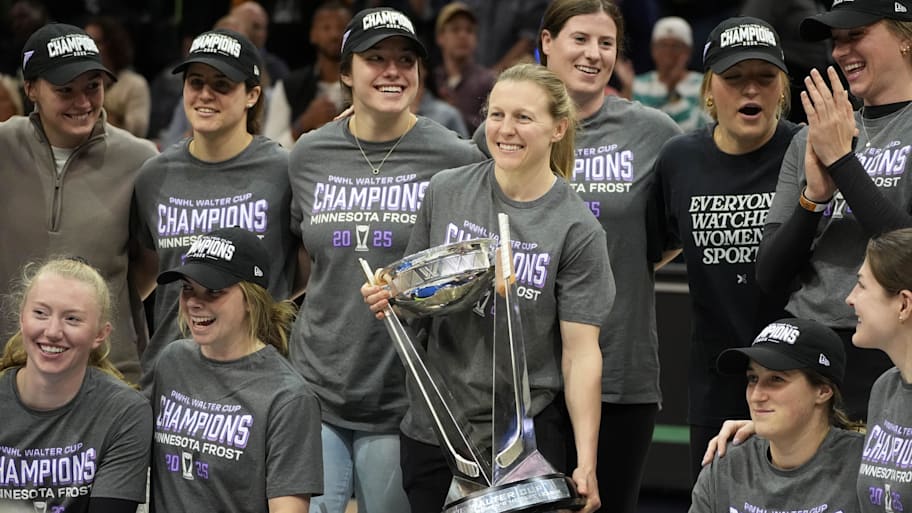
So what can fans look for? “More chaos,” Pannek says. “I feel like our league just has some chaotic moments in games, which is so fun. I also feel like there’ll be some rivalries maybe this year that start to develop with more teams.”
Chaos, after all, is how the PWHL started, and it seems to be working so far.
More NHL on Sports Illustrated
This article was originally published on www.si.com as The PWHL Has Found a Winning Formula for Women’s Hockey .