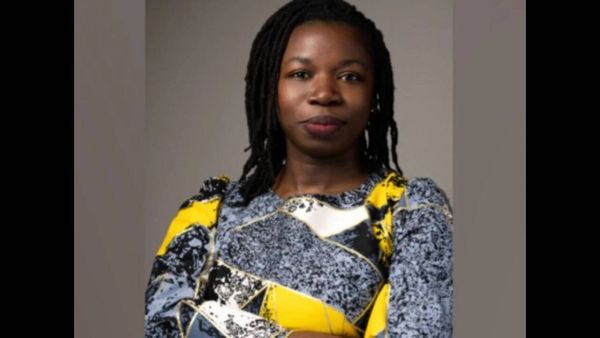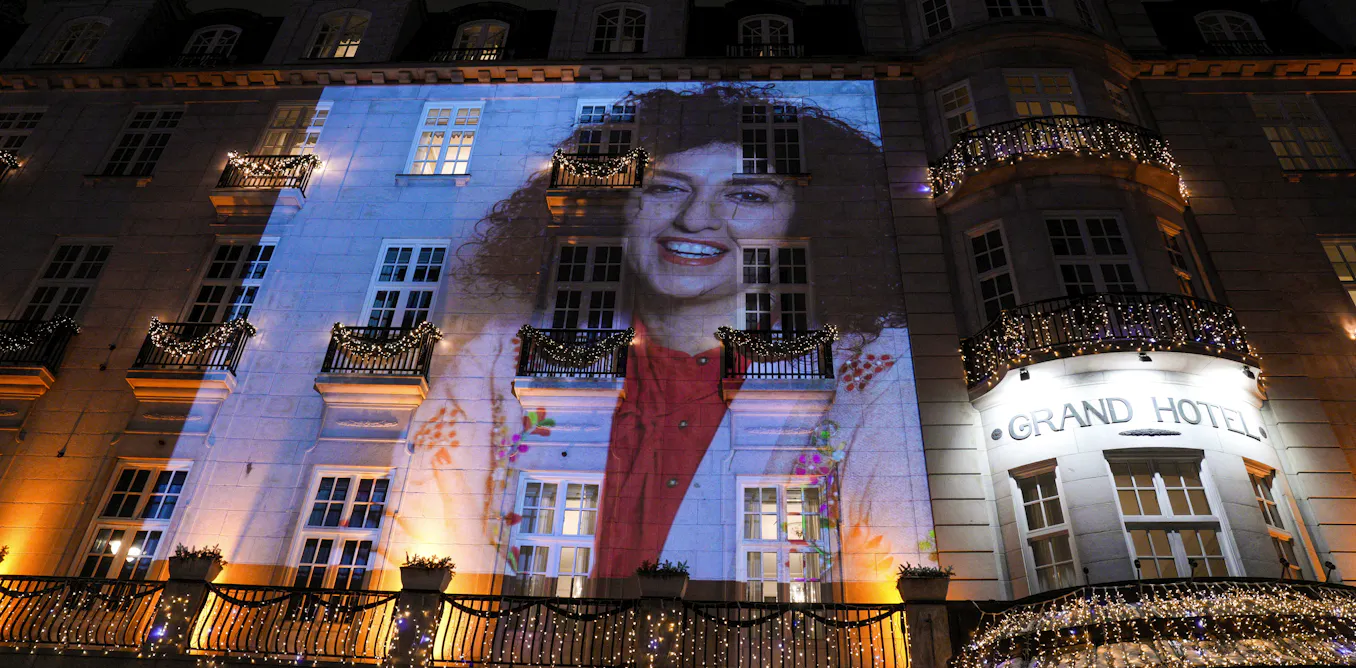
Few Iranian women are as celebrated for defending freedom in Iran as Narges Mohammadi. She is the winner of the Nobel Peace Prize, the Andrei Sakharov Prize, the Olof Palme Prize, and the PEN and UNESCO press freedom awards, among others.
Yet, like thousands of other political prisoners in Iran, her own freedom still matters little to the powerful forces around her.
As US President Donald Trump’s administration negotiates a deal with the Iranian regime to end their nearly four-month war, Mohammadi’s fate has not received even a mention. There has been no commitment from Iran to release political prisoners as part of the deal. Nor does it appear the Trump administration has even made this request at any stage of the negotiation.
Just over a month ago, Mohammadi was fighting for her life. The 54-year-old activist had two suspected heart attacks in prison in northern Iran. After weeks of battling for access to medical care, she was granted a temporary suspension of her sentence on heavy bail and transferred to a hospital in Tehran.
In mid-May, she was moved from intensive care back to her home in Tehran under medical care and heavy security.
Fighting against the regime
For more than two decades, Mohammadi has insisted on seeing, naming and resisting the human rights violations of the Islamic Republic. These include employing the death penalty as a tool of social control, as well as the use of torture and what she calls “white torture”, or prolonged solitary confinement. She has also fought against a system of gender apartheid that polices women’s bodies and speech.
As a leader in the Defenders of Human Rights Center, an Iranian NGO, she documented abuses, supported prisoners of conscience and their families, and campaigned to abolish executions and solitary confinement. She continued her work relentlessly from inside prison, interviewing other women detainees and turning their testimonies into an indictment of the carceral state.
Mohammadi has been arrested at least 13 times – most recently in December 2025 – and sentenced to more than 40 years in prison.
She is one of thousands of prisoners of conscience across Iran. For decades, Iran’s authorities have carried out large-scale arbitrary detentions with impunity. They have detained both real and perceived dissidents, as well as “debt prisoners” (those unable to pay their financial obligations).
In response to the massive street protests across Iran in late 2025 and early 2026, the regime rounded up more than 50,000 people, including human rights defenders, lawyers, medical workers, students and even children. Thousands more are believed to have been arrested since the war began.
Many are being held in secret and unofficial detention facilities run by security and intelligence bodies, where they are subjected to forced confessions. Some face charges that carry the death penalty.
Amnesty International believes at least 2,159 people were executed in Iran in 2025, more than double the 2024 total. Since the war began, the organisation says at least 36 people have been executed on politically motivated charges.
Whose peace is being negotiated?
The Trump administration is now working on a new “grand bargain” with Tehran that promises to deescalate the current tensions, reopen the Strait of Hormuz and compel Iran to give up its nuclear program.
The US and Europe have followed the same pattern of negotiations with Iran for decades. These talks tend to focus on instruments of hard power – weapons, uranium enrichment levels, sanctions, deterrence.
Yet, what rarely surfaces in these negotiations with Iran is the fate of political prisoners or the importance of women’s and human rights.
Governments, multilateral institutions and media outlets often profess their symbolic solidarity with the Iranian people. Yet, when they actually have leverage with Tehran in negotiations, Western leaders revert to the language of “balance” and “pragmatism”. Human rights are treated like a side issue.
Mohammadi spent years documenting exactly how repression works in Iran. She helped champion the “Woman, Life, Freedom” uprising from inside a jail cell. Yet, she has never been at the centre of these conversations.
This is not confined to Iran. In conflicts around the world, women like Mohammadi are hailed as the “voice of freedom”, while being largely excluded from the rooms where ceasefires and political transitions are decided.
United Nations data and independent research continue to show that women remain dramatically underrepresented as negotiators, mediators and signatories in peace processes, despite decades of commitment to diplomacy and the pursuit of peace.
What the peace negotiators should demand
After the interim peace deal is signed this week, the negotiations with Iran will move into more delicate territory, focused on Tehran’s nuclear program.
But western powers should be honest about the kind of peace they are seeking, and at whose expense. The price of “stability” should not leave intact the carceral machinery that nearly killed Mohammadi and has killed many others over the years.
A sustainable peace settlement with Iran should not only be a security arrangement, but also a broader governance and human security framework. This begins with a demand Iran release political prisoners, including Mohammadi, as part of any deal.
Negotiators could also try to secure commitments on:
- reducing arbitrary arrests
- establishing a moratorium on executions
- guaranteeing prisoners access to legal counsel and fair trial procedures
- increasing transparency regarding detention conditions and prisoner welfare
- protecting journalists and safeguarding public access to communications and the internet
- and ensuring the meaningful participation of women and youth in shaping the country’s political future.
These will not be easy to get the regime to agree to. But if we can put extraordinary ingenuity into structuring sanctions against Iran, we can also find ways to prioritise these demands in a deal that claims to be focused on peace.
True homage to Mohammadi means more than issuing another statement wishing her a speedy recovery or awarding her another prize. It means insisting her fight defines what is acceptable in any bargain with Tehran. It also means ensuring women’s rights defenders have a seat at the table.
This article was originally published on The Conversation. Read the original article.