Majid Ali, who commutes 22km every day for work, has to stand in a queue for two hours to get the fuel he needs for his bike. He is one of millions of people in Bangladesh who have been lining up outside petrol stations day and night amid concerns over the country’s declining fuel reserves triggered by Donald Trump's month-long war on Iran.
“This motorcycle is the only convenient way for me to commute, but without the octane, how will I continue,” the 33-year-old private sector employee tells The Independent.
"I was lucky, I got the fuel. Dozens of motorists behind me were forced to return as the station ran out of fuel," he adds. These days there are fewer vehicles spotted on the capital Dhaka’s otherwise overcrowded streets.
Oil prices have surged amid growing anxiety about whether Iran will reopen the Strait of Hormuz, which has been shut for most vessels since the US and Iran launched their war in late February. Almost 90 per cent of Asia’s purchases of crude oil pass through the strait that links the Persian Gulf to the Indian Ocean.
The country of 175 million people, which relies on imports for roughly 95 per cent of its energy needs, has imposed fuel rationing for vehicles, restrictions on diesel sales, and closed universities as the war causes severe disruption to Middle East oil exports.
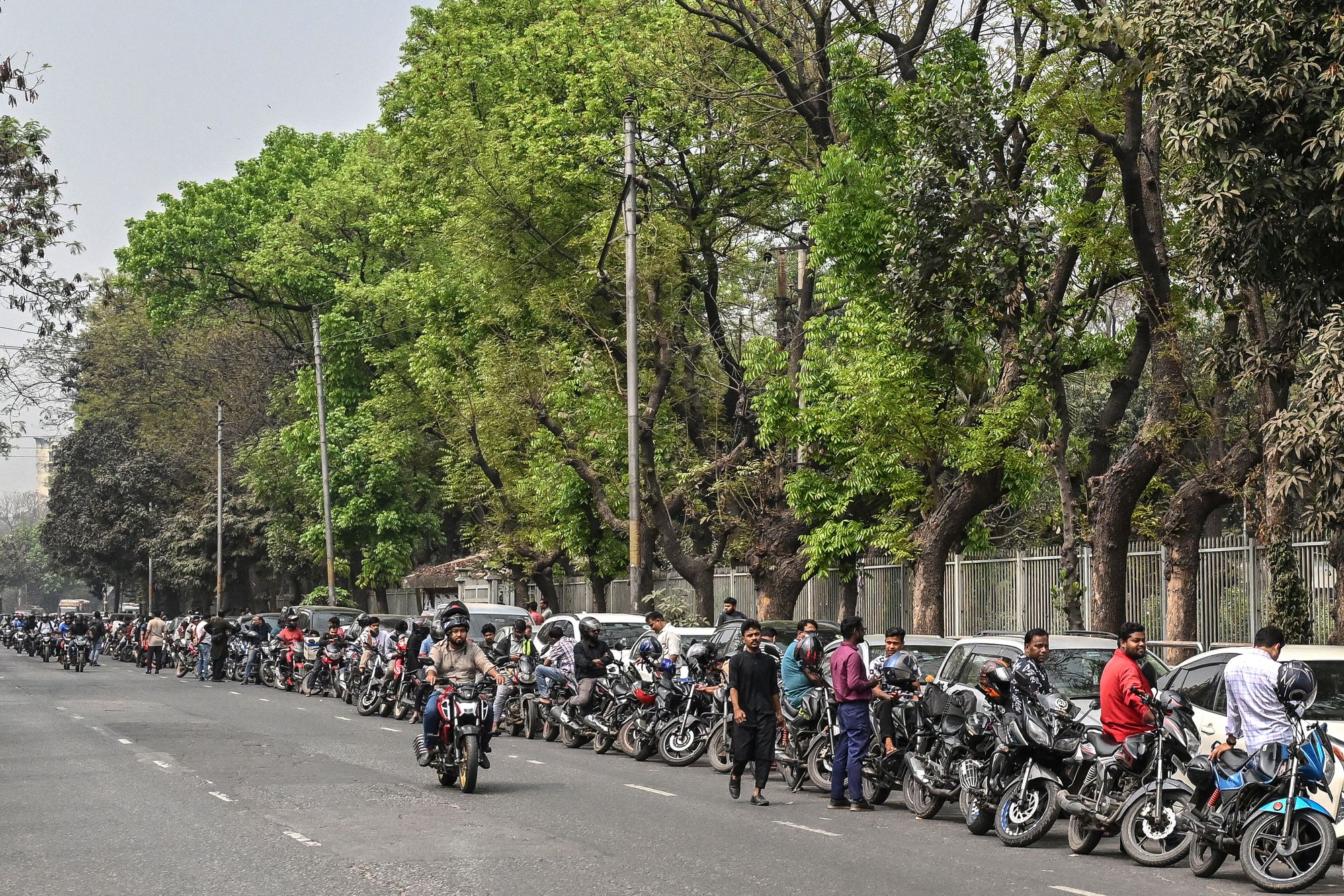
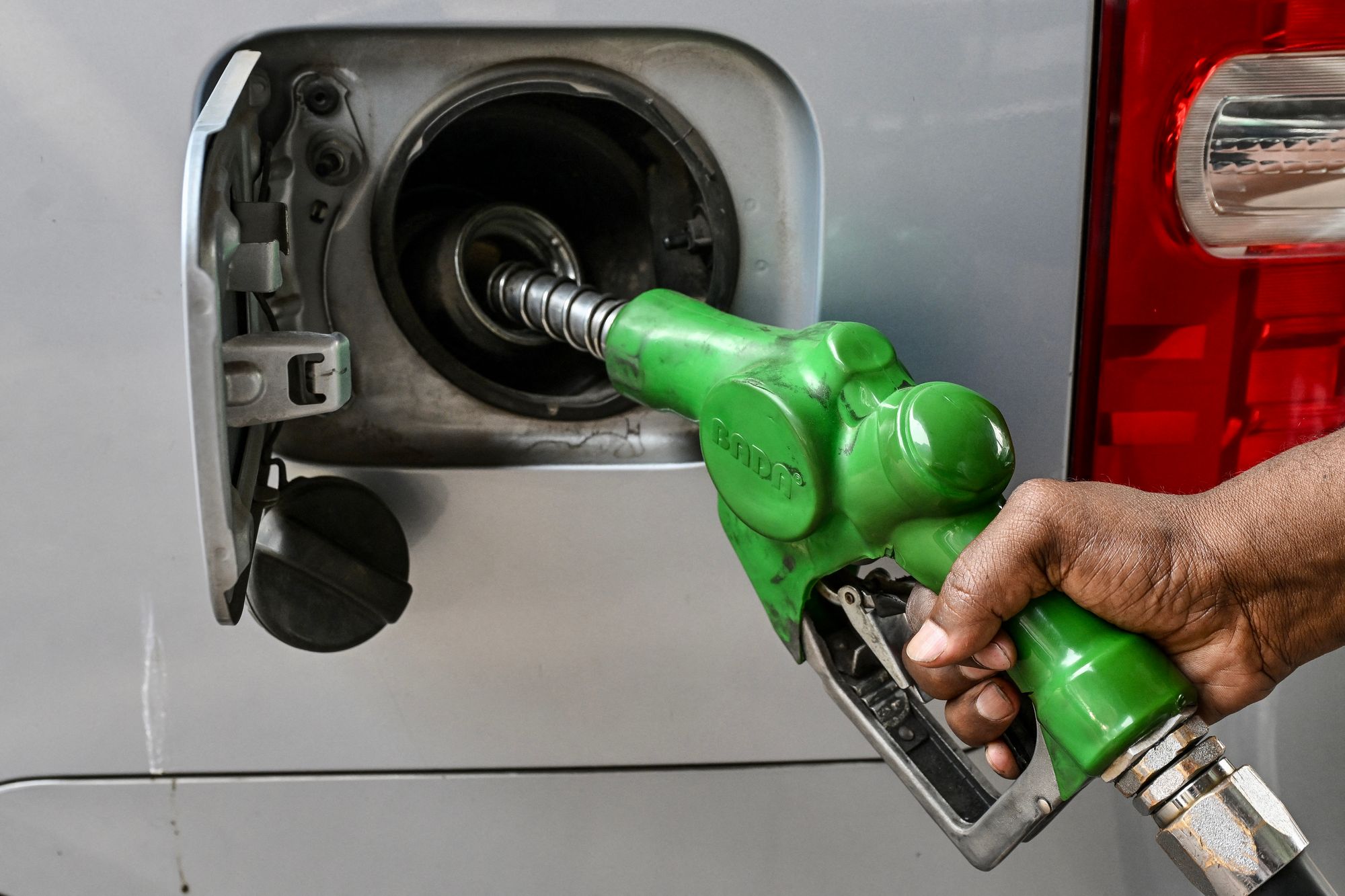
Motorcyclists and drivers of various modes of transport waited for hours, in some cases throughout the night, to receive limited amounts of fuel. Several filling stations shut their gates using bamboo barricades after running out of fuel, while fuel dispensers are wrapped in blue plastic and tied off, reflecting the severity of the supply disruption, according to Reuters. In areas outside the capital, the shortage appears more acute, with fuel being sold informally in plastic bottles in small quantities ranging from one to two litres at higher prices, the report said.
The newly elected Bangladesh Nationalist Party (BNP) government led by Tarique Rahman is scrambling to formulate a response, as Bangladesh grapples with rising energy costs, mounting pressure on foreign exchange reserves, and the prospect of being the first country to run out of fuel supplies amid the energy crisis.
According to reports, late last month, Bangladesh had around 80,000 tonnes of crude stored at its Eastern Refinery, enough to sustain the country for just over two weeks, with diesel reserves similarly stretched. Authorities in Dhaka are now scrambling to diversify their fuel imports by reaching out to Singapore, Malaysia, Nigeria, Azerbaijan, Kazakhstan, Angola and Australia, according to reports.
Bangladesh has sought a temporary US sanctions waiver similar to the exemption granted to India to import up to 600,000 metric tonnes of Russian diesel.
"The situation is dire. The spot buying is drying up our coffers, but the government can't help it. We have reserves for less than 10 days," an official in the Rahman government, who requested that they not be named, tells The Independent.
The country has turned to the expensive spot market to procure Liquefied Natural Gas (LNG) at steep prices, in a bid to keep domestic gas supplies at manageable levels for its people. After a frantic two-day push, state-owned energy firm Petrobangla on Wednesday secured two LNG cargoes at prices nearly 2.5 times higher than those paid on 1 March.
State-run Bangladesh Petroleum Corporation (BPC) is receiving around 60,000 metric tons of diesel from three traders, with a further 90,000 metric tons scheduled to arrive later this month, two energy officials told Reuters, requesting anonymity because they were not authorised to speak to the media.
"Bangladesh could be the worst-affected country in Asia due to its high exposure to imported fossil fuels," says Shafiqul Alam, lead energy analyst for the global think tank Institute for Energy Economics and Financial Analysis.
The Telegraph quoted a Bangladeshi official as saying that if the war drags on, "Bangladesh could effectively grind to a halt within weeks".
However, the government claims there has been "no fuel crisis in Bangladesh" despite the blockade at the Strait of Hormuz.
“Let me state clearly, there is no fuel shortage in Bangladesh at this moment. In fact, we have increased supply compared to last year,” said Iqbal Hasan Mahmud Tuku, the country's energy minister.
Experts also blame informal syndicates, which have been diverting supplies and withholding fuel from the market, for worsening the crisis.
Fears of a repeat of the disruption that followed Russia’s war in Ukraine in 2022 have prompted panic buying and fuel hoarding, which has further worsened shortages at petrol pumps struggling with limited supplies.
"We are getting limited supply and there is additional pressure on fuel stations," said Miznur Rahman Ratan, joint convenor of Bangladesh Petrol Pump Owners' Association.
He tells The Independent: "There is so much chaos at pumps, our workers are getting assaulted by the angry customers who have been forced to return without octane or petrol. People need to stop hoarding fuel.
"Since only a limited quantity is being allotted to each motorist, they are emptying their motorbike tanks and joining the queue to purchase more. We have urged the government to put measures in place to safeguard our pumps and the workers."
The government has been rationing fuel, though the restrictions were eased for the Eid al-Fitr festival. Dhaka has instructed its civil servants to switch off lights and turn down air conditioning to save power.
The country's diesel reserve declined to 1,15,473 tonnes, enough to meet demand for around nine days, according to 4 March data, The Business Standard reported. The stock of octane has fallen to 28,152 tonnes, which is sufficient to cover nearly two weeks of consumption.
The BPC is set to import 40,000 metric tonnes of diesel from India's Numaligarh Refinery Limited in April, nearly double the volume received in March.
The country is also seeking more than $2.5bn n in external financing to support fuel and LNG imports.
"The government is importing oil and energy at a very high price. This is increasing the subsidy burden drastically," Alam says.
"Bangladesh depends on imports for more than 62 per cent of its primary energy. So when there's any disruption, that eventually affects the system," he said, adding that due to a decline in local gas production, Bangladesh has increased its LNG imports.
"The power sector is highly subsidised, and then on top of this, now this costly fuse, which will have a severe impact on the fiscal space," he added.
Alam warns that if the Middle East crisis persists, “companies will either buy fuel at elevated prices or ration gas and fuel supplies, which will trigger industrial shortages and load shedding”.
“The government should look towards conservation measures with proper messages which were tested during the Covid-19 pandemic, such as issuing work from home for organisations that do not handle crash transactions on a regular basis.”
Officials from the prime minister's office told The Daily Star that all agencies have been asked to prepare proposals on saving energy, including a three‑month short‑term plan with mid‑ and long‑term strategies.
Nations across Asia, which have been at the frontline of the crisis, declared national holidays, imposed work-from-home measures, cut workdays, and urged citizens to shower for a shorter period of time to conserve supplies.
Rahman’s government came to power this year, facing a worsening energy crisis driven by Russia’s war in Ukraine. Within days, Trump’s war in Iran deepened the crisis.
Alam claims: “Despite being severely affected by the Russian war in 2022, Bangladesh had no long-term plan to tackle a deeper energy crisis.”
Bangladesh was plunged into a socio-political and economic crisis following the bloody anti-government protests in 2024, which forced then-prime minister, Sheikh Hasina, to flee to India. The country was run by an interim administration led by Nobel Peace Laureate Muhammad Yunus until this February.
Alam suggests the Rahman government should take a step back and consider accelerating Bangladesh’s transition towards clean energy. “There was a gap that needed to be sped up after the Ukraine-Russia crisis. That gap was not filled. The government should now accelerate the energy transition,” he adds.
Hundreds of thousands of Rohingya refugees in Bangladesh face food aid cuts
Iran war worries fail to dampen business sentiment in Japan
Indian warships step in to help stranded tanker flee Strait of Hormuz
Indian sailors freed by Iran return home: ‘Every moment felt close to death’
Terror attack suspected as gas pipeline blown up in southwest Pakistan
Why Pakistan’s ambitious bid to mediate in the US-Iran war could ‘backfire’