
It seems like every other day, we read something about the collapse of Western brands in China. But I, for one, am tired of hearing about it.
The stories are too often the same. It’s always “China puts the whole car world into a tailspin,” or “BYD will dominate the whole world,” and “foreign brands should just throw in the towel now since there’s no chance they’ll ever catch up to China.” At the same time, a China-detractor will insist that the country’s automotive push is ill-gotten, and its sales are solely due to nationalism and artificially low labor costs.
I suppose I’m also no stranger to writing those types of stories, but I have grown weary of both of those narratives. Not that they’re necessarily wrong, but I feel like the conversation doesn’t get enough into why Chinese brands have made such inroads there and now in other places: the cars themselves.

And by comparison, our cars suck.
This was readily apparent for us when we visited the Shanghai Auto Show earlier this year. Take Volkswagen: it's the original Western brand to make inroads in China, and for decades, it did extremely well there. But sit in an ID.3 and then sit in something from Nio, Xpeng, Chery or any number of homegrown brands. The Western stuff relies on leftover products often at least a generation behind, slightly rewarmed for a public these automakers assumed didn’t know much better. But now, they certainly do, and they know they can do better.

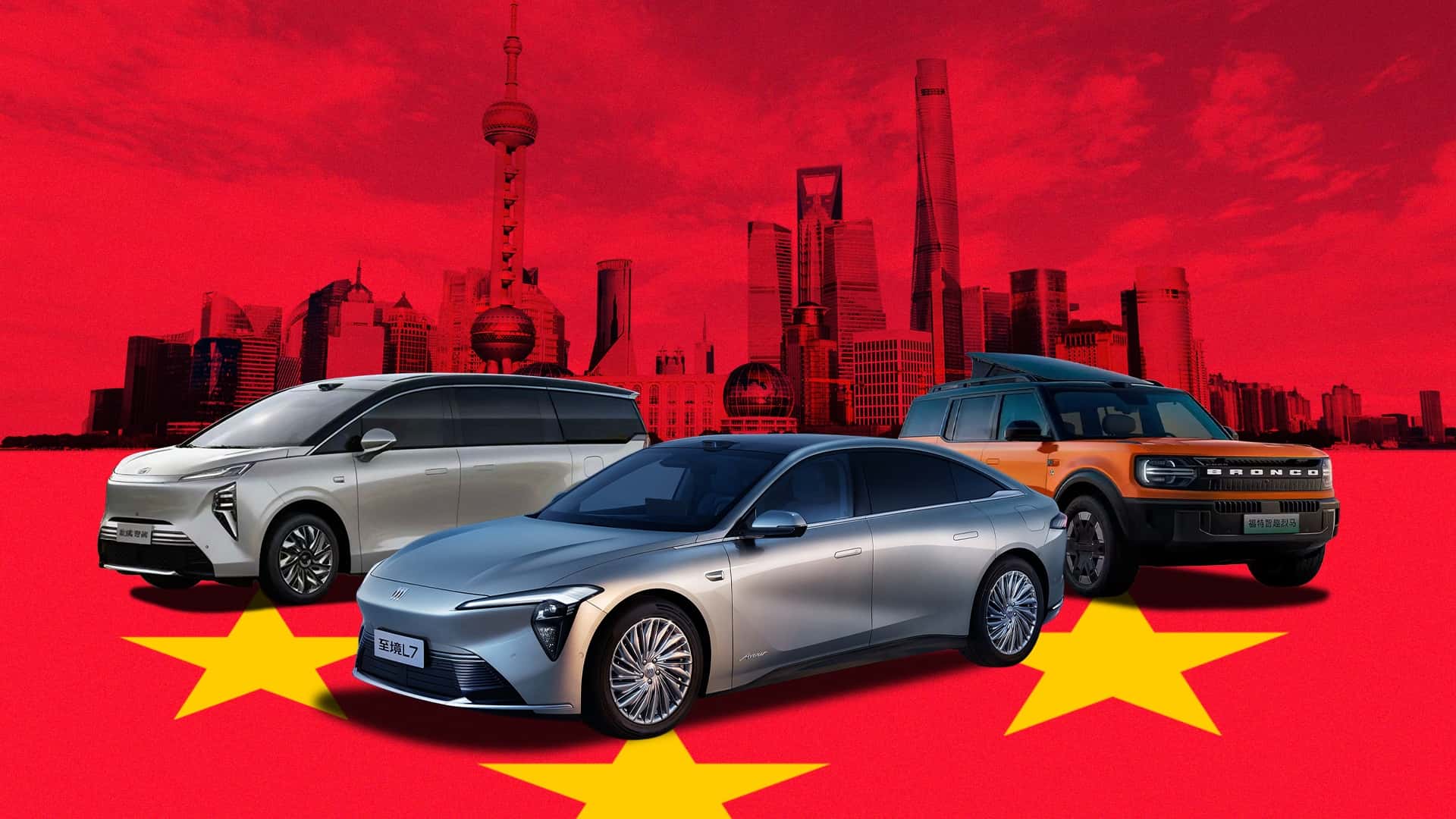
In the two years I’ve been back and forth to the People’s Republic—an eternity in Chinese car development years—it seems like some “foreign” brands are figuring out just how to compete. During my last trip to China, for Xpeng’s AI day, I skulked around both Beijing and Guangzhou in search of two cars: the Ford Bronco EREV, and the Buick Electra L7. Unfortunately, the Ford wasn’t on dealership lots quite yet. Chinese media got a special preview of the car as I was leaving the country.
But the Buick Electra L7 is there right now, though. And a quick impression in a Guangzhou dealership tells me one thing: Western brands actually do know how to make an EV (or EREV, in this case) when they want to, but you’ll never, ever see that. And that’s a damn shame.
Why The Buick Electra L7 Is So Important
Unless you’ve been living under a rock, you probably know that Buick has kind of been the backbone of GM’s Chinese operations for about 20 years now. The brand officially entered China in 1997, but close ties with local automaker SAIC (via China’s then-mandatory 50/50 joint venture scheme) and early entry into a market with very immature homegrown brands saw GM gain ground pretty quickly with Buick.
For years, Buick sold localized versions of cars from the GM global portfolio, like the Buick Excelle, a really nice version of the Daewoo Lacetti. Or, perhaps you’re familiar with the Buick GL8, a Chinese version of the old Chevrolet Venture that remains a staple on its roads today. Both cars sold millions in China. The success of Buick in China is why it didn’t get the big chop in 2008, while Pontiac did.
But the idea of simply localizing global (or American) products for China isn’t quite panning out the way it once used to. Buick’s Chinese sales numbers have seen big drops, while GM itself has been losing money in China for the first time in decades. The line of global products tweaked and then sold in China just wasn’t working, even if some were electrified. For example, Buick got its own variants of the GM Ultium platform, called the Electra E4 and E5, but sales weren’t so hot.
Buick China cut prices deeply on the E5, and even cancelled the E4 entirely. Chevrolet China was once supposed to get locally made versions of the Equinox EV and Blazer EV, but they too were killed instead. Given what I’ve seen from the competition in China, it was likely the right move.
So, GM China went back to the drawing board and came up with this: Xiao Yao.
That’s the name for a new platform co-developed by Pan Asia Technical Automotive Center Co., GM’s engineering and design joint venture with SAIC. Unlike Ultium, which is EV only, Xiao Yao is designed to be a flexible vehicle architecture, offering PHEV, EREV, or full EV, with drive wheels that can be at either end, or both of them for AWD. In concept, it feels pretty similar to what we’ve seen in Ultium, although I’d argue that Xiao Yao lends itself to a final product that doesn’t feel so large and wide. All of the Ultium cars I’ve driven feel huge, while at least a static impression of the Electra L7 feels like a normal-sized sedan.
But the platform itself goes beyond just drive wheels and batteries. Buick leaned into China’s software and hardware ecosystem, so expect assisted driving that differs from the U.S.-market Super Cruise, and processing power straight from the now-ubiquitous Qualcomm Snapdragon line of chips. On paper, it seems like it’s ready to go toe to toe with similarly sized EV or EREV sedans from brands like Zeekr, Lynk & Co, Xpeng, and Nio.
So what exactly is the L7?
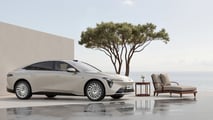
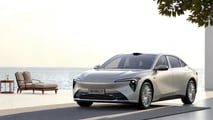
At its core, the Buick Electra L7 is an extended-range EV midsized fastback sedan about the same size as the Buick Regal from not too long ago.
Power for the Electra L7 comes from a 338-horsepower rear-mounted motor that spins the rear wheels, fed by a 40.2 kWh battery. Since this is an EREV, there’s a 1.5-liter turbocharged four-cylinder producing 154 horsepower. There may be plans for a full EV or dual motor AWD Electra L7, but Buick China has not confirmed the timing or specifications quite yet.
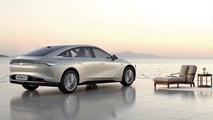
In person, I found the Electra L7 to be pleasantly handsome. I’ve not been a huge fan of Buick’s latest styling trends both in China or North America; the cars feel both too downmarket and too generic for what is supposed to be a storied American luxury brand. Buick’s crossovers just feel like nice Chevrolets with leather, almost as if GM itself is holding the brand back to make room for Cadillac.
Yet the Electra L7 is a stunner by comparison. It feels like the first iteration of Buick’s new styling themes that feel coherent and upscale. The L7’s proportions are smooth, whereas the Ultium cars sometimes look like they’re going out of their way to hide a huge and thick battery. This car’s low-slung body looks downright svelte by comparison. The proportions are slick, the hood is long, but not overly so. There’s enough bright work on the body to look more elevated compared to a non-luxury oriented car, but not so much to the point where the car would feel comfortable parking front row in the parking lot of a nursing home.
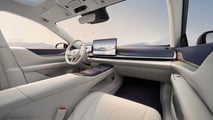
The real story is the interior. It’s so much improved from what I’ve experienced on Chinese-market Buicks. I’ve been in the back seats of cars like the old GL8 van (which still used the U-body Venture chassis until about 2019), or the PHEV or EV version of the Velite 6 station wagon. It’s all hard, rough, and loud. The first time I went to China, I wondered why GM didn’t sell cars like the Buick Velite 6 or Chevy Menlo in the United States. Within five minutes of seat time of any of Buick’s China-only specials, I learned how low-quality and unpleasant they are.
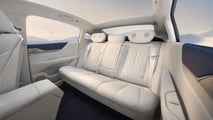
But the Electra L7 felt like GM, or at least SAIC-GM, had taken those comments to heart. See, it feels like China’s mid-tier and premium sedans have kind of all fallen into a similar level of interior quality and expected accoutrements for passengers. Sit in the back of an Xpeng P7+ or Lynk & Co 07, and you’ll realize there isn't a single Chinese-market car (whether ICE or electrified) that isn’t overwhelmingly soft to the touch in its rear quarters. Everything is padded, and adjustable, a far cry from the Velite 6es I’d ridden in the back of as rideshare cars. The Electra L7 finally joins the ranks of China’s best.
Really, it’s overwhelming how downright sumptuous the L7’s interior is. Of course, the unit on display in the dealership was a top trim Avenir model, so this car had every option on the sheet equipped. Still, every single touchpoint was covered in soft and padded leather or vinyl. Both rows of seats were heated and cooled, while the cabin was incredibly quiet.
SAIC-GM even went out of its way to minimize the use of the standard parts bucket options of GM’s switches and knobs; the only familiar thing to me was the turn signal stalk. Everything else felt new, expensive, and well-weighted. Add in the super snappy China-specific infotainment software, and it finally felt like I was in an American-branded car that felt like it was on par with China’s best offerings. It was even priced right, too. The L7 started at $24,000, although the top-of-the-line Avenir would be closer to $31,000. Right on target for plenty of premium line Chinese midsize sedans like the Lynk & Co Z10 or Changan SL03.
It’s a shame that I couldn’t drive it.
You Will Never Get It. Sorry.
It’s clear that SAIC-GM, either with the help of GM’s global assets or operating autonomously, knows how to build a car. The Electra L7 is one of its latest examples. Travel to Mexico or parts of Southeast Asia and you’ll see plenty of “Chevrolet” badged vehicles that are actually captive imports of Chinese Wuling, Baojun or SAIC-GM vehicles sold with a familiar badge. And, it’s working. These cars are selling decently because of their strong value, affordability and perception of quality.
But we’ll likely never get it. The Xiao Yao’s batteries and software are very much intertwined with China’s supply chains. GM CEO Mary Barra has reportedly gone out of her way to disentangle GM’s North American supply chains from China entirely. The prospect of bringing a U.S.-localized version of the Electra L7 to the U.S. would likely take a lot of work, if it's even possible in a political climate that is actively pushing back standards on fuel economy.
And yet Electra L7’s existence proves that brands can actually compete in China, with a little work. That might mean closer ties with Chinese brands and listening to what Chinese folks actually want to buy.
Gallery: Buick Electra L7


The L7 is nice, but Buick isn’t the only brand that’s figuring out how to play ball. Volkswagen has gone to Xpeng for platform and software stuff for its next crop of China-oriented vehicles. Ford and JMC came up with a competitively priced Bronco EREV that, so far, has strong initial impressions among Chinese media. Toyota’s Chinese bZ--series cars sometimes share parts and development with GAC and even BYD batteries. The end results are good.
It’s a shame we won’t ever be able to experience them. But if the “foreign” automakers keep this up, they may have a decent shot at relevance.
Contact the author: kevin.williams@insideevs.com