The Best Advice for Life by Dalai Lama: Hope is one of the few things in life that becomes more valuable precisely when everything else seems to be falling apart. It is easy to remain optimistic when circumstances are favourable, opportunities are abundant, and the future feels predictable. The true test of human strength begins when hardship arrives and asks whether we still believe tomorrow can be better than today.
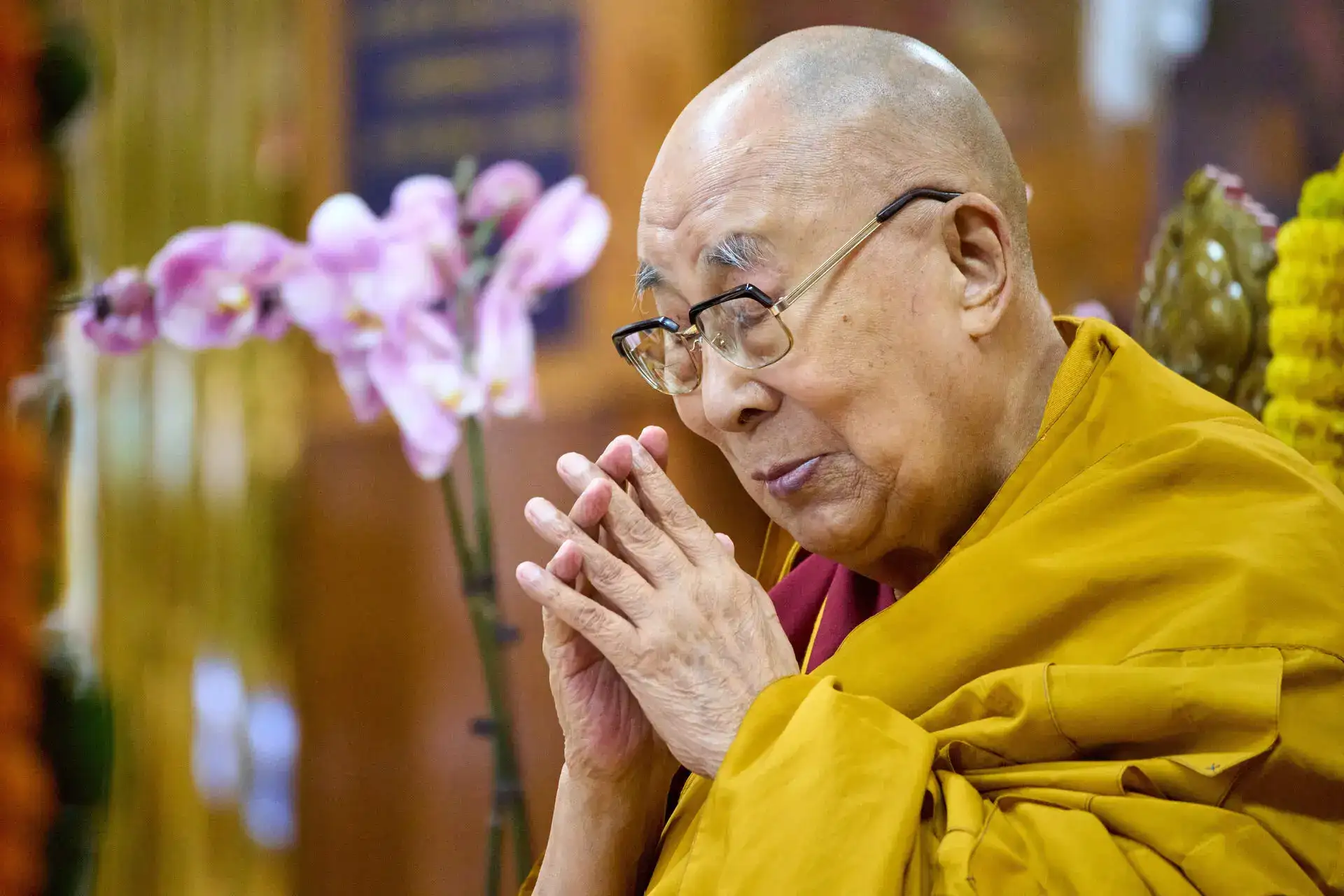
The 14th Dalai Lama has spent a lifetime answering that question with unwavering conviction. His message is uniquely enriching, reminding all of us how pain is inevitable and loss seems unavoidable. Difficult experiences are part of every human journey. But surrendering hope is the one defeat that truly robs us of our future. As long as hope remains alive, possibility remains alive too.
Few people have lived this lesson as completely as the Dalai Lama himself.
The Best Advice for Life by Dalai Lama
“No matter what sort of difficulties, how painful experience is, if we lose our hope, that’s our real disaster.”
Why the Dalai Lama’s life gives weight to his words
Born as Tenzin Gyatso in 1935 in the small village of Taktser in northeastern Tibet, he came from a humble farming family. At the age of two, he was recognized according to Tibetan Buddhist tradition as the reincarnation of the 13th Dalai Lama, becoming both a spiritual symbol and, eventually, the leader of an entire people, as per NobelPrize. org.
From childhood, his life was defined by extraordinary expectations and rigorous education. He began formal studies at the age of six and later earned the prestigious Geshe Lharampa degree, the equivalent of a doctorate in Buddhist philosophy. His education demanded mastery of logic, metaphysics, ethics, and monastic discipline, culminating in intense public examinations before distinguished scholars.
Yet the greatest lessons of his life would not come from books or monasteries. They would come from suffering, displacement, and uncertainty.
At only sixteen years old, he was forced to assume full political leadership when Tibet faced mounting pressure from China. By 1959, after the Chinese occupation, he fled into exile and settled in Dharamsala, India, where he has lived ever since. Everything familiar was left behind. The homeland he loved became inaccessible. His people were scattered across the world, as per NobelPrize. org.
For many, such circumstances would have produced bitterness or despair. Instead, the Dalai Lama chose hope.
The real disaster is not pain but hopelessness
The wisdom behind his famous quote is deeply human. Difficult experiences, however painful, do not define the end of our story. Hopelessness does.
Human beings possess a remarkable ability to endure hardship when they believe there is meaning beyond the suffering. History repeatedly demonstrates this truth. Communities rebuild after wars. Families recover after loss. Individuals rediscover purpose after devastating failures. Hope becomes the bridge between what is broken today and what may flourish tomorrow.
The Dalai Lama has often emphasized that inner peace does not depend entirely on external circumstances. While we cannot always control events around us, we retain the power to choose our response. Hope is not denial. It is not pretending that pain does not exist. Rather, it is the courageous decision to believe that pain will not have the final word.
That distinction matters. Optimism says things might improve. Hope insists that life remains meaningful even while improvement is still out of reach.
Universal responsibility and compassion as sources of strength
One of the defining principles of the Dalai Lama's teachings is universal responsibility. Throughout decades of global travel, interfaith dialogue, and humanitarian work, he has consistently argued that humanity's survival depends on compassion and mutual understanding.
He has met religious leaders from across traditions, including popes, archbishops, rabbis, scholars, and political leaders. Yet his message has remained remarkably consistent. Human beings share the same desire for happiness and freedom from suffering. Recognizing this common humanity creates the foundation for peace.
The Dalai Lama teaches that compassion strengthens hope because it connects us to something larger than ourselves. When we care about others and work to reduce suffering, we discover meaning that extends beyond personal difficulties. Service becomes a source of resilience.
His own efforts in exile reflect this philosophy. He helped establish educational, cultural, and religious institutions to preserve Tibetan identity. He appealed to the United Nations, advocated for peaceful solutions, promoted democratic values, and continued to teach despite enormous personal loss.
Hope, in his understanding, is not passive waiting. It is active participation in building a better future.
What modern life can learn from Dalai Lama's life advice?
Modern society often rewards speed, certainty, and immediate results. We expect solutions quickly and become discouraged when progress takes longer than anticipated. The Dalai Lama's lesson offers an important correction.
Life is not free from difficulty. Careers fail. Relationships end. Health challenges emerge. Dreams sometimes take unexpected turns. These experiences are painful, but they do not have to become disasters. The true danger arrives when disappointment convinces us that nothing worthwhile remains ahead.
Maintaining hope requires practice. It means choosing gratitude when circumstances tempt us toward resentment. It means continuing to act with kindness even when the world feels divided. It means believing that personal growth remains possible despite setbacks.
The Dalai Lama's own life stands as evidence that hope can survive exile, political upheaval, and decades of uncertainty. His enduring commitment to peace demonstrates that compassion and resilience are far stronger than despair.
The Best Advice for Life
“No matter what sort of difficulties, how painful experience is, if we lose our hope, that’s our real disaster." These words are not simply motivational. They are hard-earned wisdom from a man who experienced profound loss without allowing bitterness to define him. The lesson is clear. Pain may visit every life, but hopelessness does not have to stay.
As long as we preserve hope, we preserve the possibility of renewal. We preserve our ability to love, to create, to serve, and to begin again. The future remains open to those who refuse to surrender their belief in it.
For more news like this visit The Economic Times.