
Animals Hide Pain Better Than We Thought, And We Now Know How to Find It
For decades, the standard assumption was that a quiet pet was a comfortable pet. A 2016 study published in PLOS ONE, and subsequent research from the University of Lincoln, changed that. Cats in particular suppress pain behaviour as a survival mechanism, showing distress makes them vulnerable in the wild, and domestication has not erased that instinct. Dogs are only marginally more expressive.
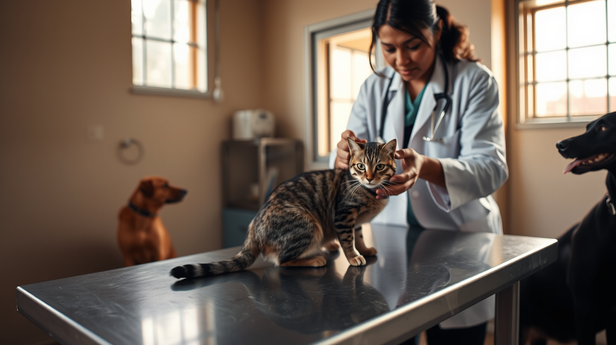
Veterinary pain assessment now uses validated scales: the Glasgow Composite Measure Pain Scale for dogs, and the Feline Grimace Scale developed by researchers at the Université de Montréal in 2019. The Feline Grimace Scale reads five facial action units, ear position, orbital tightening, muzzle tension, whisker change, and head position, to score acute pain in cats without any behavioural cue from the animal. Indian pet owners visiting clinics that use this scale will notice vets photographing or observing their cat's face before touching the animal. That is not a formality. It is the assessment.
The practical consequence: chronic pain in older dogs and cats was massively underdiagnosed before these tools existed. Osteoarthritis, for example, now appears in studies to affect over 40 percent of cats over seven years of age. Many of those animals were not limping. They were just quieter, less willing to jump, or eating more slowly, signs that were attributed to ageing rather than treatable pain.
The Pet Microbiome Is Real and It Changes What We Feed Them
The gut microbiome research that reshaped human nutrition has a direct parallel in veterinary science. Studies from the Waltham Petcare Science Institute and from North Carolina State University's College of Veterinary Medicine have established that dogs and cats carry distinct gut bacterial communities that respond to diet, antibiotics, and stress in measurable ways.
The finding with the most immediate consequence for pet owners: a single course of antibiotics can alter a dog's gut microbiome for months, sometimes permanently at certain bacterial population levels. This has changed how vets prescribe, shorter courses where clinically defensible, and a growing interest in pre- and probiotic support post-treatment.
On nutrition specifically, the science has moved away from the old protein-percentage fixation. The amino acid profile matters more than the total protein number. Taurine deficiency in dogs eating certain grain-free diets became a significant concern after the US FDA flagged a possible link to dilated cardiomyopathy in 2018 and 2019. The grain-free premium pet food market in India has grown sharply, and that FDA signal is worth knowing: the relationship between grain-free diets and cardiac risk in dogs is still being studied, but it has already prompted many vets to recommend taurine supplementation or diet rotation for dogs on these formulas.
Dental Disease Is Not a Cosmetic Problem
The Cornell Feline Health Center and multiple peer-reviewed studies in the Journal of Veterinary Dentistry have established a clear systemic connection between periodontal disease and organ damage. Bacteria from infected gum tissue enter the bloodstream and have been found in kidney, liver, and cardiac tissue in dogs and cats with advanced dental disease.
Periodontal disease affects an estimated 80 percent of dogs and 70 percent of cats over three years of age. In India, where dental care for pets remains largely reactive, owners bring animals in when a tooth is visibly broken or the breath is severe, this number has significant consequences. Kidney disease is already the leading cause of death in older cats. The dental-kidney connection means that a Rs 3,000 dental cleaning is not a luxury grooming service. It is preventive nephrology.
The other dental finding that changed clinical practice: tooth resorption in cats, where the tooth structure is literally absorbed by the body, is now understood to be far more common and far more painful than previously recognised. It requires extraction, not monitoring.
Vaccine Protocols Have Become More Precise, and Less Frequent
The World Small Animal Veterinary Association guidelines, updated over the last decade, now distinguish clearly between core vaccines and non-core vaccines. Core vaccines for dogs, distemper, parvovirus, adenovirus, carry duration-of-immunity data showing protection lasting three years or more after the initial series. Annual boosters for these are no longer the global standard.
This matters for Indian pet owners because annual multi-vaccine packages remain common at many clinics. The shift toward titre testing, a blood test that measures existing antibody levels before deciding whether a booster is needed, is now supported by the American Animal Hospital Association and WSAVA. A dog with adequate titres does not need the vaccine that year. Over-vaccination carries a small but documented risk of injection-site reactions and, in rare cases, immune-mediated disease.
Rabies vaccination schedules remain non-negotiable in India given the public health context, and no titre test substitutes for rabies compliance under Indian law. But the broader principle stands: more vaccines on a fixed annual calendar is not automatically better medicine.
What Pain, Gut Health, Teeth, and Vaccines Have in Common
Each of these advances arrived from a different corner of research, but they share a single underlying correction: veterinary medicine spent decades treating pets as small humans or as livestock, and neither model was accurate. Dogs and cats have species-specific physiology, species-specific pain expression, and species-specific nutritional needs that required their own research base to understand. That base now exists. The pet owner who acts on it, asking their vet about pain scoring, about microbiome-aware antibiotic use, about titre testing, about dental cleanings as organ protection, is not being demanding. They are practicing the medicine that the last decade actually produced.