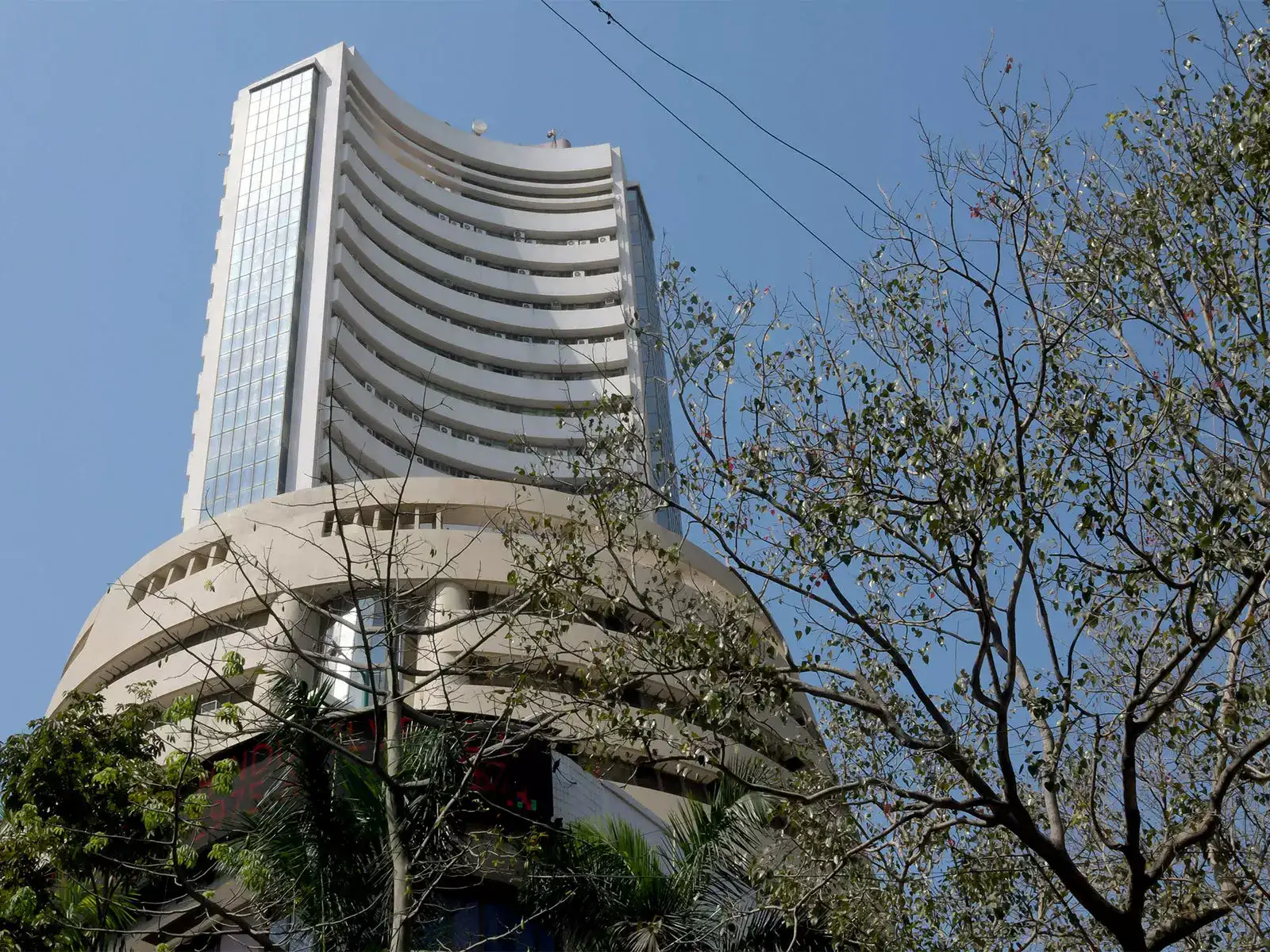
Indian stock market recorded marginal gains to close in the green, with Sensex and Nifty snapping a four-session losing streak even as rupee erased all morning gains to hit a fresh lifetime low despite government’s measures to support the Indian currency.
Sensex gained around 49 points to close at 74,609 while Nifty 50 rose 33 points to end the session at 23,413 on Wednesday. This came even as India VIX, which measures volatility in markets, inched up slightly to 0.36.
Asian Paints, Tata Steel, Adani Ports, Bharat Electronics, Bharti Airtel and L&T shares were the top gainers on Sensex, jumping 2-4% each. On the other hand, Infosys, M&M, Sun Pharma, Tech Mahindra, TCS and Power Grid shares declined over 1% each to lead losses.
Metal stocks soared as gold and silver prices jumped after the Indian government hiked import duties on the precious metals to 15%. The Nifty Metal index surged over 3% despite the muted market sentiment. Nifty IT however declined over 1% to lead losses.
Midcap stocks recorded sharp gains, pushing the Nifty Midcap 100 index 0.77% higher. The Nifty Smallcap 100 index meanwhile gained 0.36%. Around 1,962 stocks advanced on NSE, while 1,303 declined and 113 remained unchanged.
What lies ahead?
“Domestic benchmark indices closed flat with a cautious undertone, while broader markets outperformed on dip buying and short covering in mid- and small-cap stocks,” said Vinod Nair, Head of Research at Geojit Investments.
“Inflation inched higher domestically but remained below expectations, offering some near-term comfort. However, prolonged Middle East tensions and elevated commodity prices could restrict the RBI’s policy flexibility if inflationary pressures persist. Globally, sticky US inflation continues to strengthen the higher-for-longer rate narrative, supporting the US dollar and weighing on risk assets. At the same time, AI-driven themes are witnessing strong global inflows due to better earnings visibility and long-term structural growth potential. Markets will now closely monitor the US–China summit for further clarity on trade and geopolitical developments,” the analyst said.
Rupee hits all-time low
Rupee erased all morning gains to decline to breach 95.80 against the US dollar for the first time ever. The Indian currency then recovered some losses but closed at an all-time low closing level to 95.71.
Iran-US ceasefire weakens
US President Donald Trump is reportedly growing increasingly frustrated with how Iranian leaders are handling negotiations to end the war, with some close aides saying he is more seriously considering resuming major combat operations that could render the ceasefire ineffective, CNN reported, citing sources.
This comes a day after Trump said the fragile ceasefire with Iran was “on life support” after Tehran rejected a US proposal to end the war and instead presented a list of demands that Trump described as “garbage”.
Trump said Iran’s response threatened the ceasefire that began on April 7. “I would call it the weakest right now, after reading that piece of garbage they sent us. I didn’t even finish reading it,” he told reporters. These developments further dimmed hopes for an early resolution to the Middle East conflict.
Oil prices
Oil prices declined slightly but remained comfortably above the crucial $100-per-barrel mark. Brent crude fell 1% to $107 per barrel, while WTI crude also declined around 1% to $101 per barrel. This comes amid the US military blockade around the Strait of Hormuz, a narrow 33-kilometre waterway connecting the Persian Gulf with the Gulf of Oman that handles over 20% of the world’s daily oil and gas shipments.
FII selling continues
Foreign institutional investors (FIIs) continued to remain net sellers of Indian equities, offloading shares worth Rs 1,959 crore on Dalal Street on Monday, according to NSE data. This marked the sixth consecutive session of selling by foreign investors. While this does not reflect their activity on Wednesday, persistent FII selling continues to weigh on sentiment.
(With inputs from agencies)
(Disclaimer: Recommendations, suggestions, views and opinions given by experts are their own. These do not represent the views of The Economic Times)