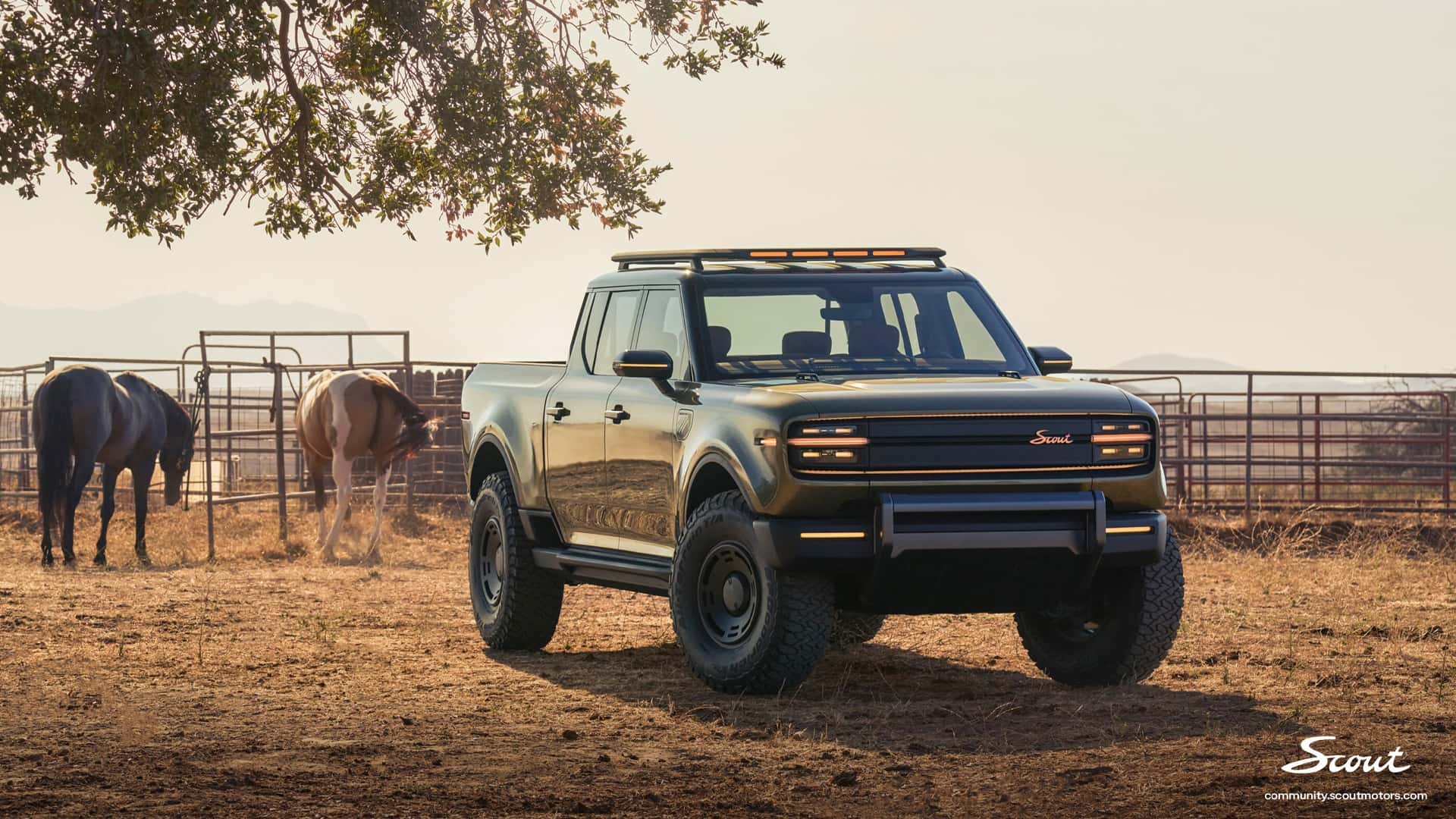
Scout—the blue-collar Volkswagen spin-off that's giving the Germans a chance to launch an electrified truck in the U.S.—is not a cheap expedition for parent company Volkswagen.
(Correction: An earlier version of this story was focused on Scout's factory being "over budget" from its original $2 billion estimate. But Scout always framed that as the "minimum" investment, and confirmed in an email to InsideEVs that the project is not "over budget," as the article claim. The story has been updated to be accurate. We regret the error.)
The Scout factory currently under construction in South Carolina will now cost an estimated $3 billion, according to reporting new reporting from Handelsblatt. That's already a billion more than the "minimum investment" of $2 billion that Scout announced previously.

Scout confirmed the increased figure to Handelsblatt. The original $2 billion was merely a "guaranteed minimum investment," a company spokesperson told the outlet. The company also said the construction still fits with Scout's overall business plan.
One of the reasons for the increase is a $300 million facility expansion announced in September in the form of a supplier park. Scout says that the expansion will increase efficiency and create a number of additional local jobs to help fuel its factory and pump out electrified trucks. But for its parent company, this means spending some additional coin that wasn't exactly planned.

Per Handelsblatt (translated):
The increased spending is likely to reignite the debate within the company. "Scout is under pressure. Wolfsburg is watching developments in South Carolina very closely," said a company insider.
Perhaps a bigger question is Scout's timing. Though it's entering the North American electrified vehicle market in a time where EVs aren't exactly gaining traction stateside, the company maintains that it's optimistic about its prospects. Scout CEO Scott Keogh said as much in a recent interview with InsideEVs.
Indeed, its Traveler SUV and Terra pickups have racked up 150,000 reservations and are hotly anticipated as Rivian-like lifestyle vehicles. In particular, its range-extended EV options top the reservation charts. That could be a boon—and separate it from the battery-only competition.