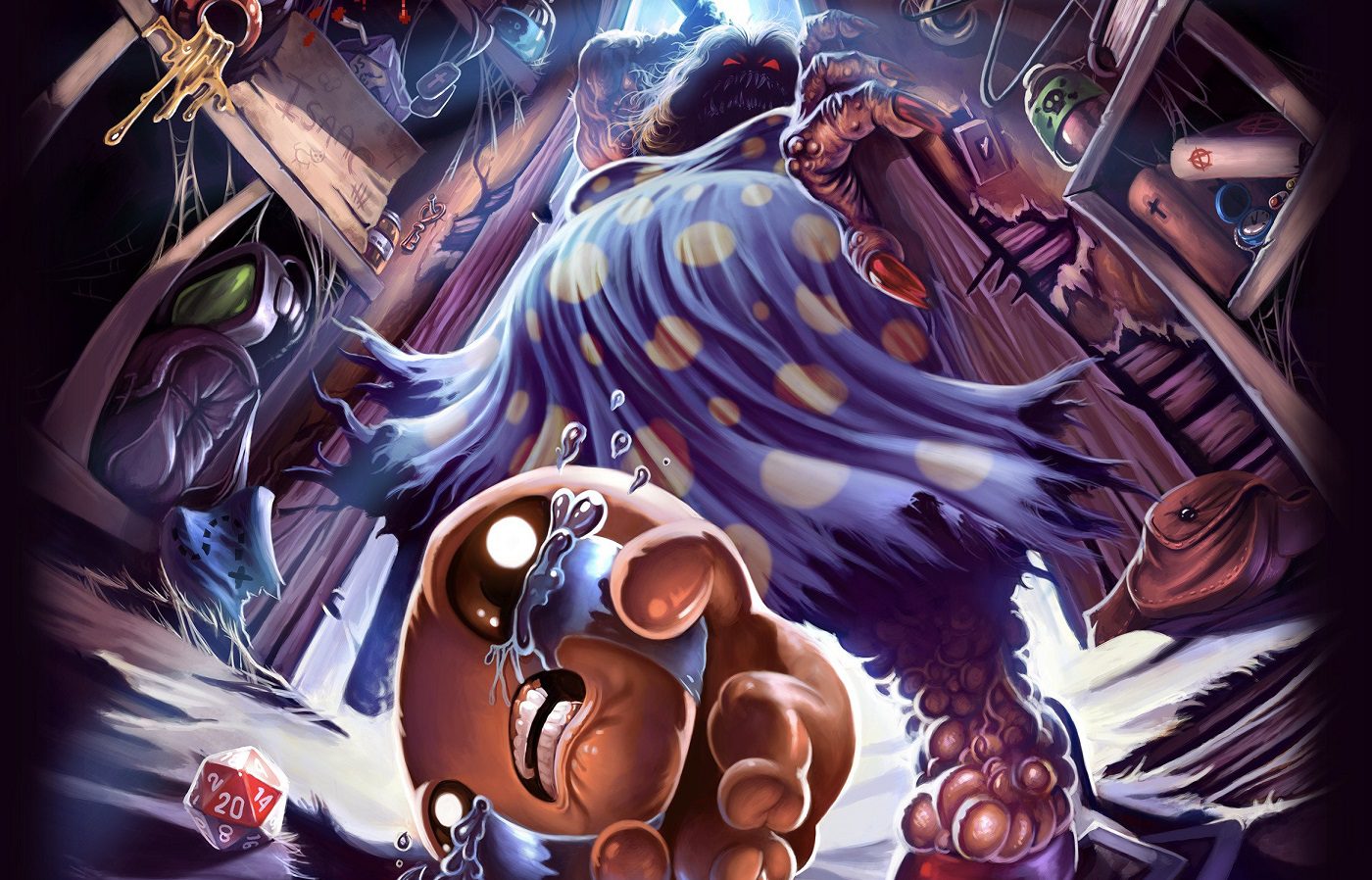
The Binding of Isaac creator Edmund McMillen and his friend and Mewgenics' co-creator Tyler Glaiel spoke with Destructoid about The Binding of Isaac and the state of the roguelike genre in the video game indie scene.
We already spoke with the duo during a hands-on preview of Mewgenics, where they explained their ambitious plan to make it "the most fun" game they've ever made. This time, though, we've asked them questions about the current state of the roguelike genre, especially because Steam never had so many roguelikes published in a single year as in 2025.
Destructoid: We'll get The Binding of Isaac on Switch 2 at $70. Do you think the price is too high?
Tyler: Well, that's for a limited physical edition; it’s not the price of the game on digital.
Edmund: The price of the game in the digital version is like $60 with all of its DLCs. It's like $58 without tax. So it's only like roughly $10 more for the physical part of it.
Tyler: They’re collectors' things. You're not printing a billion physical copies of the game to try and sell them in Walmart or anything.
Edmund: But truth be told, I'm not in control over that sort of stuff. But I think I think the biggest misconception is that people go and look at The Binding of Isaac and they see that the game is $20, and they're like “well, why am I paying $70 for a game that's $20?”, but that's the complete version, and the complete version costs $60. I think that's usually, I think that's the misconception that people are going off of.

Destructoid: 2025 is already the year with the most Roguelike games released on Steam ever, with Megabonk leading the pack right after 2024, which had Balatro. What are your thoughts on the current state of the genre?
Tyler: We barely know what the definition of roguelike is anymore. I think people are just using it as like shorthand for indie game at this point. So I'm not sure that that's a good statistic. Like, Balatro is an amazing game. It is tagged as a roguelike. I'm not sure it counts as a roguelike or a roguelite.
Edmund: Yeah, it's getting a little broad; it's covering too many things at this point.
Tyler: If you have a definition of roguelike. It’s usually a randomly generated adventure, permadeath, and infinite combos. And Balatro hits that infinite combos kind of thing, but it's not like randomly generated.
Edmund: I think we just need a new name for randomly generated content. I think that's what it's become. People say “roguelike” or “roguelite” or whatever, and they just mean “random rerun”. It just means a game with random elements that you play over and over again.
Tyler. Yeah. In that case, Balatro would fall under that definition.
Edmund: Everything would [laughs]. That’s why there are so many roguelikes coming out.
Tyler: The traditional roguelike people think that every roguelike needs to be like an ASCII art on a grid, turn-based, and exactly play like Rogue did back in like 1980 … They're very bad at the word getting diluted, but I've also heard someone say they’re modern arcade games.
Edmund: I think I've said that!
Tyler: Yeah, you said that as well. But that sounds more correct for a lot of these, although less correct for Mewgenics because it's not an arcade. It's definitely not a modern arcade game because there's like an overarching campaign and story and stuff, which is missing in stuff like Balatro or Slay the Spire.
Edmund: If anything, I would say there's more of a... The new theme for indie games is: let's take a classic board game or existing board game’s generalized idea and turn it into a video game with randomly generated elements. I think that's what's happening. You see games like Balatro or Ball x Pit that are remixing classic ideas. Even Mewgenics is a remix of a bunch of different board games. It’s what indies have been doing forever, which is remixing the stuff that you're the most familiar with. It used to be video games. Super Meat Boy is my remix of Mario, and Isaac was my remix of The Legend of Zelda. I think that's more the theme than the word roguelike.
Tyler: But that is why there's so many things that count under roguelike that wouldn't have 10 years ago, which is probably why it's such a good, large genre.
Edmund: But if the question is, why are so many games randomly generated right now? The answer is because you get a lot of gameplay out of that. You get emergent, interesting gameplay that feels like it's alive and infinite. And that is really, really satisfying to play.
Tyler: Adding the sort of actual failure condition to a game is only something you can truly do in a roguelike shell. You can't make Halo like "if you pick the wrong gun, you can't beat the game." You can't do that in a single-player game. You can't do Elden Ring if it locks in the weapons that you picked immediately, and doesn't give you respecs, because you could just end up in a situation where you can't beat the game anymore. And people would complain, and I would kind of agree that you can't do that. But in a roguelike, you can absolutely do that. You can be like, “You've made so many bad decisions, your run is over, try again.” And I think that’s the core that makes the genre interesting compared to the alternatives.
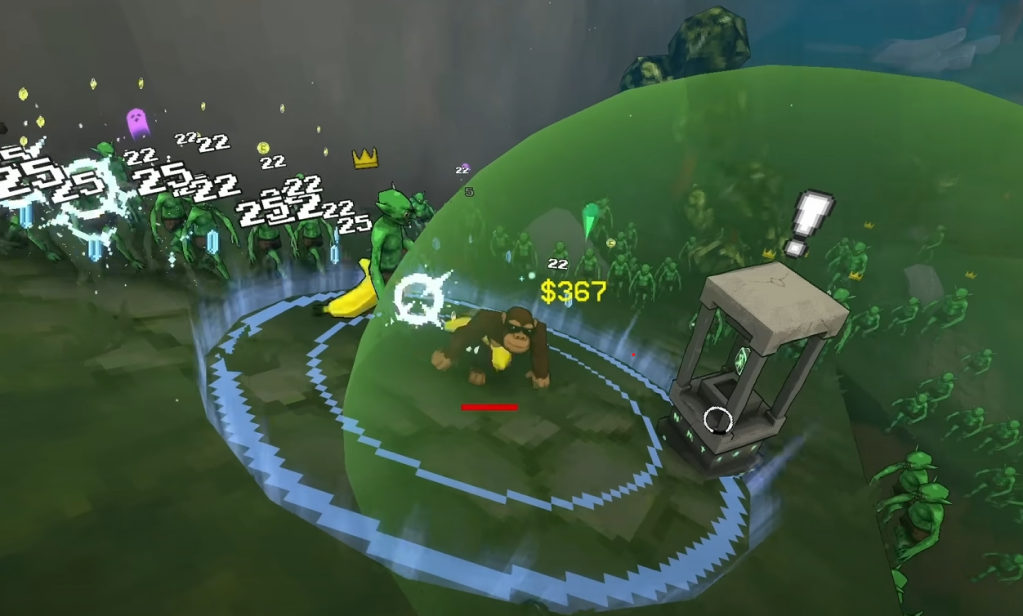
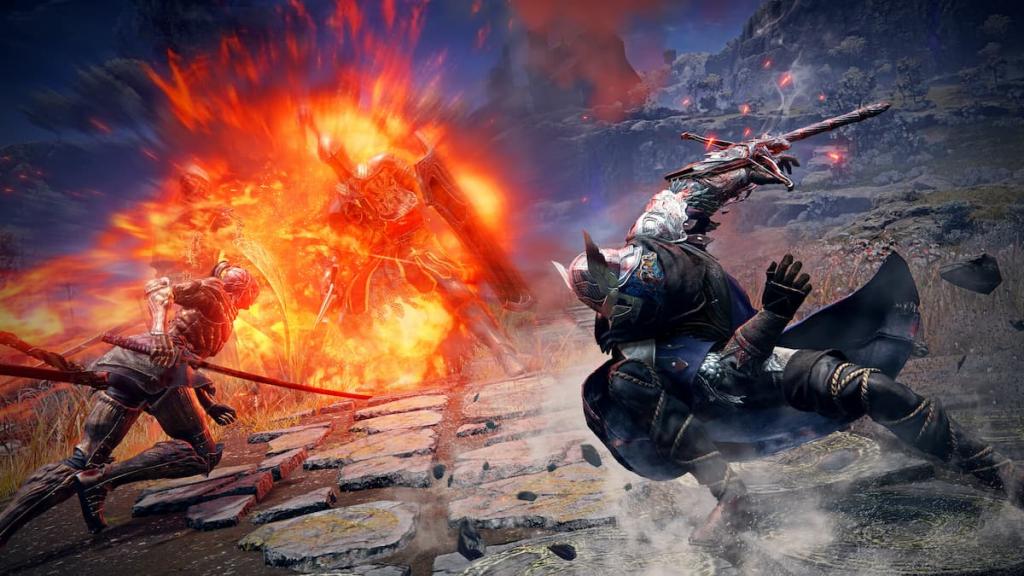
Destructoid: We’re seeing some AAA franchises testing the roguelike formula, like Elden Ring Nightrein, and the upcoming Warhammer Survivors. What are your thoughts on these bigger companies trying the genre?
Tyler: I think that the roguelike is such a good genre for indies because we can do stuff that AAA games can't in this genre.
Edmund: It's risky and it’s weird.
Tyler: We can make 20,000 items in the game that all do crazy, weird, broken things with a potential to break, like when you were talking about Megabonk putting so much s*** on the screen that it slows down. That stuff will not fly in an AAA game with high production value. They will not let you do things that are weird and fun like that and break the game or crash it. A true AAA, The Last of Us-style game isn't going to want to have any amount of jink in their controls, enemies, items, or anything. Whereas that's the lifeblood of a giant roguelike.
There's an implicit understanding that if you mix A and B together and these things are wildly different, that it's probably gonna do something interesting, but it might not be like the cleanest thing that could happen. I know there's a lot of s*** like that in Isaac where, you know, my tears are just doing something. They're like teleporting around and not hitting things anymore.
Edmund: Yeah. Imagine a mainstream studio putting something like [The Binding of Isaac's item] TMTRAINER in the game. We've accepted that you pick the item up, and it could crash the game. Not gonna happen.
Tyler: You're not gonna play GTA and then fight the thing that turns every person into a cop car or whatever. They're not gonna do that in GTA 6, I could guarantee you. I mean, maybe a cheat code or a mod, but they're not including that in the game.
Edmund: There are still games like Diablo and XCOM… they are roguelikes. And they are multi-million dollar, large company studio-type games. They do get made. I think… I don't f****** know what the industry is doing.
Tyler: I liked Returnal, but it did feel like they shaved off all the little edges that a roguelike normally has.
Destructoid: Do you guys think with so many roguelikes coming out and lots of indie games calling themselves roguelikes, we could be close to roguelike fatigue?
Edmund: I don’t think so. These are just games.
Tyler: They’re all so different from each other. This isn't the same thing as people being like, “Oh, I'm sick of every game being an extraction shooter,” because when every game's an extraction shooter, they all kind of have the same structure, and they play the same. The normal genre trends are closer together to each other than a roguelike is. I think it would be similar to saying that there is like a 3D game fatigue. It's just a wide thing that… maybe people will get tired of certain types of roguelikes. People were starting to get tired of all the deck builders that came around after Slay the Spire.
Edmund: People will get tired of like-likes, but not the true ones.
Tyler: But then Balatro comes out and does its own thing that is not anything like Slay the Spire, and it's still a deck builder, and people like it again. They don't want to play one game and then play another game that's like the same one that they just played, and then play another game that's like the one they just played, repeatedly. They want to experience new things.
The lifeblood of the genre is that every time you play a run, it’s completely different. And there's a lot of roguelikes that don't quite do that correctly or capture that feeling correctly. They either like, give you too many rerolls so you can just do the same build every round that you want. Or they were made on a small budget in one and a half years of development cycle, and just don't have a lot of content in it, and are just using the formula to stretch that small amount of content out as thin as it'll go. And I think that those are the ones that people are usually getting tired of when they complain about.
The post Roguelike fatigue isn’t coming, but the genre’s definition has become meaningless, says The Binding of Isaac creator appeared first on Destructoid.