
Endorsements are one of the ways voters learn who candidates are and what they stand for. They can be particularly useful for voters in two types of elections: in partisan primaries, when voters may find it difficult to discern differences between candidates with the same party affiliation, and in nonpartisan local elections, when party labels don't appear on the ballot and little other information is available about each candidate. A number of both types of elections took place on Aug. 11.
Ballotpedia tracks endorsements from organizations we call Recognized Endorsement Contributors (RECs): groups including political action committees, local associations, unions, media editorial boards, and more that publicly support candidates and communicate those choices to voters. In the Aug. 11 statewide elections, we tracked 1,924 endorsements from 276 RECs across five states: Alabama, Connecticut, Minnesota, Vermont, and Wisconsin. These included 158 endorsements of candidates in local races.
Local primaries
Endorsements can be particularly helpful in local primaries, which are often officially nonpartisan. In these instances, voters can’t rely on the party label, which typically gives them a quick sense of what a candidate stands for. Endorsements can help voters understand where a candidate may fall along more traditional party lines, as well as reveal ideological leanings, policy preferences, or relationships with other individuals and groups. Here are some case studies that illustrate this point.
Mayor of Rochester, Minn.
Three RECs endorsed competing candidates in the nonpartisan primary for mayor of Rochester, Minn. This southern Minnesota city had 121,000 residents as of the 2020 census.
- Jess Garcia finished second in the primary with 24.5% of the vote and advanced to the general election. Endorsements Ballotpedia tracked for Garcia included the Minnesota Association of Professional Employees .
- Benjamin Zastrow finished fourth in the primary with 7.2% of the vote. Endorsements Ballotpedia tracked for Zastrow included Forward Independence, the state affiliate of the Forward Party .
- Axe Abdimajid Ahmed finished sixth in the primary with 3.6% of the vote. Endorsements Ballotpedia tracked for Ahmed included Mamdanification , a Sway voting group.
Partisan primaries
In partisan primaries, endorsements can help voters discern meaningful differences between candidates who otherwise share the same party affiliation: differences in policies, approaches to electability, commitment to principles, and more.
One such example from Aug. 11 was the Republican primary for Wisconsin’s 7th Congressional District. Different RECs supported two of the three candidates who received the most votes in this primary:
- Michael Alfonso won the primary with 48.9% of the vote. Endorsements Ballotpedia tracked for Alfonso included Turning Point Action, President Donald Trump (R), and Dick Uihlein.
- Jessi Ebben finished third with 15.6% of the vote. Endorsements Ballotpedia tracked for Ebben included Club for Growth and Liz Uihlein.
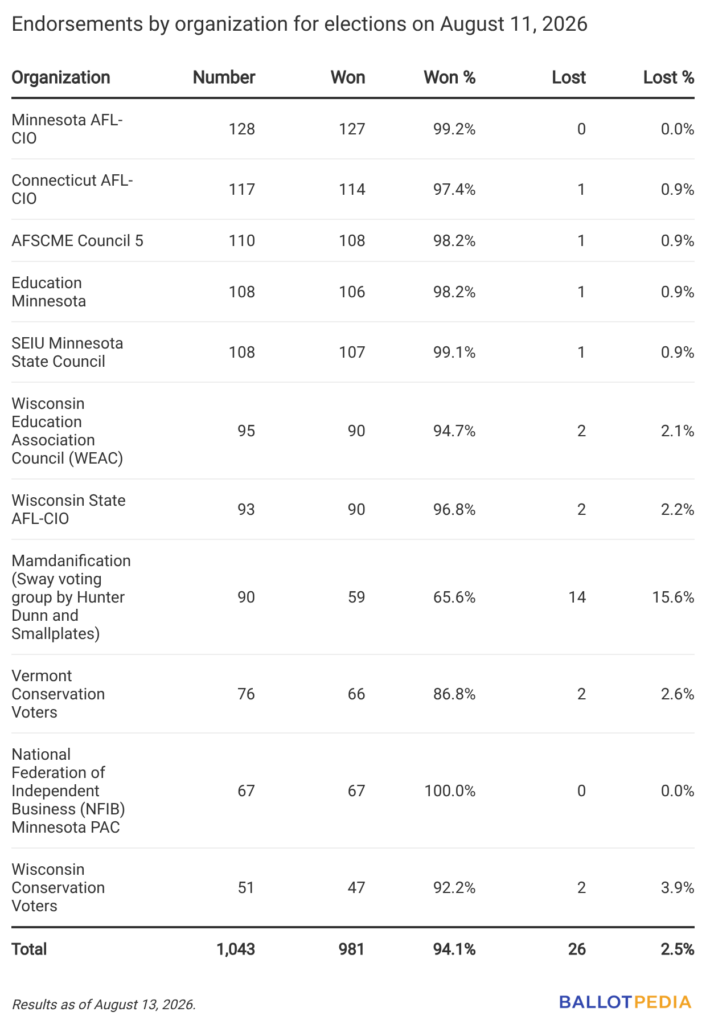
We identified 11 RECs that issued more than 50 endorsements each in these primary elections. The table below displays the organizations and their endorsee success rates. Candidates endorsed by these organizations won 94% of their races, lost 2%, and the remaining races were uncalled.
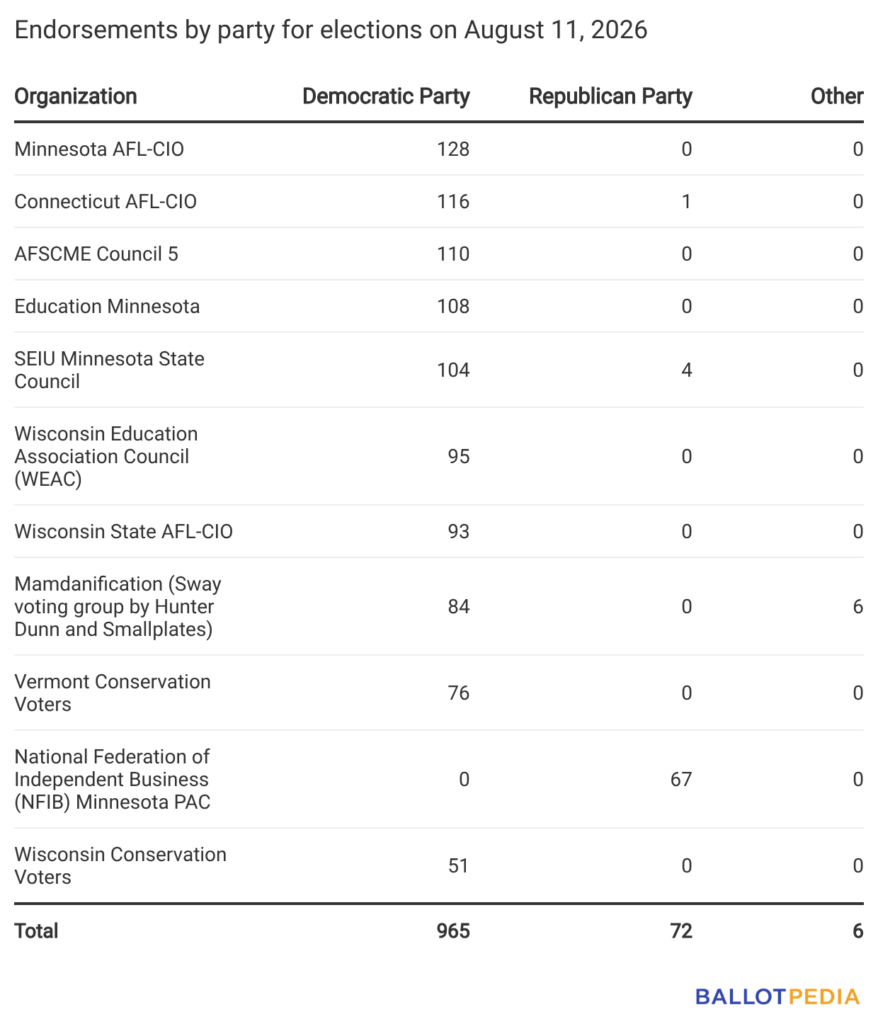
Among these organizations, two endorsed candidates from multiple political parties in these partisan primaries:
- Connecticut AFL-CIO: Endorsed 116 Democratic candidates and one Republican candidate (State Rep. Tom Delnicki in District 14).
- SEIU Minnesota State Council: Endorsed 104 Democratic candidates and four Republican candidates.
The remaining organizations endorsed candidates from one major political party in these partisan primaries. The table below displays the partisan affiliation for all candidates endorsed by these 11 RECs.
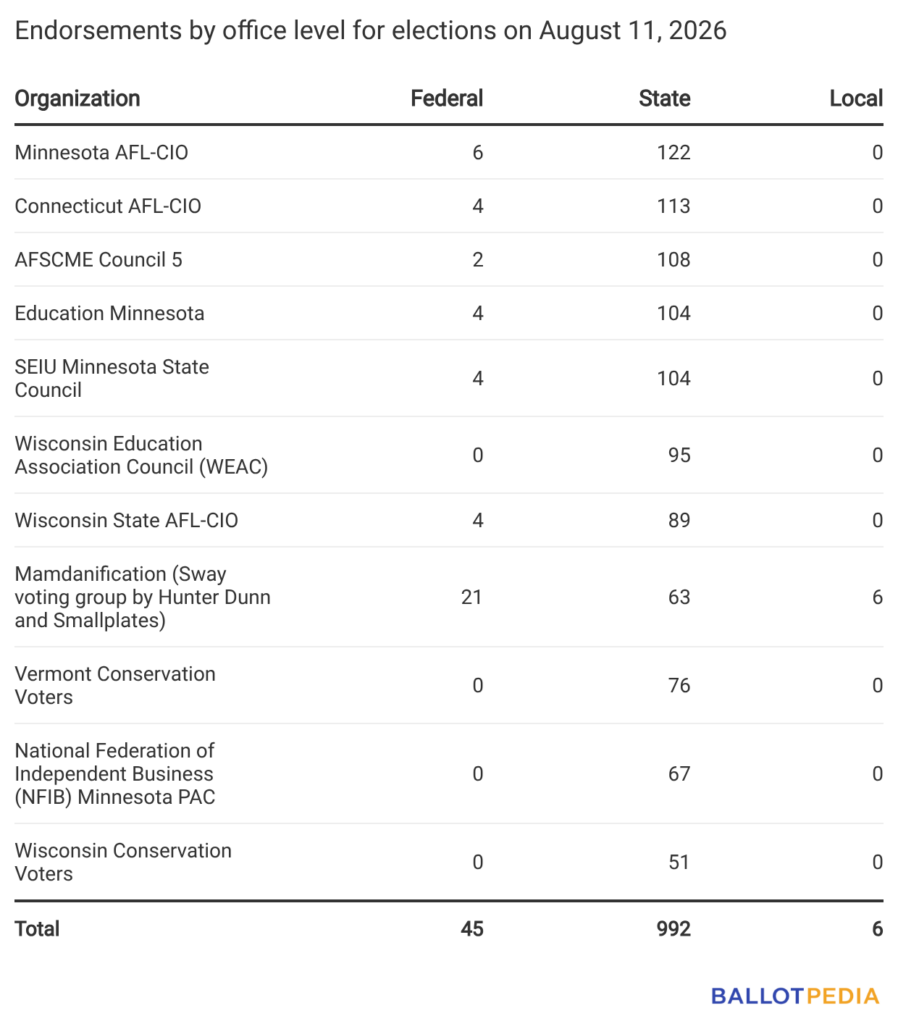
Endorsements by these 11 RECs were mostly in state primaries (992), followed by federal primaries (45). One of the 11 RECs — the Mamdanification Sway voting group — issued endorsements in local-level races. The table below displays endorsements issued by these RECs by level of government.
Endorsements are statements or actions that an individual or group provides in support of a candidate, but they are also much more than that. Endorsements reveal alliances, ideological leanings, and potential policy priorities in ways that campaign platforms and quotes from a candidate sometimes can’t. Endorsements also play a practical role in campaigns. Many endorsers — especially for statewide and national candidates — can provide candidates with volunteer support, access to possible campaign donors, and give candidates a degree of credibility and notoriety.
Ballotpedia is tracking endorsements made by organizations in races at all levels of government, with a particular focus on groups that endorse candidates at the local level. Endorsements are one component of Ballotpedia's goal to provide robust information — data that helps voters understand who a candidate is and what their political philosophy is — for every office on the ballot.