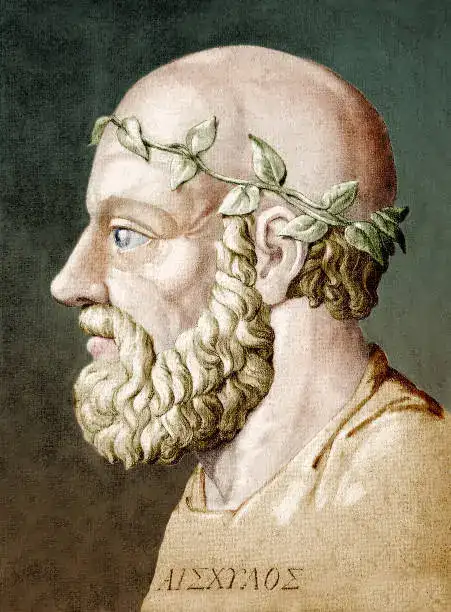
Quote of the day: Long before modern psychology, relationship advice columns, or social media debates about “toxic friendships,” ancient Greek playwright Aeschylus was already exploring the fragile balance between human relationships and opposing personalities. Widely regarded as the “Father of Tragedy,” Aeschylus transformed Greek drama into a powerful art form that examined justice, pride, conflict, and reconciliation. His plays were filled with kings, warriors, gods, and moral dilemmas, yet many of his observations about life remain deeply relatable even centuries later.
Among his enduring reflections is a quote that speaks directly to the tensions people experience in friendships, families, workplaces, and society itself. The line compares incompatible personalities to two substances that cannot truly blend, offering a striking metaphor about emotional conflict and human nature.
Quote of the day today
“If you pour oil and vinegar into the same vessel, you would call them not friends but opponents.”
The quote by Aeschylus uses a simple image from everyday life to express a larger truth about relationships. Oil and vinegar may occupy the same container, but they naturally separate instead of becoming one. In the same way, some people may share space, responsibilities, or even history, yet remain fundamentally opposed in values, intentions, or temperament.
Who was Aeschylus?
Aeschylus was born around 525 BCE and became one of the most influential dramatists in classical Athens. He lived during a transformative period in Greek history, witnessing wars, political upheaval, and the rise of Athenian democracy. Unlike many writers who observed history from a distance, Aeschylus fought in major battles against the Persian Empire, including the Battle of Marathon.
His dramatic works elevated Greek tragedy into something intellectually and emotionally profound. Before Aeschylus, theatre relied heavily on choruses and limited interaction between characters. He revolutionized storytelling by introducing a second actor, allowing for richer dialogue, deeper conflict, and greater dramatic tension.
Though he wrote nearly 90 plays, only seven survive today, including Persians, Prometheus Bound, and the celebrated Oresteia trilogy. His writing explored justice, revenge, fate, and the moral consequences of human choices. Many scholars believe his plays helped shape Western dramatic tradition itself.
Yet beyond the grand themes of war and divine justice, Aeschylus also understood ordinary human friction. His quote about oil and vinegar reflects an awareness that not every relationship can exist peacefully, no matter how close the connection may appear on the surface.
Thought behind the metaphor
The brilliance of the quote lies in its simplicity. Oil and vinegar are often placed together in cooking, but unless continuously stirred, they separate almost immediately. Aeschylus uses this image to describe relationships that lack compatibility or mutual understanding.
The quote does not necessarily suggest hatred. Instead, it highlights the reality that some personalities naturally clash. Two people may have entirely different worldviews, emotional needs, ambitions, or values. When forced together, tension often replaces harmony.
In modern life, the metaphor can apply to:
- Friendships built on convenience rather than trust
- Workplace relationships filled with competition
- Romantic partnerships lacking emotional compatibility
- Family disagreements rooted in opposing beliefs
- Social divisions shaped by ideology or ego
Aeschylus reminds readers that proximity alone does not create unity.
Quote of the day meaning
At its core, the quote is about incompatibility and emotional truth. Aeschylus suggests that relationships cannot thrive merely because people occupy the same environment. Genuine friendship requires shared respect, understanding, and willingness to coexist peacefully.
The quote also warns against forcing harmony where conflict constantly exists. Many people spend years trying to maintain relationships that repeatedly drain them emotionally. Aeschylus’ metaphor suggests that some differences are too fundamental to ignore.
However, the quote can also be interpreted more thoughtfully. Oil and vinegar, while separate, can still create something meaningful when balanced properly, such as a salad dressing. That modern interpretation adds another layer: opposites may not fully merge, but with effort and understanding, differences can sometimes produce balance rather than destruction.
In that sense, the quote becomes less cynical and more realistic. It encourages people to recognize incompatibility honestly while also understanding the importance of respect and emotional awareness.
Why Aeschylus’ words still matter today
Despite being written more than two millennia ago, the quote feels remarkably modern. Today’s world is filled with debates, polarization, and constant social interaction online. People are more connected than ever, yet often divided by politics, identity, opinions, and personal values.
Social media especially amplifies conflict. Individuals with opposing beliefs are placed into the same digital “vessel,” where arguments quickly erupt. Aeschylus’ observation about opponents sharing space without genuine harmony mirrors many modern conversations.
The quote also resonates in personal growth discussions. Many therapists and self-help experts encourage people to evaluate whether certain relationships are healthy or emotionally sustainable. Aeschylus expressed a similar idea through poetic imagery centuries earlier.
His words encourage reflection:
- Are some conflicts unavoidable?
- Can every relationship truly be repaired?
- When should people accept incompatibility instead of fighting it?
These questions remain deeply relevant.
A playwright fascinated by conflict
Conflict was central to Aeschylus’ dramatic vision. His tragedies often examined cycles of revenge, clashes between family members, and battles between justice and anger. In the
Oresteia, for example, violence continues through generations until law and reconciliation finally replace vengeance.
That fascination with opposition makes the oil-and-vinegar quote especially fitting. Aeschylus understood that conflict is not always loud or violent. Sometimes it exists quietly beneath the surface, separating people despite outward closeness.
Yet many of his plays also suggest that wisdom comes from recognizing these tensions honestly rather than pretending they do not exist.
A lesson in emotional awareness
The quote ultimately serves as a reminder to choose relationships carefully and understand human differences with maturity. Not everyone will think alike, connect naturally, or coexist peacefully. Pretending otherwise can lead to frustration and emotional exhaustion.
At the same time, Aeschylus encourages readers to observe relationships honestly instead of idealizing them. Some connections flourish because of mutual respect and shared values. Others remain divided despite repeated attempts at harmony.
Centuries after his death, Aeschylus’ reflections still carry emotional power because they speak to a universal truth: people, like oil and vinegar, do not always blend simply because they are placed together.