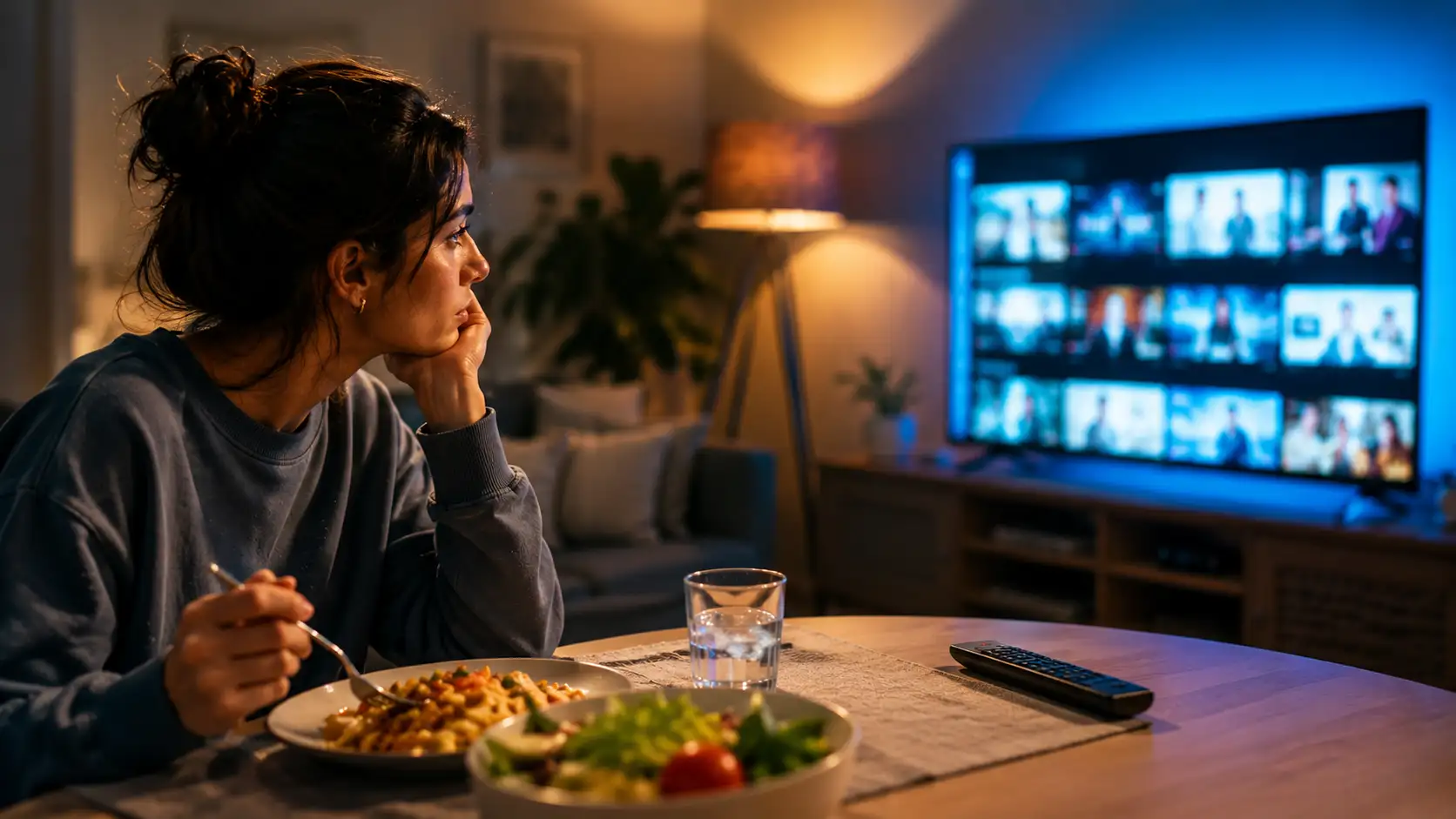
For many adults, dinner no longer starts with food. It starts with a remote control. They sit down with a meal, turn on the television and open a streaming app. Then something interesting happens. Five minutes pass. Ten minutes pass. They scroll endlessly through dozens of options but still cannot decide what to watch. Sometimes the meal is finished before they even choose something. At first glance, this may seem silly or indecisive. But psychology suggests something much deeper is happening. People are often not looking for entertainment. They are looking for emotional comfort after a mentally exhausting day. Several psychological theories help explain why this habit has become increasingly common.
Choice Overload Is Quietly Exhausting The Brain
One of the biggest explanations comes from Choice Overload Theory. Humans enjoy having options, but only to a certain point. Too many choices can overwhelm the brain instead of empowering it. Research from Columbia University has explored how excessive choices can reduce satisfaction and increase indecision. Streaming platforms now offer thousands of possibilities. The brain suddenly has to answer multiple questions. Should it be funny? Should it be relaxing? Should it be educational? Should it be familiar?
What was once entertainment becomes another decision-making task.
Decision Fatigue Makes Even Small Choices Feel Difficult
By evening, the brain is already tired. Psychologists call this decision fatigue. Throughout the day, people make hundreds of decisions. They manage work, family, finances, emails, schedules and responsibilities. By dinnertime, their mental energy is depleted. Research from Columbia University has repeatedly explored how prolonged decision-making can reduce confidence and increase avoidance behaviors. This is why choosing a show suddenly feels harder than it should. The brain quietly says: