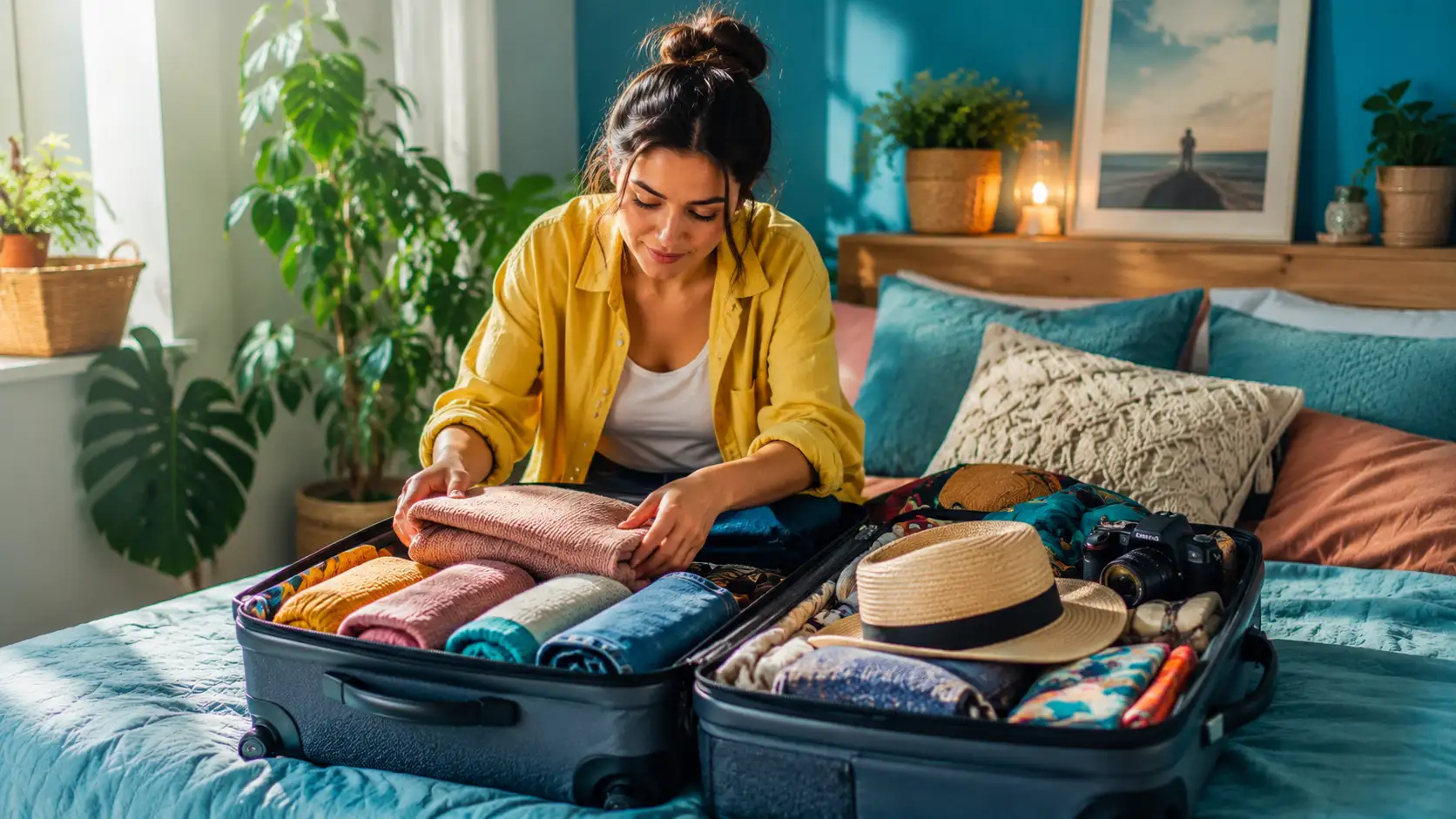
Some people can pack for a week with a single backpack. Others struggle to close a large suitcase for a weekend trip because it contains extra shoes, multiple jackets, backup chargers, medicines, snacks, and clothes for weather that may never happen. To outsiders, overpacking often looks unnecessary.
Psychology suggests that, for many people, it is actually a strategy for managing uncertainty. There is no scientific evidence that everyone who overpacks has the same personality or level of anxiety. Packing habits are influenced by travel experience, destination, culture, family upbringing, health needs, and previous travel problems.
However, several well-established psychological theories help explain why some people naturally prepare for every possible situation.
Uncertainty makes some people pack more
One of the strongest explanations comes from Intolerance of Uncertainty, a concept widely studied in anxiety research. Some people find unpredictable situations especially uncomfortable.
Packing extra items becomes a way of reducing that uncertainty. For example, someone traveling to a city with an unpredictable weather forecast may pack both light clothing and heavy sweaters, even if only one is likely to be needed. The goal is not to use every item but to feel prepared.
The brain dislikes potential losses
Another explanation comes from Prospect Theory, developed by psychologists Daniel Kahneman and Amos Tversky. The theory shows that people often work harder to avoid losses than to achieve equivalent gains.
When packing, the possible loss, forgetting medicine, formal shoes, or a phone charger, often feels more important than the inconvenience of carrying a heavier suitcase. This mental bias encourages people to pack "just in case."
Previous experiences shape future packing
Psychologists also study Availability Heuristic, introduced by Amos Tversky and Daniel Kahneman. People judge future risks based on memories that are easy to recall.
If someone once forgot an umbrella and spent an entire vacation walking in heavy rain, that memory becomes highly accessible. The next trip, they may pack not only an umbrella but also a raincoat and waterproof shoes. One memorable experience can influence packing decisions for years.
Planning ahead creates a sense of control
Research on the Need for Cognitive Closure, developed by psychologist Arie Kruglanski, suggests that some people feel calmer when situations seem organized and predictable.
Packing thoroughly helps reduce the feeling of unfinished preparation. Knowing that everything has been considered provides psychological comfort before the journey begins. For these individuals, preparation itself lowers stress.
Personality also influences packing habits
Research on the Big Five Personality Traits suggests that people high in Conscientiousness often prefer planning and organization.
They may create detailed packing lists and double-check that essential items are included. Interestingly, conscientious people are not always minimal packers. Some become overpackers precisely because they want to be ready for every possible scenario.
Meanwhile, highly spontaneous travelers may be comfortable buying forgotten items after they arrive.
Mental simulation encourages "what if" thinking
Psychologists also study Mental Simulation, the process of imagining future events before they happen. Before traveling, people often picture different situations. "What if the weather changes?"
"What if the airline loses my luggage?"
"What if there's a formal dinner?"
Each imagined scenario encourages another item to be added to the suitcase. This ability to mentally rehearse future possibilities is useful for planning, but it can also lead to excessive preparation.
Overpacking isn't always caused by anxiety
A common misconception is that every overpacker is anxious. Psychology does not support that conclusion. Some people overpack because they travel with children.
Others pack for photography, sports, medical conditions, or unpredictable work schedules. Some simply enjoy having choices. Packing habits reflect many practical and psychological factors working together.
FAQs
Why do some people always overpack?
Psychologists say overpacking may help reduce uncertainty, prepare for unexpected situations, or avoid the stress of forgetting important items.
Does overpacking mean someone has anxiety?
Not necessarily. While anxiety can influence packing, many people overpack because of personality, previous travel experiences, practical needs, or family responsibilities.