Psychology says people who drive slowly in fast lanes, highways or expressways aren't always unaware of traffic. Some drivers may not notice vehicles approaching from behind, while others may remain in the lane because they believe they are driving within the speed limit. Some may feel uncomfortable changing lanes. Others may become focused on their own driving routine. This behaviour can affect traffic flow because vehicles behind them may have to slow down, change lanes or pass from another lane. Psychology offers several ways to understand this behaviour, including psychological reactance, moral licensing, automatic thinking, anxiety and lack of spatial awareness.
Psychology says people who drive slowly in fast lanes, highways or expressways aren't always unaware of traffic
Driving on a highway requires attention to more than the road directly ahead. Drivers also need to observe vehicles approaching from behind, changes in speed, lane movement and traffic conditions.
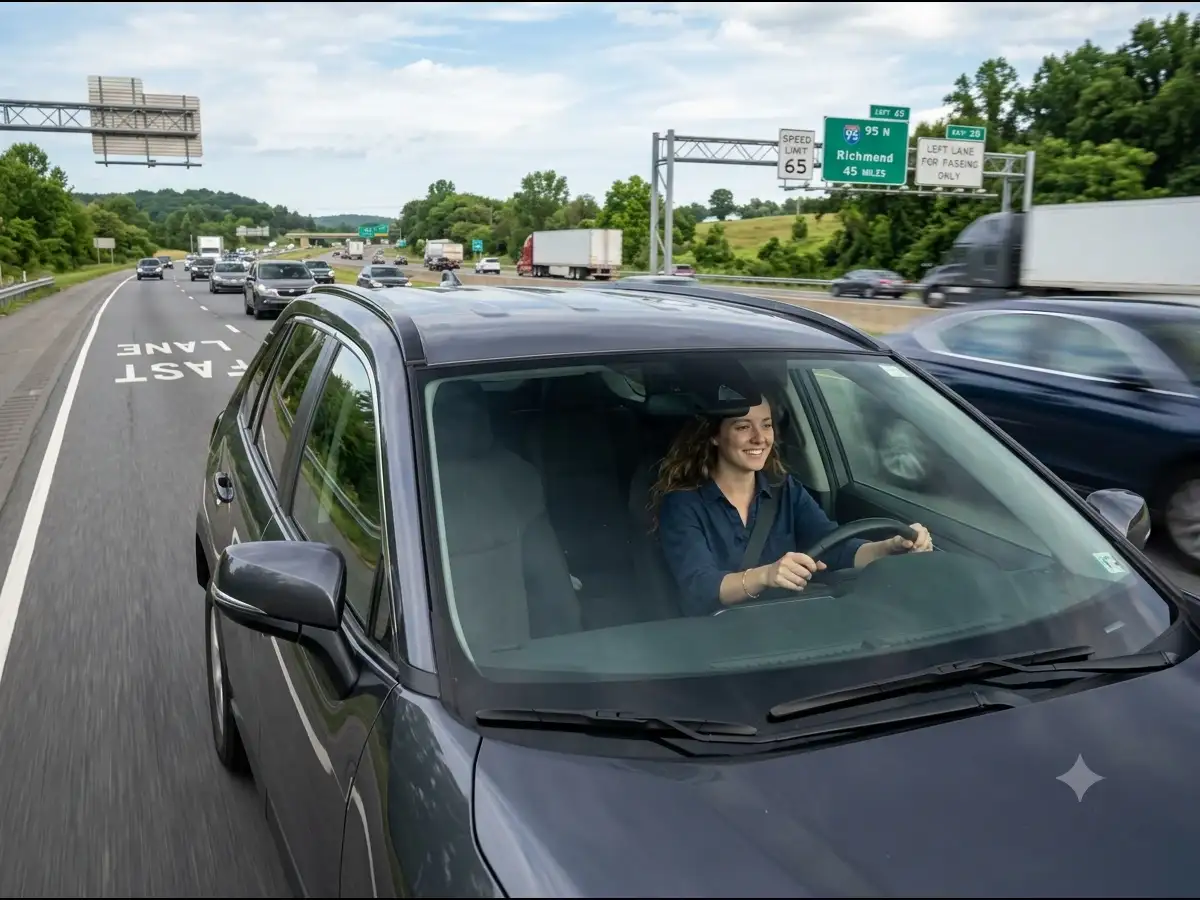
The fast lane is generally used for passing or for traffic that is moving faster than vehicles in other lanes, depending on local traffic rules. When a driver stays in that lane while moving slowly, other vehicles may become trapped behind the vehicle.
The behaviour can have different causes. It does not always mean that a driver is deliberately trying to create a problem. Psychology points to several possible reasons, including distraction, habit, anxiety, self-righteousness and a desire to control the situation.
What Psychology Says?
Psychology and traffic behaviour research can help explain why some drivers continue to occupy a passing or fast lane even when vehicles are approaching from behind. One explanation is self-appointed policing. Discussions among drivers, including users on Quora, suggest that some slow left-lane drivers believe they are doing the correct thing because they are following the legal speed limit.
Such a driver may think that another person should not be travelling faster. The driver may therefore see remaining in the lane as a way to prevent others from speeding. The problem is that following one traffic rule does not automatically make every action correct. Lane-use rules can also require drivers to keep to the appropriate lane and allow traffic to pass.
Another explanation is cognitive dissonance or obliviousness. A driver can become absorbed in a routine and stop processing information from the surrounding traffic. This can happen when someone is thinking deeply, listening to something, looking at a phone or simply operating the vehicle on mental autopilot. The driver may not realise that several vehicles are waiting behind them.
What Does This Mean?
The behaviour can mean different things depending on the driver and the situation. Some drivers may have limited awareness of what is happening around them. They may look forward but fail to check their mirrors regularly. Others may understand that vehicles are behind them but believe that they are entitled to remain in the lane because they are driving at the posted speed limit.
A third group may feel nervous about changing lanes. For these drivers, moving into another lane can create a sense of risk. This is sometimes described as defensive fixation. A driver becomes attached to one lane because changing position feels difficult or unsafe. The behaviour can therefore come from both conscious and unconscious processes.
Why Is It Done?
There are several possible reasons.
- Passive-aggressive control: Some drivers may experience a sense of control when they prevent another vehicle from passing. The interaction remains anonymous because the drivers may never communicate directly.
- Tunnel vision and habit: Drivers can become focused on the road ahead and stop responding to changes behind them. Repeated driving routines can make this behaviour automatic.
- Lack of spatial awareness: Some people may have difficulty judging how quickly another vehicle is approaching. They may see a car in the mirror but fail to understand the closing distance.
- Fear of changing lanes: A driver who lacks confidence may believe that remaining in one lane is safer than moving between lanes.
- Belief in personal correctness: A driver may think that following the speed limit gives them the right to remain in the lane, even when traffic conditions require them to move.
These reasons can overlap. A driver can be distracted and also believe that they are enforcing the speed limit.
Which Psychology Theory Explains This Behaviour?
Several psychology theories can be used to understand the behaviour.
Psychological Reactance
Psychological reactance describes the tendency to resist when people feel that their freedom is being restricted. On a highway, a driver may feel pressured by vehicles approaching from behind. Instead of responding by moving over, the driver may resist the pressure and maintain the same position. The person may interpret the faster driver as someone trying to force them to change their behaviour.
Moral Licensing
Moral licensing occurs when people use one action they consider correct to justify another action. In this situation, a driver may believe that obeying the speed limit means they are driving correctly. That belief can then be used to justify remaining in a lane that is affecting other traffic. This can create a form of self-righteousness. The driver sees the other vehicle as the problem rather than considering the effect of their own lane position.
System 1 and System 2 Thinking
The distinction between System 1 and System 2 thinking also provides a way to understand the behaviour. System 1 refers to fast and automatic mental processing. System 2 involves slower and more deliberate thinking. A driver operating on automatic thinking may follow the same lane and speed pattern without actively reviewing the traffic situation. A driver using more deliberate attention may notice a vehicle approaching from behind, assess the road and decide whether changing lanes is appropriate.
This Psychology Study Says
The information provided about this behaviour should not be treated as proof that every slow driver has the same psychological reason. There is no single explanation that applies to every person who drives slowly in a fast lane. Driver behaviour depends on traffic conditions, road rules, experience, attention and individual decision-making.
The ideas from psychology are useful because they show how different mental processes can influence driving. Traffic discussions also show that people often interpret the behaviour of other drivers through their own beliefs. A person who feels that another driver is blocking traffic may assume that the action is deliberate. The other driver may instead be distracted or uncertain about changing lanes. Understanding this difference can help explain why conflicts develop between drivers.
The Principle Behind It
The main principle is that driving takes place in a shared environment. A driver's decision affects other road users. Staying in one lane may appear to be an individual choice, but it can influence the speed and movement of vehicles behind that person.
Traffic works through coordination. Drivers need to observe signs, speed limits, lane markings and the movement of other vehicles. The same principle applies outside driving. People often focus on whether their own action is correct without considering how that action affects others.
What To Learn From It?
There are several lessons that can be taken from this behaviour.
- Check the surroundings: Drivers should regularly use their mirrors and remain aware of vehicles approaching from behind.
- Understand lane purpose: Drivers should follow the lane-use rules that apply to the road they are using.
- Avoid policing other drivers: A driver should not attempt to control another person's speed by deliberately blocking their path.
- Recognise distraction: Mental autopilot can reduce awareness of changes in traffic.
- Manage anxiety: Drivers who feel uncomfortable changing lanes can work on observation and safe lane-changing skills.
- Think beyond personal intention: Driving decisions can affect several other people at the same time.
Life Lessons From The Behavior
The behaviour offers a lesson about shared spaces. People can become convinced that their own approach is correct without considering the wider situation. A person may follow one rule and still overlook another responsibility. The same pattern can appear in daily life. Someone may focus on completing their own task while ignoring how their actions affect colleagues, family members or other people.
Self-awareness can help prevent this. Before judging another person, it is useful to consider what information may be missing. The lesson is not that every slow driver is controlling, distracted or anxious. The lesson is that behaviour can have more than one cause.
On a highway, the practical goal is to drive safely, follow traffic laws and remain aware of surrounding vehicles. Drivers should use the appropriate lane and allow traffic to move according to the rules of the road.
The broader psychology lesson is about awareness. A person does not need to control the behaviour of others to drive correctly. The focus should remain on following the rules, reading the traffic situation and making decisions that do not create unnecessary disruption.