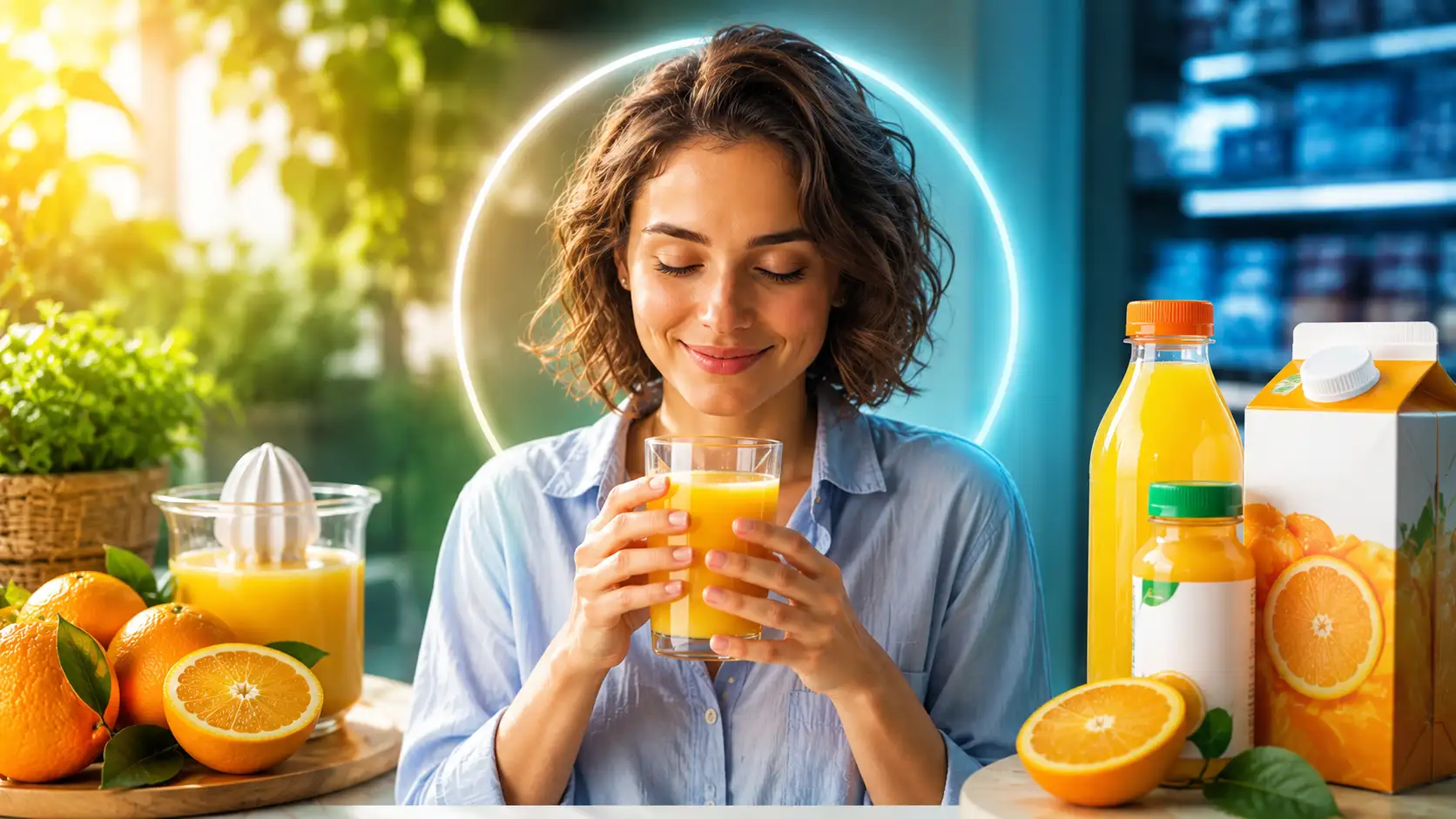
Walk into any breakfast café and you'll notice that some people insist on ordering freshly squeezed orange juice, even when packaged juice is available at a lower price. Others won't drink orange juice unless they've squeezed it themselves. At first glance, this might seem like a simple food preference. However, psychology suggests that our everyday food choices are shaped by much more than taste. Research in consumer psychology, health psychology and sensory science shows that people often make decisions based on beliefs, emotions, personal values and previous experiences. There is no evidence that people who prefer freshly squeezed juice share a particular personality type. Instead, their preference often reflects the way the brain evaluates freshness, authenticity and control.
Freshness often creates a "health halo"
One explanation comes from the Health Halo Effect, a well-known concept in consumer psychology. Researchers have found that people often judge foods labeled as "fresh," "natural" or "homemade" as healthier than similar products, even when the nutritional differences are smaller than they assume.
For example, someone may automatically believe a freshly squeezed glass of orange juice is significantly healthier than packaged juice because the word "fresh" carries positive associations. This perception can influence satisfaction before the first sip is even taken.
Psychologists say these expectations often shape how people evaluate food, illustrating how beliefs influence eating behavior.
People often rely on intuitive thinking when making food choices
According to Dual Process Theory, developed by psychologists such as Daniel Kahneman and Amos Tversky, people make decisions using both fast, intuitive thinking and slower, analytical reasoning.
When choosing between fresh and packaged juice, many consumers rely on quick impressions rather than carefully comparing nutrition labels. Freshly squeezed juice may simply "feel" more natural or wholesome, making it the preferred option even before any factual evaluation takes place.
Imagine someone standing in a supermarket deciding between freshly squeezed juice and a packaged carton. Their choice may be guided as much by instinctive perceptions of freshness as by nutritional information.
Sensory experiences shape preferences
Food psychologists emphasize that taste is only one part of eating. Aroma, texture, color and even the sound of food preparation influence enjoyment. Research in sensory perception shows that freshly squeezed juice often provides stronger aromas and slight variations in flavor, making the experience feel more authentic.
For example, watching oranges being squeezed at a café may increase anticipation and satisfaction before the juice is even consumed. This demonstrates that the eating experience begins long before the first taste.
The need for control can influence food decisions
Health psychology also suggests that some people prefer foods they perceive as less processed because they feel more in control of what they consume. This idea relates to Self-Determination Theory, developed by psychologists Edward Deci and Richard Ryan, which proposes that people are motivated by needs such as autonomy and personal choice.
Choosing freshly squeezed juice can give individuals a greater sense of control over ingredients, preparation methods and quality. Even when packaged juices meet high safety standards, some consumers feel more comfortable with products they perceive as closer to their natural state.
Past experiences create lasting food preferences
Our food choices are also influenced by learning. According to Classical Conditioning, first demonstrated by Ivan Pavlov, repeated positive experiences become associated with specific foods.
Someone who grew up drinking freshly squeezed orange juice during relaxed family breakfasts may continue choosing it as an adult because it evokes pleasant memories. In contrast, another person raised on packaged juice may genuinely prefer its familiar taste. These emotional associations often influence preferences more than objective comparisons.
Marketing and packaging shape perception
Consumer psychology has repeatedly shown that packaging affects how people judge products. Research on expectancy effects suggests that labels such as "fresh," "natural" or "premium" can increase perceived quality even before tasting.
This does not mean consumers are irrational. Rather, the brain combines visual information, prior beliefs and sensory expectations to create an overall impression of a product.
People preferring freshly squeezed orange juice over packaged juice is less about personality and more about how people perceive freshness, health, control and authenticity. Consumer beliefs, sensory experiences, childhood memories and decision-making processes all influence everyday food choices. While one person may enjoy the convenience of packaged juice, another may genuinely appreciate the taste and experience of freshly squeezed oranges. Neither preference reveals a hidden personality trait. Instead, it highlights how psychology shapes even the simplest decisions we make at the breakfast table.
FAQs
Does preferring freshly squeezed orange juice reveal someone's personality?
No. There is no scientific evidence linking this preference to specific personality traits. It is better explained by beliefs, sensory preferences and personal experiences.
Why do many people think fresh juice tastes better?
Research suggests stronger aromas, texture, visual cues and expectations all influence how enjoyable freshly squeezed juice feels.