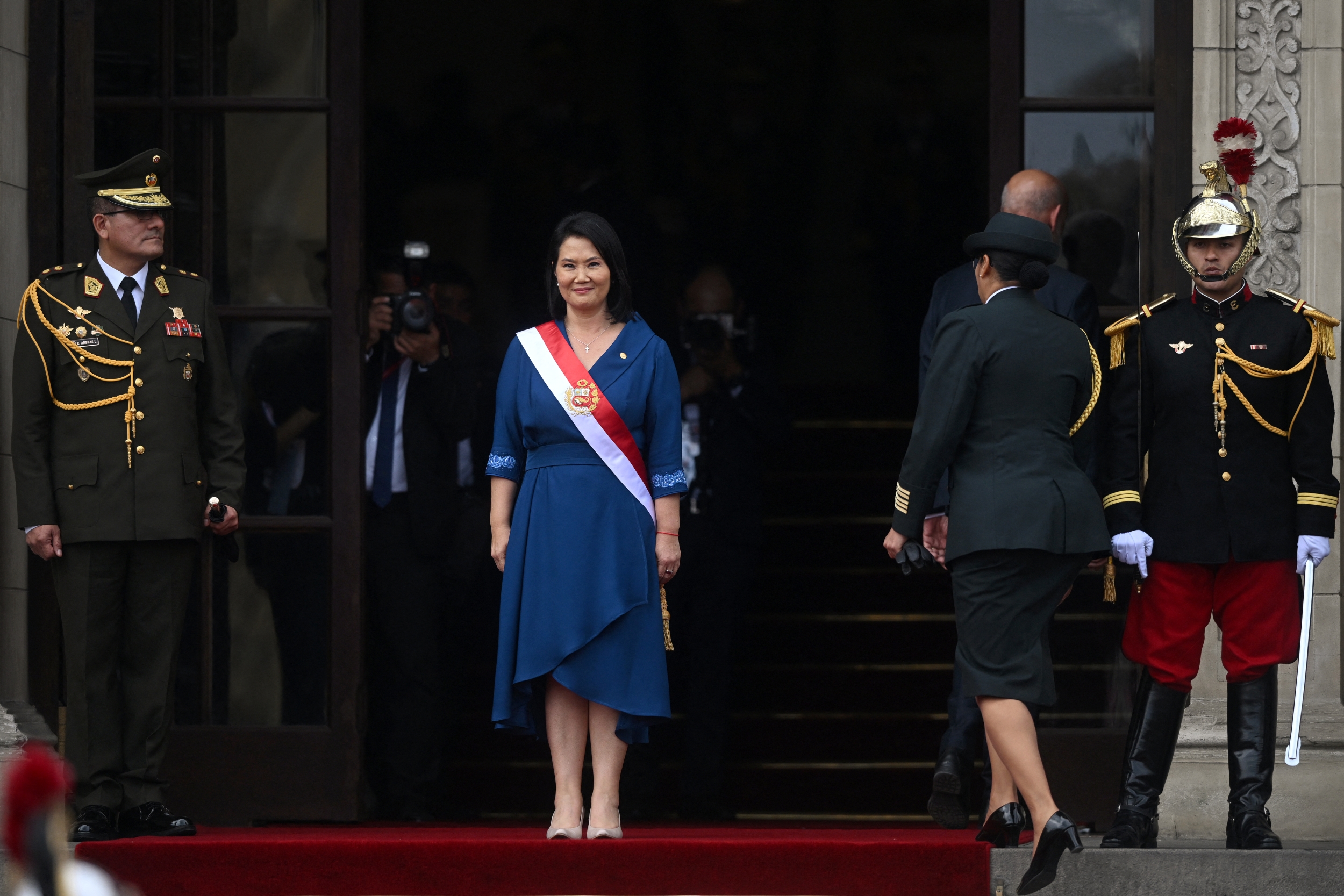
LIMA — Keiko Fujimori placed her hand on the presidential sash Tuesday, July 28 and took the oath of office in front of Peru's Congress, ending a pursuit of the country's top job that stretched across four campaigns and a decade and a half. The ceremony landed on the 205th anniversary of Peruvian independence — the date Peru has used for decades to hand over presidential power.
Three Losses, Then a Win by a Whisker
Fujimori, 51, chairs the conservative Popular Force party and had been turned away in second-round votes in 2011, 2016 and 2021 before finally clearing the runoff this year. She outlasted left-wing lawmaker Roberto Sánchez in the June 7 vote by just 49,641 ballots out of nearly 18 million cast — a roughly 50.1-to-49.9 split that ranks among the closest presidential finishes in Peru's modern history. Peru's National Jury of Elections didn't formally proclaim her the winner until July 3, nearly a month after polls closed, while officials worked through a pile of disputed tally sheets. A second, separate milestone followed on July 15, when election authorities handed Fujimori and her running mates their formal credentials in a ceremony at Lima's Gran Teatro Nacional.

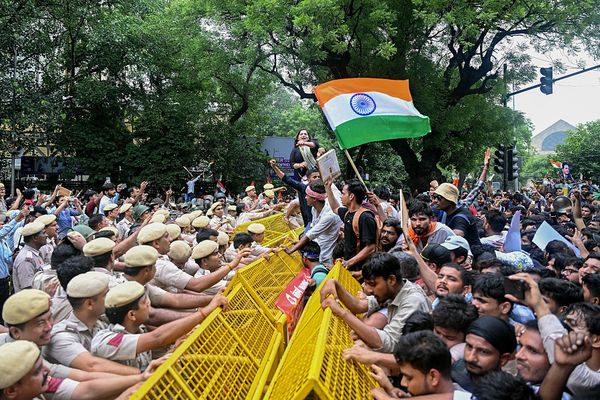
Sánchez never made peace with the outcome. He accused election officials of mishandling ballots cast at consulates abroad — where Fujimori's support was heaviest — after a rule change let those tally sheets travel to Lima for processing instead of being scanned on-site. He asked the National Jury of Elections to throw out votes from 119 overseas consulates and took his case to the Inter-American Commission on Human Rights, warning at one point that "We believe there's been a manipulation of the vote." Election officials rejected the challenge, and both the elections board and outside observers found nothing to back the fraud claims before the results were made official. Sánchez has since kept calling backers into the streets, and demonstrations tied to his objections continued around Tuesday's ceremony.
A Dynasty Comes Back to Government Palace
Fujimori's swearing-in returns her family's name to executive power roughly 26 years after her father's government collapsed. Alberto Fujimori ran the country through the 1990s before fleeing into disgrace, was later convicted over corruption and killings carried out by military death squads, and died of cancer in September 2024 at his daughter's Lima home. Keiko has spent years as his most visible political defender, and her victory finishes a comeback he was still planning to attempt himself before his death.
Lima Fills Up With Foreign Dignitaries
Tuesday's handover pulled in an unusually large international guest list. Spain's King Felipe VI flew in for a bilateral sit-down with Fujimori and stayed for the ceremony, joining a cluster of visiting leaders that included Argentina's Javier Milei, Bolivia's Rodrigo Paz, Chile's José Antonio Kast, Ecuador's Daniel Noboa, Honduras's Nasry Asfura, Panama's José Raúl Mulino, and Uruguay's Yamandú Orsi — roughly ten heads of state or government in total. Washington's delegation was led by Deputy Secretary of State Christopher Landau at President Trump's direction, while China, Japan and other governments sent their own representatives to the events. Outgoing interim President José María Balcázar hosted the visiting leaders at a dinner the night before the ceremony.


Crime and the Economy Sit at the Top of Her List
Fujimori has built her early message almost entirely around public safety, casting crime as the country's most pressing crisis, while also pitching Peru as open for mining and foreign investment to jump-start growth. She takes charge of a legislature reorganized for the first time in three decades into two chambers, and the early results are not encouraging for her: her coalition secured the Senate presidency in a July 26 vote, but the opposition took control of the Chamber of Deputies, a split that could complicate her legislative agenda from
Whatever momentum Tuesday's ceremony creates, Fujimori is stepping into a job that has burned through leaders at a startling pace — no Peruvian president has finished a full five-year term in the last ten years, and she becomes, by one count, the ninth person to hold the office in that span. Her term is set to run through 2031, but that track record — combined with a win narrow enough to leave close to half the country unpersuaded — suggests her hold on the office will face pressure well before then.