The sale of a building that once operated as a brothel for inmates of the Gusen concentration camp has prompted outrage in Austria.
Local officials and a nearby memorial organisation expressed their shock after the semi-detached house was listed by an estate agent, with no mention of its horrific wartime past.
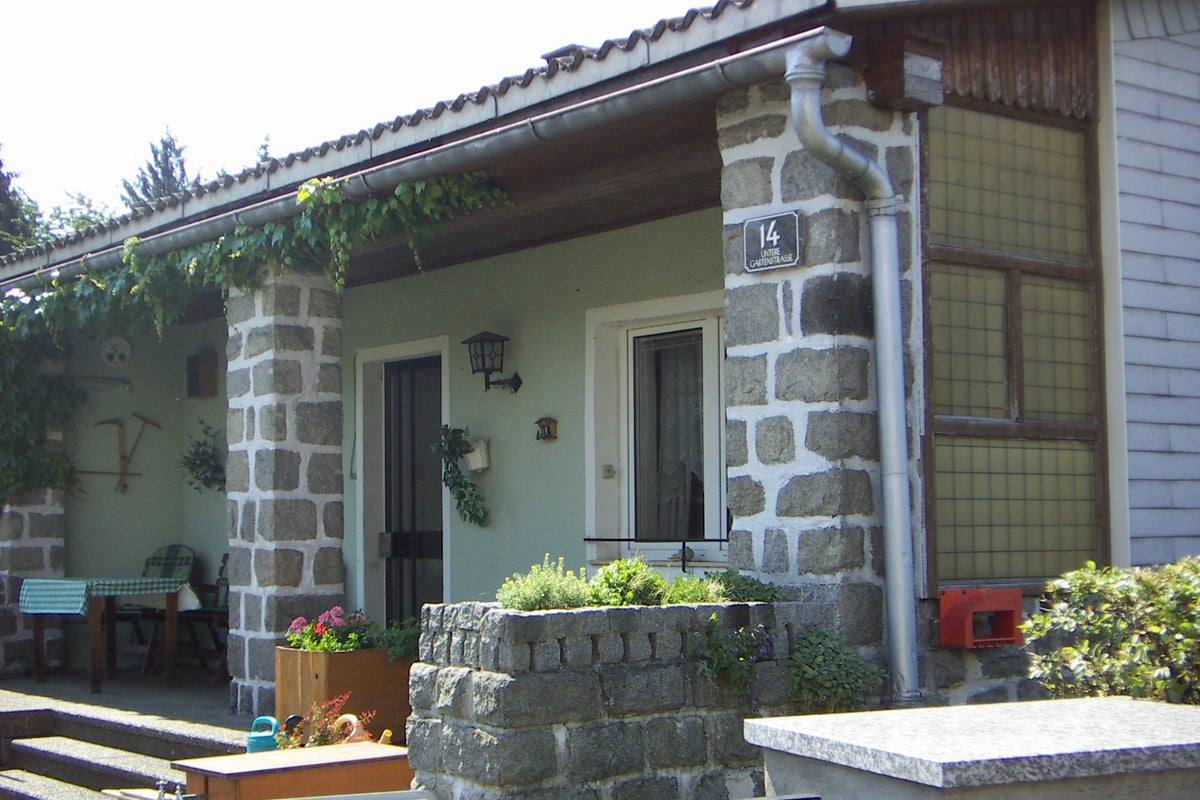
The ageing bungalow, advertised on a property website simply as a “house with a history” and suitable for renovation, was first reported by regional newspaper OÖN on 28 November.
The listing highlights the home’s proximity to a kindergarten, school and shops – but includes no information about its use during the Holocaust.
It was originally built as part of the Gusen camp complex, which the Nazi regime established in 1939 near a quarry north of the Danube.
The property was used from June 1942 as a brothel where female prisoners were forced to provide sexual services to selected inmates.
The Gusen camp, less well known than the larger Mauthausen camp nearby, held more than 71,000 people during the war; at least 35,800 died from forced labour, starvation or execution.

Much of the former camp area was redeveloped after 1945, but the house now on the market still retains original features, including stone walls and pillars.
Barbara Glück, director of the Mauthausen memorial, said: “We only learned of the ad on 21 November and we are rather surprised.”
Local authorities were also reportedly unaware of the listing.
The interior ministry presented plans on 17 November to expand the Gusen memorial, though the former brothel was not included in the proposal.
A sub-camp of Mauthausen, Gusen sits between the villages of Sankt Georgen an der Gusen and Langestein in the Reichsgau Ostmark, currently known as Perg District in Upper Austria.
It was mainly populated by Polish prisoners, although there were also large numbers of Spanish Republicans, Soviet citizens, and Italians.
The prisoners initially worked in nearby quarries, producing granite which was sold by the SS company DEST.
The life expectancy of prisoners was as short as six months and some 35,000 people are thought to have died there from forced labour and starvation, as well as mass executions.