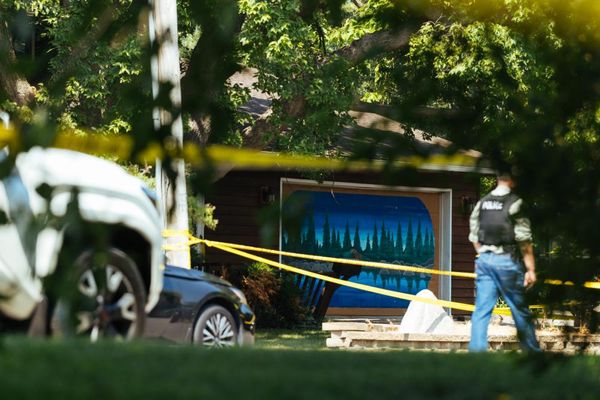
NYPD officers took 3,259 illegal firearms off New York City streets during the first seven months of 2026, a haul Police Commissioner Jessica Tisch tied directly to the city's steepest crime decline in decades. Of that total, 199 were so-called ghost guns — homemade or kit-assembled firearms with no serial number, built specifically to slip past background-check laws and trace requirements. The NYPD announced the figures on August 11, timing the release to the fifth anniversary of the multi-agency task force it credits with driving the seizures.
A Five-Year Partnership Behind the Numbers
That task force, the Gun Violence Strategies Partnership, pulls in more than 30 agencies — a mix of federal, state, city and prosecutorial offices — for a daily exchange on gun arrests made over the previous 24 hours, so cases can be steered toward whichever agency can bring the toughest charges against repeat offenders. Tisch called the results the product of what she described as "our precision-policing strategy," crediting the approach with directing officers to the right places and identifying who's actually driving the violence.
The recoveries were heaviest in the boroughs that have historically carried the largest share of the city's gun violence: Brooklyn led with 915 firearms, followed by the Bronx at 782, Manhattan at 764, Queens at 605 and Staten Island at 193, according to the department's own count. Prosecutors treated the numbers as vindication of the interagency model — Manhattan District Attorney Alvin Bragg noted that "shootings are down 57% and homicides are down 65% since I took office," while Queens District Attorney Melinda Katz pointed to shootings in her borough sitting at their lowest point in three decades.

Violence at Historic Lows — With One Exception
The gun seizures line up with a broader collapse in violent crime. New York logged 381 shooting incidents in the first seven months of 2026 — a 7.5% drop from the 412 recorded over the same stretch a year earlier, and the fewest ever tallied for that period, per NYPD data. Shooting victims fell 5.5%, from 489 to 462, while homicides dropped 22.8%, from 193 to 149, breaking the prior low of 174 set back in 2017. July alone brought 59 shooting incidents, down 21.3% from a year before. Not every category moved the same direction, though: CBS New York reported that confirmed hate crimes climbed 9.4% over the same seven months, rising from 329 to 360 incidents, with anti-Jewish attacks making up more than half of them despite Jewish residents accounting for roughly a tenth of the city's population. Brooklyn District Attorney Eric Gonzalez pointed to his borough going nearly a month this summer without a single homicide as evidence of what he called a public-safety turnaround.

The Database Behind the Crackdown
Much of the targeting strategy behind these numbers relies on the NYPD's Criminal Group Database, an internal list the department uses to flag suspected gang members and repeat "violence drivers" for closer monitoring. A 2023 audit by the city's Department of Investigation found that of the roughly 16,000 people then on the list, about 99% were Black or Hispanic — roughly 11,000 Black entries and 4,700 Hispanic ones, by the auditors' own count. A follow-up review completed in October 2025 found the department had trimmed the database to around 8,500 people, down nearly 40% from close to 14,000 as recently as mid-2024, after inspectors flagged data-entry errors — but subsequent reporting puts the racial composition at 98% Black or Hispanic, barely changed from the 2023 figure.
A Stalled Bill and a Wavering Mayor
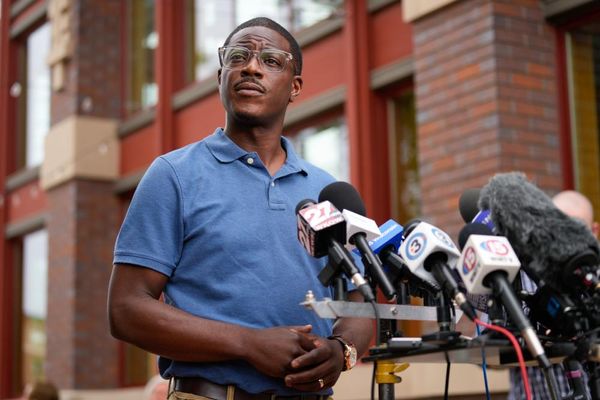
Bronx Council Member Althea Stevens, whose South Bronx district takes in Highbridge, Concourse and Morrisania, has championed Intro 798, legislation to abolish the database entirely, arguing it sweeps up minors and operates with almost no outside review. Public Advocate Jumaane Williams has co-sponsored the bill. Civil rights advocates have kept up the pressure: an organizer with a NAACP Legal Defense Fund-affiliated coalition didn't mince words, saying "the database policing will always disproportionately affect Black and Brown bodies." The bill remains stalled in the Council's Public Safety Committee with no vote scheduled, according to recent reporting. Mayor Zohran Mamdani, who campaigned on abolishing the database, has since signaled he's open to keeping it, telling reporters the NYPD's reforms and their results are "part of the active discussion that we're having" — a shift that's drawn public pushback from the same advocacy groups that once counted him as an ally. The NYPD, for its part, has defended the database as essential to identifying the small number of repeat offenders it says drive most of the city's shootings.
Why It Matters for Latino New Yorkers
The fight lands squarely on neighborhoods with large Latino populations. Stevens' own South Bronx district is one of them, and the Bronx posted the second-highest gun-seizure total of any borough this year. That leaves the same enforcement strategy being credited with the city's steepest-ever drop in shootings and murders, and criticized for feeding a database auditors say is still overwhelmingly Black and Hispanic — a tension that the Council, and now the mayor's office, will keep wrestling with in the months ahead.