New York has become the first U.S. state to temporarily halt construction of large new data centers, marking a significant shift in how states are responding to the rapid expansion of infrastructure supporting artificial intelligence.
The decision comes as electricity demand from AI-related computing continues to climb across the United States at a time when utilities are already facing higher summer demand, aging transmission infrastructure and increased scrutiny over energy reliability.
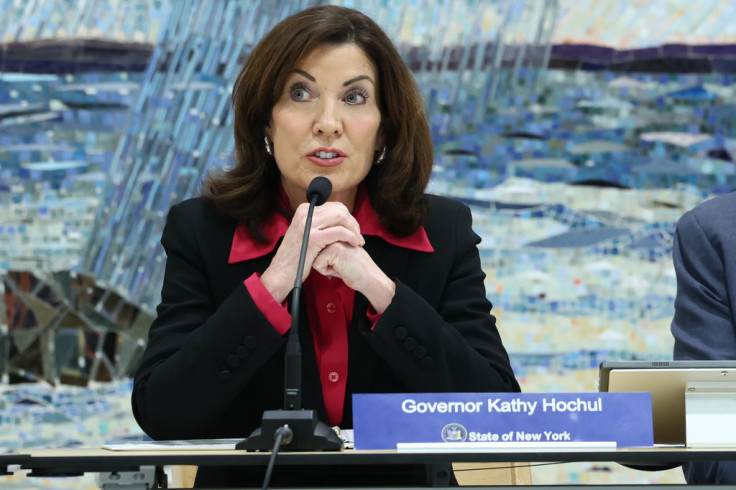
Gov. Kathy Hochul on Tuesday announced a one-year moratorium on the construction of large new data centers, making New York the first state to adopt such a measure, Reuters noted. State officials said the pause applies to new facilities expected to consume at least 50 megawatts of electricity.
The governor said the decision was driven by concerns that large data centers could increase electricity costs, strain water resources and place additional pressure on local communities. Hochul also said she will pursue legislation repealing New York's sales tax exemption for hyperscale data centers.
"As data center development threatens to hike up utility bills, deplete our natural resources, and create uncertainty for New Yorkers, it's my responsibility to take action and lead," Hochul said.
According to the governor's office, the state's Department of Environmental Conservation will not issue discretionary permits for covered projects during the one-year moratorium unless applications have already been deemed complete, Reuters reported.
State agencies have instead been directed to prepare a Generic Environmental Impact Statement to evaluate the cumulative effects of large-scale data center development. The review will examine issues including electricity demand, water use, environmental impacts and permitting standards, according to Reuters.
Demand for data centers has accelerated following the rapid expansion of generative AI services. Major technology companies, including Microsoft, Amazon, Google and Meta, have announced tens of billions of dollars in investments aimed at expanding computing capacity needed to train and operate advanced AI systems.
That rapid growth has increasingly drawn attention from regulators and utilities. Bloomberg has reported that lawmakers and utility commissions in several states have begun reviewing whether large data centers should bear a greater share of electricity infrastructure costs as utilities seek billions of dollars in grid upgrades tied to AI-driven demand.
Community opposition has also become more visible across the country. Residents in several states have raised concerns over increased water consumption, higher electricity demand, noise from cooling equipment and the construction of large industrial facilities near residential neighborhoods. The New York Times has reported that proposed data center developments have faced growing resistance in states including Virginia, Georgia and Arizona, where communities have questioned their environmental impact.
New York's action differs from many other state responses because it temporarily pauses new construction while officials complete a statewide environmental review rather than evaluating projects individually.
The issue has become increasingly important as electricity demand forecasts continue rising. The North American Electric Reliability Corporation (NERC) warned earlier this year that expanding data center development is contributing to higher electricity demand across multiple U.S. regions and increasing pressure on grid planning, according to its latest long-term reliability assessment.
Technology companies have argued that expanded data center capacity is necessary to support cloud computing, AI applications and digital services used by businesses and consumers. Many developers have also announced investments in renewable energy and nuclear power agreements to help meet growing electricity needs.