

Multiple MLS executives have revealed that discussions with soccer’s lawmakers have taken place regarding the prospect of reintroducing a stopped clock to matches in the U.S. top flight.
The concept of halting time for injuries or unforeseen stoppages is familiar across multiple U.S. sports, such as NFL or NBA matches. However, soccer has traditionally been governed by a continuous clock monitored by the referee, with any added time for delays tacked onto the end of each half by the fourth official.
That hasn’t always been the case. The first three years of MLS’s existence (1996–99) saw the implementation of a countdown clock. Each half began at 45:00 on the stadium clock and would be stopped for in-game delays before ending on zero, bringing everything to an immediate halt.
The league ultimately reverted to international regulations at the end of the 20th century but, in an attempt to combat the modern rise of time-wasting, meetings have taken place about a return.
Ali Curtis, MLS’s executive vice-president of sporting development, released a statement to The Guardian which revealed that there have already been “preliminary conversations with IFAB around future areas of innovation, including concepts such as a stopped clock, increased transparency around timekeeping, and other measures designed to improve consistency and fan understanding.”
Vice-president of competition for MLS, Paul Grafer, added: “We’re open to trials around the world, and working with IFAB.”
Why Would MLS Want to Bring Back the Stopped Clock?
Grafer explained that the stopped clock would be a way to “address gamesmanship and match manipulation” which currently isn’t being tackled by the current “stopgap procedures“ that have been introduced in recent years.
There has been a surge in concerns over time-wasting in recent years. There was an active drive ahead of the 2023–24 season to counteract the amount of minutes whittled away by adding much larger chunks of stoppage time to the end of each half. “I am convinced time wasting will be reduced when players know it is meaningless to waste time because that time is compensated,” legendary former official and current chair of FIFA’s referees committee, Pierluigi Collina, declared at the time.
It hasn’t quite panned out that way. There was an initial increase in the amount of time the ball was in play during the 2023–24 season but the trend has been downward over the subsequent two seasons. The stain of time-wasting is one which has been thrown at Arsenal, for example, during their Premier League title-winning campaign.
“These discussions [with IFAB] are exploratory,” Curtis added. “But they reflect a broader commitment across the global game to examine how the sport can continue to modernize while preserving what makes soccer unique.”
Why Did MLS Get Rid of the Stopped Clock?
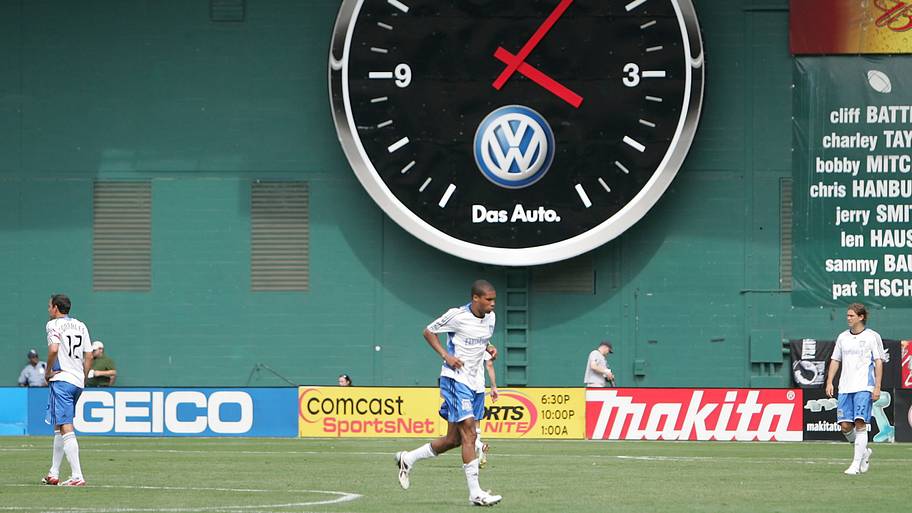
A countdown clock was not the only innovation MLS brought in when the league was formed in 1996. There were extra substitutions for goalkeepers, the wage limit was $192,500 and, most famously, regular season matches which ended in a tie were decided by 35-yard penalty shootouts.
Don Garber’s appointment as MLS Commissioner in August 1999 almost immediately coincided with a swift curtail to these novelties. The countdown clock (and penalty shootouts) were even removed before the end of the 1999 season, with European convention implemented for the MLS Cup in November.
“Our core audience has spoken,” Garber explained. “And we have listened.”
Will the Stopped Clock Come Back?
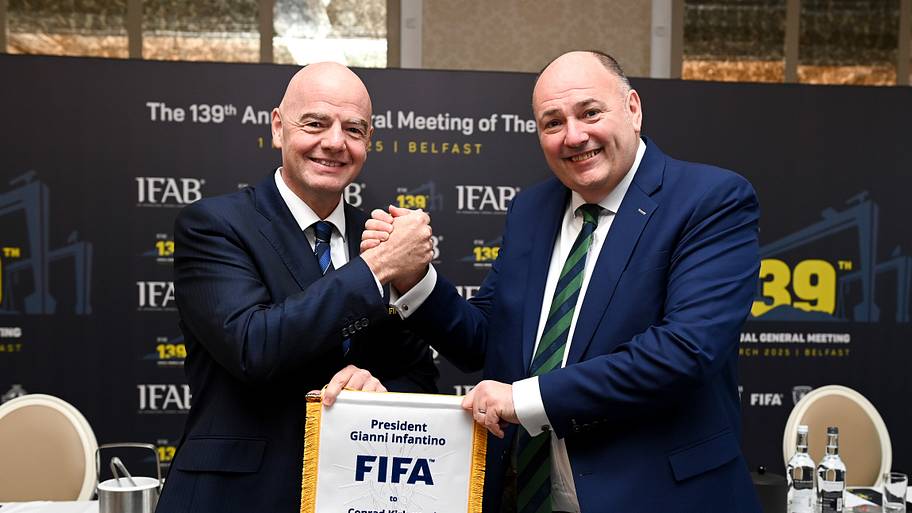
MLS have successfully lobbied for several advancements in recent years, most notably standing out as a pioneering voice for VAR (video assistant referees). However, expectations are that this change will be one step too far. The Guardian cited sources from within IFAB, soccer’s lawmakers, who flagged concerns over the “sacrosanct” nature of a 90-minute match.
More compelling, however, may be concerns from broadcasters about the unpredictable length of games. Given the influence that TV sponsorship has over the sport at the elite level, this stance is one to consider.
There is thought to be “very little support” for the proposal at this point in time.