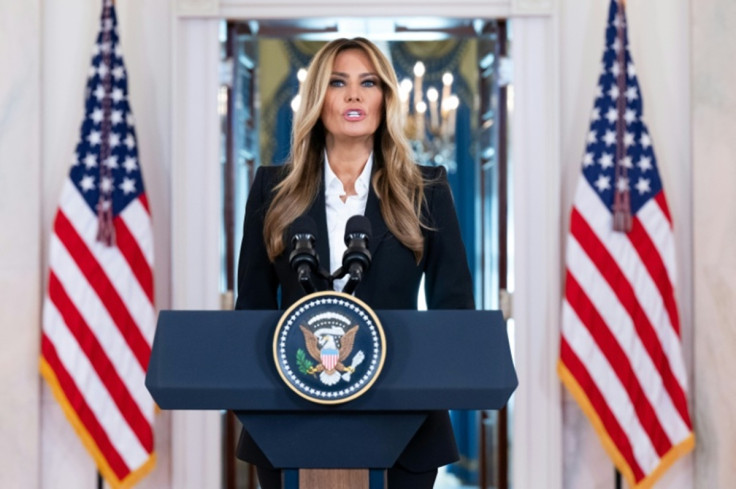
When First Lady Melania Trump appeared on Fox & Friends on Tuesday, Jan. 27, she was meant to strike a healing note amid profound national tension. Instead, her appearance became a textbook case of miscalculated timing and public‑relations overreach. As deaths in Minneapolis tied to federal immigration enforcement operations have fuelled protests and unrest, her simultaneous promotion of her self‑titled documentary struck many as less statesmanship and more like a corporate product launch thinly veiled in compassionate rhetoric.
The interview appeared carefully orchestrated. Trump spoke eloquently about unity and peaceful protest while the nation reeled from the killings of two US citizens by federal agents this month. Her softer, more measured tone stood in stark contrast to the administration's typically hardline messaging on law and order. It was exactly what a crisis‑management textbook would prescribe.
Then came the problem: she spent considerable airtime promoting Melania, a new self‑titled documentary produced by her company, Muse Films, scheduled for worldwide theatrical release on Friday, Jan. 30. For a PR expert surveying the fallout, the decision to plug a personal project during a moment of national grieving was almost bewildering in its tone‑deafness.
The Strategic Calculation Behind the Interview
Chad Teixeira, a PR and media specialist who spoke to the Irish Star, understood precisely what the Trump administration was attempting. 'Melania Trump speaking out on the protests serves a very specific strategic purpose for the Trump administration,' he explained. Her willingness to engage with the pressing issue of recent ice‑related civilian deaths in Minneapolis signalled empathy without forcing the administration to alter its underlying policy stance — a classic political manoeuvre designed to soften optics without commitments.
'Her tone, calling for unity and peaceful protest, offers a softer, more conciliatory counterpoint to an administration often perceived as hard‑line on law and order,' Teixeira continued. 'In moments of national tension, deploying a comparatively apolitical figure helps humanise the White House and signals empathy without forcing a shift in policy.' The strategy makes political sense: when a president is a polarising figure, send a trusted surrogate with broader appeal. It is diplomacy by proxy.
The carefully chosen language revealed careful hands at work. 'The language used was deliberately safe, non-specific and values-based, classic crisis communications framing designed to reduce heat rather than invite debate,' Teixeira noted. This was not off-the-cuff commentary. Senior White House advisers had clearly prepared and rehearsed every phrase, understanding that Melania's rarity in public appearances meant the media scrutiny would be intense. Her limited engagement with the press typically makes any statement she does release disproportionately newsworthy.
Documentary Promotion Weakens Position
Yet the strategy, however shrewd, collapsed under the weight of a single decision. The choice to use the interview as a launch platform for Melania transformed what could have been a dignified moment of national leadership into something far messier: opportunism dressed as crisis management.
'From a branding standpoint, the logic is obvious: maximum visibility, high audience reach and narrative control around her own story,' Teixeira acknowledged. The mathematical appeal is undeniable — reaching millions of Fox viewers while discussing matters of national importance guarantees exponential publicity. It's the kind of media synergy that marketing departments dream about.
But synergy and decency often exist in tension. 'Promoting a personal project during times of civil unrest is always risky,' Teixeira explained. The calculation that worked in the boardroom failed spectacularly in the court of public opinion. 'It always runs the risk of accusations of tone-deafness and opportunism,' which, as events unfolded, was precisely what occurred across social media and in subsequent commentary.
The documentary mention did more than court controversy. It actively undermined the very credibility Melania had been sent to establish. 'The negative reaction online suggests that for many viewers, the documentary mention distracted from rather than enhanced her credibility. While the plug may boost awareness and curiosity in purely commercial terms, it weakens her position as a moral or calming voice in a crisis context,' Teixeira observed with clinical precision. The mathematics of media exposure had collided with the human reality of compassion fatigue. When grief meets self-promotion, audiences recoil.
'Serious moments demand restraint, and audiences are increasingly unforgiving when tragedy and self-promotion intersect,' he added. This is perhaps the lesson of the moment. First Ladies have historically known when to hold back. Melania Trump's appearance proved that knowing when to stay silent might have been the more strategic choice.
Crisis Management That Backfired
On balance, Teixeira's assessment was measured but damning. 'Overall, Melania's intervention helps the administration marginally on optics but carries limited political upside. As a PR move, it works best when viewed as reputational cushioning rather than persuasion.' She gave the White House a slight boost in the appearance of concern, nothing more.
The documentary promotion, by contrast, cost far more in credibility than it could gain in ticket sales. 'The documentary, meanwhile, may succeed as a personal brand exercise but in this setting, it risks reinforcing exactly the criticism her appearance was meant to soften.'
In attempting to serve two masters — both crisis management and personal branding — Melania Trump satisfied neither. The Fox interview was supposed to be about national healing. Instead, it became a case study in how ambition can undermine the very authenticity that makes leadership moments work.