Immediately after a US border patrol agent shot two people in Oregon last month, the Department of Homeland Security (DHS) said the targets were “vicious” gang members connected to a prior shooting and alleged they had “attempted to run over” officers with their vehicle.
In the weeks since, key parts of the federal government’s narrative have fallen apart.
The events took place on the afternoon of 8 January, one day after a US Immigration and Customs Enforcement (ICE) officer fatally shot Renee Nicole Good in Minneapolis.
According to a DHS press release and social media posts issued the following day, border patrol agents were conducting a “targeted” stop of a vehicle in Portland occupied by two members of Tren de Aragua, the Venezuelan gang. Yorlenys Zambrano-Contreras, a woman in the passenger seat, had been “involved” in a Portland shooting last year, the agency wrote.
During the border patrol stop, the driver, Luis Niño-Moncada, “weaponized their vehicle against” officers, DHS said, prompting an agent “to defend himself and others” by shooting the occupants. Zambrano-Contreras was hit in the chest, Niño-Moncada was hit in the arm and both were hospitalized, then taken into federal custody, DHS noted. The agents were uninjured.
But court records obtained by the Guardian reveal a Department of Justice prosecutor later directly contradicted DHS’s Tren de Aragua statements in court, telling a judge: “We’re not suggesting … [Niño-Moncada] is a gang member.” An FBI affidavit issued following the incident also suggests that in the previous shooting cited by DHS, Zambrano-Contreras was not a suspect, but rather a reported victim of a sexual assault and robbery. Neither Niño-Moncada or Zambrano-Contreras have prior criminal convictions, their lawyers have said.
Immigration and criminal justice experts who reviewed the case records characterized the federal government’s communications as a “smear campaign” against the two Venezuelan immigrants, with mischaracterizations of their pasts and unsubstantiated allegations of criminality.
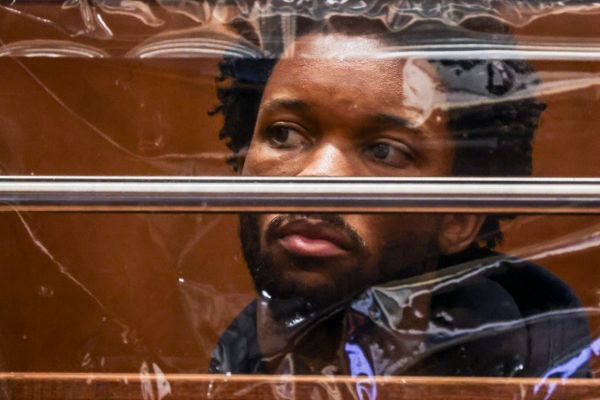
Niño-Moncada, the 33-year-old driver, who is undocumented, remains detained, facing charges of aggravated assault of an officer based on claims he tried to “intentionally” hit agents with his car. Zambrano-Contreras, 32, was not criminally charged, but has pleaded guilty to improper entry to the US, a misdemeanor. Prosecutors have said the two were dating.
Questions about the Oregon shooting come as the Trump administration faces scrutiny over its false statements, disproven by video evidence, about the killings of Good and Alex Pretti in Minneapolis and as cases of alleged “assaults” on immigration agents have repeatedly fallen apart in court.
“The federal government cannot be trusted. Our default position should be skepticism and understanding they lie very regularly,” said Sameer Kanal, a Portland city councilor. “There’s a playbook of demonizing people … and claiming vehicles were used as ‘weapons’. We see a pattern of victim-blaming, and it’s important we push back, because it’s propaganda.”
No body-camera footage
None of the six border patrol agents involved in the Portland shooting recorded body-camera footage. The shooting occurred in a hospital parking lot, but the FBI said in a 10 January affidavit supporting charges that surveillance cameras didn’t capture the incident: “Investigators continue to look for any available video evidence … but to date have been unsuccessful.”
Without videos, the charging documents largely relied on agents’ testimony. A complaint said Zambrano-Contreras was the “target of interest” for the operation and when officers approached in unmarked vehicles, they ordered her and Niño-Moncada to exit their car. Niño-Moncada, prosecutors alleged, reversed their vehicle, collided with an unoccupied border patrol car, then did a “forward/reverse maneuver multiple times”.
The filing summarized testimony from four agents – two who said they were fearful for their safety, one who said he was not. The charges did not cite testimony from the officer who appeared to have fired two shots into the driver’s side window. He has not been named.
The FBI’s affidavit alleged that Niño-Moncada later “admitted to intentionally ramming the Border Patrol vehicle in an attempt to flee”.
Last week, prosecutors disclosed in court that investigators have since obtained surveillance footage partially showing the incident. The video was not made public in court filings, but KGW, a local station, obtained and published it on Monday.
The grainy footage, taken from a distance and with no sound, does not clearly capture the encounter. It shows agents following what appears to be Niño-Moncada’s truck in the parking lot and then approaching him. He appears to maneuver the car and drive off, though the moment of the shooting is not clearly visible.
Sergio Perez, a civil rights lawyer and former US prosecutor, said it was alarming the government filed charges two days after the incident while acknowledging it was still seeking video: “This government needs to go back to the practice of slow and thorough investigations rather than what we consistently see in immigration enforcement activities – which is a rush to smear individuals.”
Niño-Moncada’s public defenders have rejected claims he intended to hit officers, noting the complaint failed to identify any specific agent who believed they were going to be hit. Niño-Moncada was likely in a “frightened” state, the attorneys argued in court filings, given the “climate of abject terror” for immigrants: “Anyone who looks like Mr Niño-Moncada would wonder: if shooting someone who looks like Ms Good is acceptable, what can they do to someone who looks like me?” the lawyers wrote.
The US attorney’s office and FBI declined to respond to detailed inquiries about the case. DHS did not respond to requests for comment. Attorneys for Niño-Moncada and Zambrano-Contreras also declined to comment.
The government’s narrative has also heavily relied on gang claims, but those allegations have not stood up to scrutiny.
‘She is a victim’
DHS has repeatedly argued Zambrano-Contreras had gang ties, claiming in its first statement the day of the shooting that she was “affiliated with [a] transnational Tren de Aragua prostitution ring and involved in a recent shooting in Portland”.
Those claims stem from an incident on 7 July 2025, the FBI wrote in its recent affidavit in Niño-Moncada’s case.
Zambrano-Contreras had been working as a sex worker that day and later told police a man had “forced her to provide oral sex, initially did not let her leave, and she was forced to leave without her belongings and all of her money”, the FBI wrote.
Once Zambrano-Contreras was able to flee, she texted Niño-Moncada to pick her up, and Niño-Moncada later told police he found her “crying and [with] marks on her neck”, according to the affidavit. Later that day, Zambrano-Contreras returned with several men to the apartment where she had been assaulted to get her money and belongings, the FBI said. Police responded to calls of shots fired at the scene and encountered two men who said they had “engaged the services of a prostitute”, and due to a “dispute”, the woman came back with other men who started to break into the apartment – one of whom fired a shot that didn’t hit anyone.
Four days later, on 11 July, there was another shooting, which the FBI says was “connected” to the 7 July shooting. In the second shooting, a Venezuelan national was shot in the abdomen. According to the FBI, he told authorities the shooting stemmed from an altercation with members of Tren de Aragua over a car sale.
One of those men was a “friend” of Zambrano-Contreras, the FBI said, and was among the group that had returned with her to the apartment to fetch her belongings.
Niño-Moncada was not present at either shooting. Zambrano-Contreras has not been described as a suspect in the first shooting, and she was not present at the second shooting. Neither have faced charges related to either shooting.
Legal experts said it seemed the government’s claim that the couple was affiliated with Tren de Aragua was largely based on vague and unproven assertions there were gang members in their social circle.
“It’s having them seem guilty without any evidence,” said Elliott Young, a history professor at Lewis and Clark College in Portland and Latin America expert who regularly testifies in asylum cases. “If they did have evidence that either of them were active in this group they’ve described as a dangerous ‘narco-terrorist’ organization, why are they not being charged with that?”
Young, who reviewed the court records, said it was particularly galling for the government to use an incident in which Zambrano-Contreras was victimized to paint her as a criminal: “It appears this woman is the victim of a rape, theft and being kidnapped, yet she is being turned into the target of a smear campaign claiming she’s an associate of the gang. It seems twisted and unjust.”
The July cases were originally investigated by Portland police and the local Washington county sheriff. A Portland police bureau spokesperson pointed to the chief’s prior remarks saying there appeared to be “some nexus” between Niño-Moncada and Zambrano-Contreras and Tren de Aragua, but that he could not address specifics while investigations were continuing. A sheriff’s spokesperson declined to answer questions, saying Zambrano-Contreras was considered a “person of interest” in the 7 July shooting, but that federal law enforcement was handling the investigation.
‘Dirtying up of the defendant’
In a 21 January hearing about whether Niño-Moncada should remain detained, prosecutors acknowledged the lack of evidence linking him to Tren de Aragua.
A federal judge, Jeff Armistead, pressed the US attorney, Thomas Edmonds, on Niño-Moncada’s link to the 7 July shooting, noting it appeared the defendant had merely rescued his girlfriend from a dangerous situation and was not involved in what happened after.
Edmonds said the other men she called that day were “related” to Tren de Aragua, then conceded: “We’re not suggesting, and we didn’t make an argument to the court that [Niño-Moncada] is a gang member or that he fired shots. But we’re saying that there are associations with him in this circle of individuals … We’re not making a submission that you ought to detain on the basis of him being a gang member. I want to be clear about that.”
Carley Palmer, a former federal prosecutor who reviewed the hearing transcript, said: “Prosecutors have a duty of candor to the court. It sounds like the prosecutor wanted to honor that.”
Gang prosecutions generally include clear documentation of affiliation, such as tattoos, social media posts or past statements to law enforcement, said Palmer, a partner at the Halpern May Ybarra Gelberg firm. None of that was presented in this case: “What’s interesting about the filings is that you don’t see evidence of gang association.”
Prosecutors, she argued, had not only failed to prove Niño-Moncada’s association with the gang, but also failed to present any argument suggesting his purported Tren de Aragua affiliation is connected to the actual alleged crime of assaulting an officer: “It just feels like a dirtying up of the defendant.”
Edmonds, the prosecutor, argued in court that Niño-Moncada posed a threat because he had eight previous traffic violations and a previous misdemeanor arrest for driving under the influence.
Niño-Moncada’s lawyers countered he was released each time with tickets and had no criminal convictions in the US nor a record in Venezuela. The attorneys said he came to the US in 2022 to flee political persecution and had been attacked by Venezuelan police. His cousin, in a court filing, said Niño-Moncada was part of student protests in approximately 2014 where police used brutal force. The cousin also expressed disbelief at the Tren de Aragua claims, noting the gang was not based in the region where they grew up.
Scholars on Latin American gangs have repeatedly disputed the Trump administration’s claims that Tren de Aragua poses a national security threat, saying the group is decentralized and there is no evidence it had any formal hierarchy or structure in the US. The administration has cited alleged Tren de Aragua threats to justify lethal boat strikes and the swift deportations of Venezuelans to a notorious El Salvador prison, without due process.
Young, the Portland-based expert on the group, said he wasn’t aware of any criminal court cases involving Tren de Aragua in Oregon, noting the state is home to only roughly 2,000 Venezuelans, with about 350 people in Portland.
Fernando Peña, a Portland-based advocate who has worked closely with Latino immigrant communities in the region, said he had seen an influx of Venezuelans in recent years, but that he had never even heard the name Tren de Aragua until the White House started talking about it last year.
‘Credibility is everything’
The US attorney’s office will face significant hurdles in prosecuting Niño-Moncada if the case goes to trial, said Palmer. The government has to prove he had “intent” to assault the agents with his vehicle, which will be challenging without body-camera evidence and considering DHS’s admission no agents were injured.
The claims of his gang connections and loose ties to a previous shooting could further be considered “unduly prejudicial” and excluded from the trial, she said.
The case is likely to be a “he said, he said” matter, Palmer said: “Credibility is everything in this kind of trial. The credibility of the individual officers who testify will be on trial and so will the credibility of the agency.”