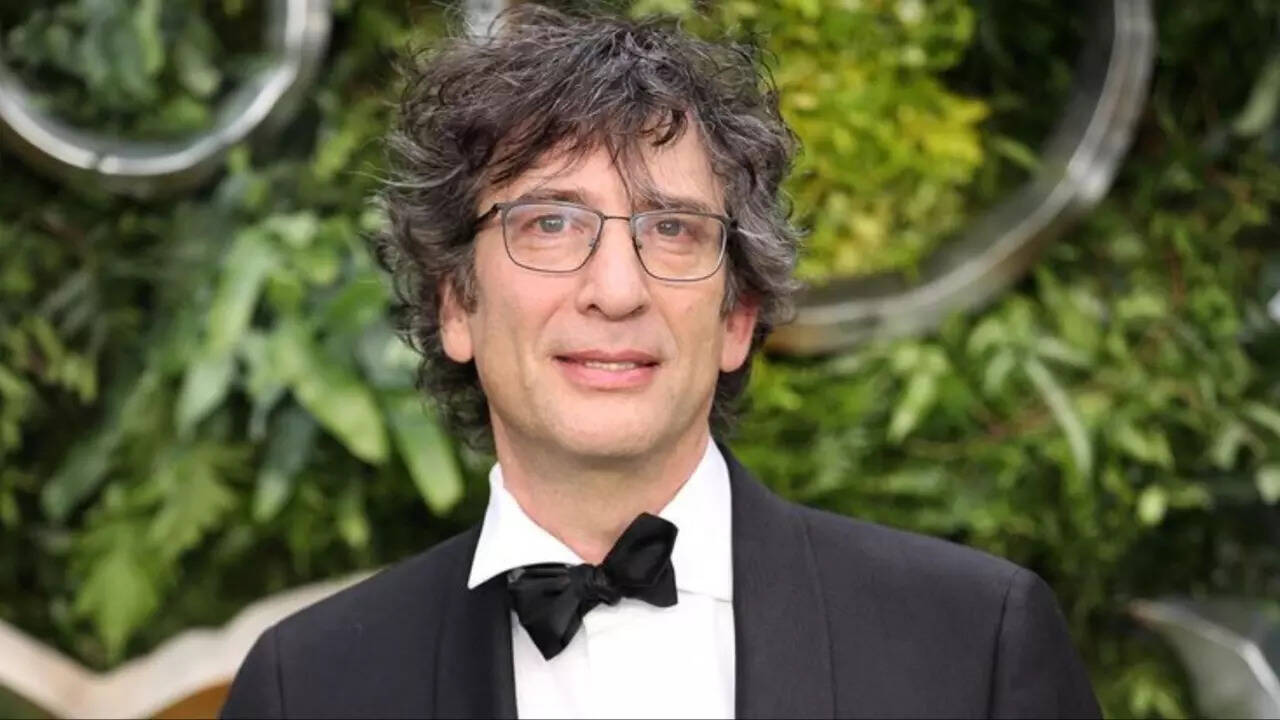
Over the past nearly two years, acclaimed British author Neil Gaiman (known worldwide for The Sandman, American Gods, Coraline and other beloved works) has been the subject of a highly contentious and polarising public controversy centred on multiple allegations of sexual assault and misconduct. What started with a podcast investigation and magazine exposé has evolved into a long-running debate about consent, evidence, media coverage and artistic legacy.
What the allegations against Neil Gaiman say
The controversy began in July 2024, when Tortoise Media released a multi-part investigative podcast titled “Master: The Allegations Against Neil Gaiman”, in which two women spoke about alleged sexual misconduct by Gaiman, including instances they described as coercive or non-consensual. Over the following months, more women came forward and in January 2025, New York Magazine published a high-profile piece detailing accounts from at least eight women accusing Gaiman of behaviours they experienced as abusive or coercive.
The allegations span decades and different contexts; some involve women who were in relationships with Gaiman that they later described as harmful, while others involve women who worked for him in some capacity, raising questions about power dynamics in addition to consent. One of the most detailed allegations came from Scarlett Pavlovich, a former nanny who has both discussed her experiences publicly and filed civil legal claims related to sexual assault and coercion.
Neil Gaiman’s denials and public statements
Throughout this period, Gaiman has repeatedly and emphatically denied ever engaging in non-consensual sexual activity. In statements on social media and his website, particularly a lengthy post this February 2026, he shared, “The allegations against me are completely and simply untrue. There are emails, text messages and video evidence that flatly contradict them. These allegations, especially the really salacious ones, have been spread and amplified by people who seemed a lot more interested in outrage and getting clicks on headlines rather than whether things had actually happened or not. (They didn't.)”
I forgot I was still following Neil Gaiman’s Twitter and then got a pop up of a post that he said he’s experiencing a smear campaign pic.twitter.com/2GfGp7xs33
— ElizaJean🖋💕 (@JellyLizzy) February 2, 2026
He characterised the controversy as a “smear campaign” driven by sensationalist coverage and online outrage rather than careful consideration of evidence. Gaiman also expressed frustration at being drawn into the controversy after initially refraining from comment and revealed, “One thing that's kept me going through all this madness is the conviction that the truth would, eventually, come out. I expected that when the allegations were first made there would be journalism, and that the journalism would take the (mountains of) evidence into account, and was astonished to see how much of the reporting was simply an echo chamber, and how the actual evidence was dismissed or ignored.”
In addition to wholesale denials, Gaiman has acknowledged, “I was a journalist once, and I have enormous respect for journalists, so I've been hugely heartened by the meticulous fact and evidence-based investigative writing of one particular journalist, whom some of you recently brought to my attention, who writes under the name of TechnoPathology. I've had no contact with TechnoPathology. But I'd like to thank them personally for actually looking at the evidence and reporting what they found, which is not what anyone else had done.”
So Neil Gaiman decided to speak up now and it's only really to say he's about to come out with a new book....he makes me sick pic.twitter.com/Og9zmBwvgY
— ⚞•⚟Miles⚞•⚟ (@themightymiles) February 2, 2026
Gaiman called it “a strange, turbulent and occasionally nightmarish year and a half” but he emphasised that he took his own advice of making art when things get tough and once he was done with making television, he went back to doing something else that he claimed he loved even more: writing. He wrote, “I thought it was going to be a fairly short project when I began it, but it's looking like it's going to be the biggest thing I've done since American Gods. It's already much longer than The Ocean at the End of the Lane, and it's barely finished wiping its boots and hanging up its coat.”
He concluded, “I spend half of every month being a full-time Dad, and that remains the best bit of my life. It's a rough time for the world. I look at what's happening on the home front and internationally, and I worry; and I am still convinced there are more good people out there than the other kind. Thank you again to so many of you for your belief in my innocence and your support for my work. It has meant the world to me.”
Neil Gaiman slinking out of the shadows to try to sell a new book? pic.twitter.com/U0bpvqRje0
— Aaron Meyers (@AaronMeyers) February 3, 2026
Neil Gaiman’s legal and professional fallout
The allegations have had tangible impacts on Gaiman’s professional life. For example, Dark Horse Comics (a publisher closely associated with his work) publicly announced that it would no longer publish his books or future projects, including cancelling planned releases connected to his Anansi Boys series. Other media adaptations associated with his properties, such as expanded seasons of Good Omens or Coraline stage projects, were reportedly paused or restructured, reflecting industry caution amid the controversy.
starting the year with epstein files and the comeback of neil gaiman... just kill me right now atp https://t.co/A1NOyNQO3v pic.twitter.com/QGiD305g1Z
— ˙⋆✮Em ✮⋆˙🐈⬛ (@lavis_tashitp0s) February 2, 2026
From a legal standpoint, some actions taken against Gaiman such as at least one lawsuit filed by Pavlovich in US courts, were ultimately dismissed on jurisdictional grounds because the alleged conduct occurred outside the forum that filed the suit, meaning procedural rather than substantive legal rulings left questions unresolved in US courts.
Media, evidence and the “echo chamber” debate around Neil Gaiman
One of the core points of dispute in this saga is how media and public discourse have treated the allegations and the author’s responses. Gaiman and some supporters argue that much of the reporting has been an “echo chamber”, amplifying accusations without sufficiently weighing counter-evidence like private correspondence or communications that he says show consensual relationships. He has publicly thanked a private investigative writer, known only by a pen name, for reporting what he considers factual evidence of his innocence.
Neil Gaiman showing up again to apologize for nothing and then proceeding to talk up his next book (like anyone is going to read it) is so gross.
Stay gone, asshole.
— Kent Priore, Author (@KentPriore) February 3, 2026
Critics, including some of the accusers and advocates for survivors of sexual assault, counter that the nature of consent, particularly where power differentials are significant cannot simply be reduced to text messages or isolated screenshots. For many observers, the key issues involve not just legal consent but ethical considerations of consent in context, especially in relationships involving caretaking, employment, or artistic authority.
This reflects evolving cultural conversations about consent, coercion and the ways personal relationships intersect with power. Discussions on platforms like Reddit show that community responses are deeply divided, with some users emphasising the difficulty survivors face in coming forward, and others analysing textual evidence as ambiguous or inconclusive.
Reactions of Neil Gaiman’s fans and critics
Among fans and cultural observers, reactions have been highly mixed. Some longtime admirers feel betrayed or disillusioned, struggling to reconcile their appreciation for Gaiman’s creative work with troubling allegations, a dynamic common in other cases where beloved figures face misconduct claims. The Internet has larlegy called out a caution against falling for his new book promotion.
Neil Gaiman, I do not forgive you. pic.twitter.com/0b5AxxoDs8
— °•☆°• (@starscapishh) February 3, 2026
The debate around Gaiman’s case illustrates broader cultural tensions of how to balance support for survivors with fair treatment of the accused, how media coverage can amplify narratives in ways that feel reductive or sensational and how personal legacies are re-evaluated in the public eye as new information emerges.
I said this last year when the big news broke, and I'll say it again.
Fuck Neil Gaiman. He is a serial rapist and he has gaslighted people for years about it. Anyone who follows him or supports him in any way, you are complicit in his gaslighting.
— The Paladin Journal (@abhinavjain87) February 3, 2026
Neil Gaiman’s recent statement, his first detailed public response in nearly two years, frames the sexual assault allegations against him as untrue and part of a smear campaign, citing contradictory evidence and questioning media coverage. Meanwhile, accusers and their supporters maintain that the controversy highlights serious concerns about consent, power dynamics and accountability that go beyond legal verdicts.