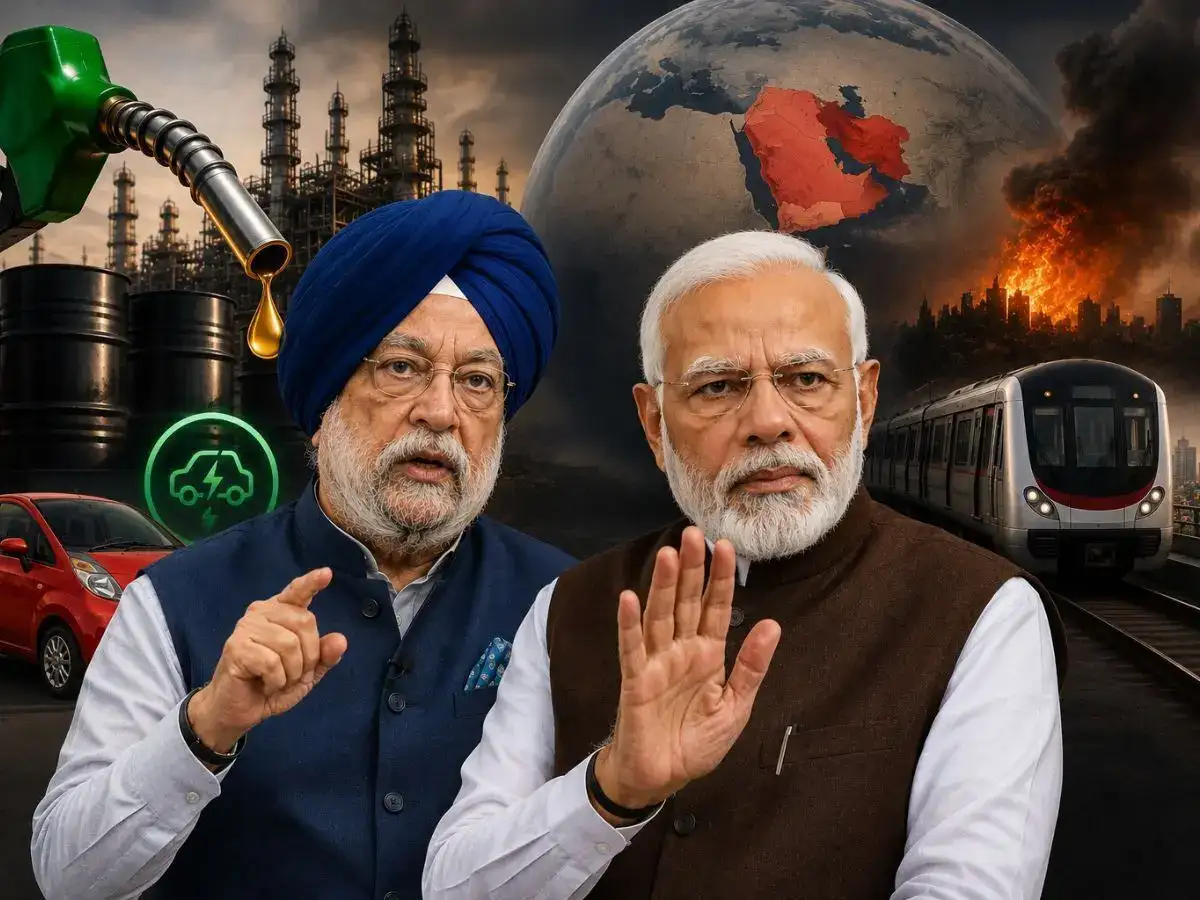
Union Petroleum and Natural Gas Minister Hardeep Singh Puri on Tuesday dismissed concerns of any imminent lockdown-like restrictions after Prime Minister Narendra Modi urged citizens to adopt fuel-saving and austerity measures amid the ongoing West Asia crisis, asserting that India’s energy supplies remain stable despite global disruptions.
Addressing the CII Annual Business Summit 2026, Puri said there was no cause for panic even as the government pushes conservation measures similar to those seen during the COVID-19 period.
Also read: No plan to hike gold import duty despite Modi's appeal to skip buying, says government official
“It's not like a lockdown is going to take place tomorrow,” Puri said, seeking to allay fears after Modi’s recent appeal to reduce fuel consumption, use public transport, postpone foreign travel and avoid non-essential spending to conserve foreign exchange.
The minister said India had successfully shielded consumers from global oil market volatility and maintained uninterrupted fuel availability despite rising crude prices linked to geopolitical tensions in West Asia.
“At a time of global supply shocks and rising crude prices, India ensured seamless availability of petrol, diesel, and LPG across the country, with no reports of shortages. Despite sharp global volatility, fuel prices have largely remained unchanged since 2022, reflecting strong policy coordination and effective supply management,” he said.
LPG output scaled up
Puri said India has significantly ramped up domestic LPG production to strengthen supply security and price stability amid rising demand.
According to the minister, LPG production has increased from nearly 36,000 metric tonnes per day to around 54,000 metric tonnes per day.
He added that the country has also built substantial energy buffers, including nearly 60 days of crude oil reserves and 45 days of LPG stocks, to protect against external supply disruptions.
The remarks come days after Modi called for a nationwide effort to reduce fuel and foreign exchange consumption as the prolonged West Asia conflict threatens to increase pressure on India’s import bill.
The Prime Minister had urged citizens to cut petrol and diesel use, rely more on metro rail and public transport, adopt carpooling, increase the use of electric vehicles and shift parcel movement to railways. He had also appealed to people to postpone gold purchases and overseas travel for a year.
Read more: As PM Modi appeals, govt & India Inc set to operate on a war footing
India’s refining ambitions
Highlighting India’s growing global energy role, Puri said the country should not be viewed merely as a large importer of oil.
“India's energy story is not just about imports, but also about being a leading global refining hub,” he said.
He noted that India is currently the world’s third-largest refining hub and the fourth-largest exporter of petroleum products, with refining capacity reaching nearly 260 million metric tonnes annually.
On domestic exploration, the minister said the government has accelerated efforts to revive hydrocarbon production through reforms and wider exploration coverage.
Puri said exploration activities are being expanded from 6 per cent to 15 per cent of India’s 3.5 million square kilometres of sedimentary basins, while previously restricted “no-go” areas have also been opened up.
He added that reforms such as the Open Acreage Licensing Policy (OALP) IX and the Oilfields (Regulation and Development) Amendment Act, 2025, are aimed at attracting greater private and international investment.
Referring to future energy potential, Puri said the Andaman region continues to show promising hydrocarbon reserves, while initiatives such as “Samudra Manthan” are expected to accelerate deepwater exploration.
The minister also urged industries to transition from LPG to LNG and adopt piped gas infrastructure, saying piped gas is “15-20 per cent cheaper and significantly cleaner.”