The July Fed meeting kicked off on Tuesday, July 28, and concluded today, July 29, with the central bank's latest policy decision.
Oil prices have been volatile recently amid on-again, off-again fighting between the U.S. and Iran. But while crude futures were lower to start Fed week, they're up more than 20% for July, which is likely to keep headline inflation readings hot in the near term.
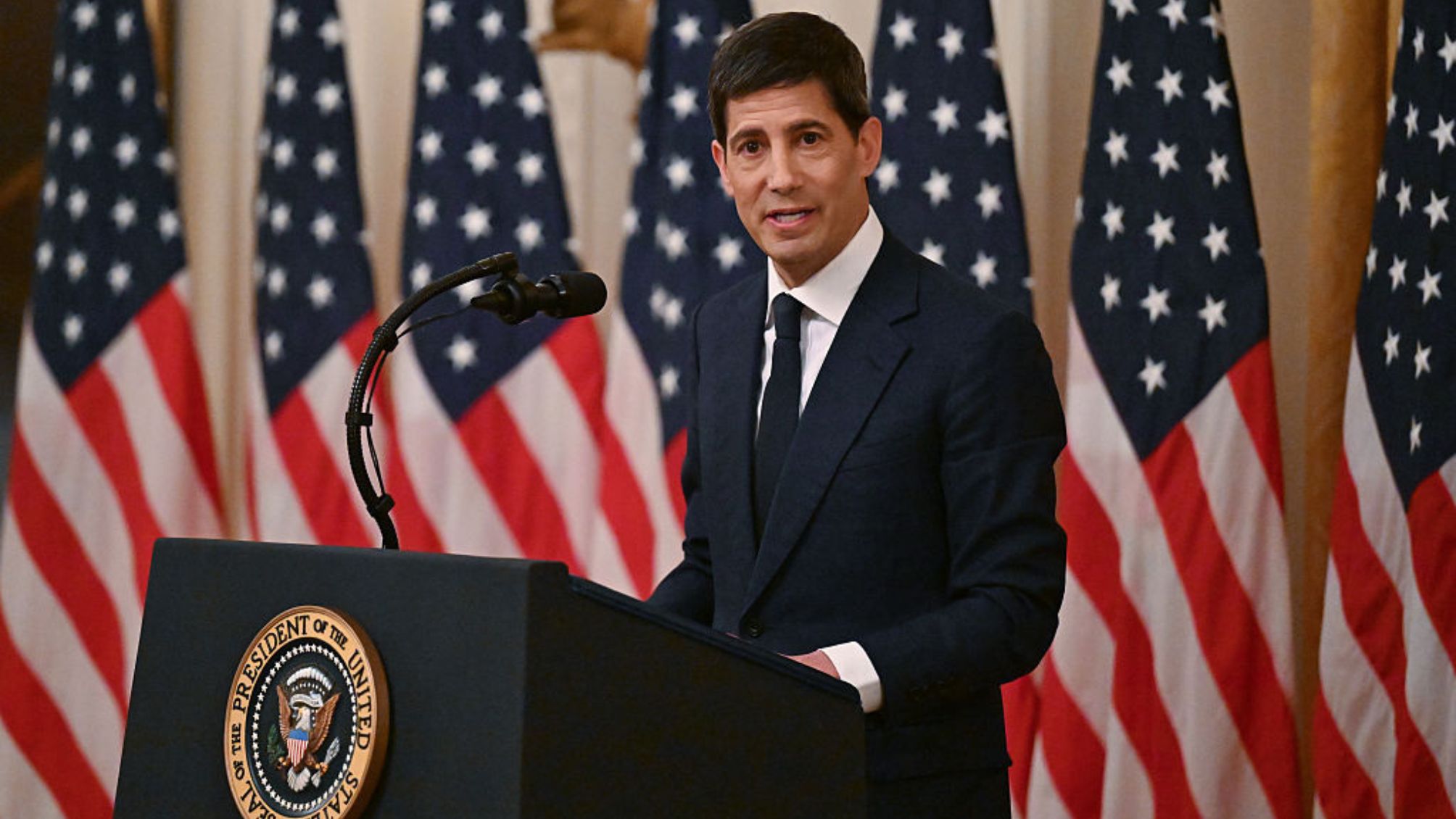
Still, Federal Reserve Chair Kevin Warsh and the rest of the Federal Open Market Committee (FOMC) voted to interest rates steady this time around, though a few committee members voted to raise rates.
The Kiplinger team reported live on the July Fed meeting, bringing you the news and expert analysis of what it could mean for the economy and your money. Scroll for the latest updates.
How Does the Federal Reserve Work? | How the New Fed Chair Could Impact What You Pay in Taxes this Year | Navigating the New Fed: 5 Conflicts Kevin Warsh Has to Tackle Now
The stock market trades mixed to start Fed week
Stocks are mixed at midday Monday as market participants weigh falling oil prices and a continued sell-off in semiconductor stocks.
At last check, the blue-chip Dow Jones Industrial Average was up 0.3% at 52,099, boosted by strength in mega caps Microsoft (MSFT) and Alphabet (GOOGL).
But the broader S&P 500 is down 0.04% at 7,408 and the tech-heavy Nasdaq Composite is off 0.2% at 24,924, with heavy losses for Micron Technology (MU) and SanDisk (SNDK) dragging on the indexes.
Over in the bond market, the yield on the 2-year Treasury yield is off 1.5 basis points at 4.316% and the 10-year Treasury yield is 3.2 basis points lower at 4.647%, though both remain near their highest points since early 2025.
- Karee Venema
Fed meeting schedule for 2026
The next Fed meeting, which runs from July 28 through July 29, marks the fifth gathering of 2026.
"The committee meets eight times a year, or about once every six weeks," writes Kiplinger contributor Dan Burrows in his feature, "When Is the Next Fed Meeting?".
The Federal Open Market Committee "is required to meet at least four times a year and may convene additional meetings if necessary," Burrows adds, noting that "the convention of meeting eight times per year dates back to the market stresses of 1981."
Fed meetings last two days and wrap up with the release of a policy decision at 2 pm Eastern Standard Time. This is typically followed by the Fed chair's press conference at 2:30 pm, though this could change under Warsh's leadership.
Here is the full remaining Fed meeting schedule for 2026:
- July 28 to 29
- September 15 to 16
- October 27 to 28
- December 8 to 9
- Karee Venema
Oil prices are lower Monday as U.S. and Iran pause fighting
Oil prices are starting Fed week on a negative note, with front-month West Texas Intermediate crude futures down 6.5% at $83.50 per barrel.
This comes after a Reuters report indicated that Iran has agreed to pause strikes in the region as long as Washington agrees to do the same.
But "the situation remains far from resolved," says Daniela Hathorn, senior market analyst at Capital.com. "Shipping risks through the Strait of Hormuz and continued disruption in the Red Sea mean energy markets remain vulnerable to fresh headlines, and any setback in negotiations could quickly send crude prices higher once again."
- Karee Venema
Who is Kevin Warsh?
The July Fed meeting will mark Kevin Warsh's second as head of the Federal Reserve. But who is Kevin Warsh?
Warsh previously served on the Federal Reserve Board from February 2006 through March 2011. He was Fed Chair Ben Bernanke's right-hand man during the 2008-09 global financial crisis and was his primary liaison to Wall Street, which earned him credibility he still retains.
Before his time at the Federal Reserve, Warsh was special assistant to the president for economic policy and executive secretary of the White House National Economic Council from 2002 through 2006, during the George W. Bush administration. From 1995 to 2002, Warsh worked for Morgan Stanley.
Leading up to his May 2026 confirmation as Fed chair, Warsh was a visiting fellow in economics at Stanford University's Hoover Institution, a lecturer at the Stanford Graduate School of Business and a member of the Panel of Economic Advisers of the Congressional Budget Office.
He is widely viewed as a "hawk" on monetary policy who generally favors higher interest rates rather than the risk of inflation.
At the same time, Warsh, who was said to be a candidate for Treasury secretary before Trump picked Scott Bessent, was on the short list because he has a great relationship with the president.
Warsh said in mid-2025 that "the independent operations in the conduct of monetary policy is essential," adding "that doesn't mean the Fed is independent in everything else it does."
Though he consistently took the hawkish line on inflation during his time inside the central bank, Warsh has more recently advocated for lower interest rates.
- David Dittman
The July Fed meeting is a "live" one
With inflation risks elevated amid geopolitical uncertainty in the Middle East, Wall Street isn't sure what the Federal Reserve will do with interest rates this time around.
The odds of a rate hike have been climbing recently. According to CME Group FedWatch, futures traders are now pricing in a 36% chance of a quarter-percentage-point increase to the federal funds rate on Wednesday — up from 16% one week ago.
And given Chair Warsh's "clear hawkish bias," this makes the July Fed meeting a "live" one, says Kyle Rodda, senior financial market analyst at Capital.com.
In addition to the "will they or won't they" narrative on interest rates, markets are also contending with the additional "challenge of working out the potential path forward for policy from here, given [Warsh's] antipathy towards forward guidance," Rodda adds.
- Karee Venema
Who gets to vote at the July Fed meeting?
The Federal Open Market Committee (FOMC) has 12 total members, eight permanent and four who rotate each year.
The eight permanent voting committee members include the Fed chair and vice chair, the five Fed governors and the president of the New York Fed.
Four regional Fed presidents are rotated in each calendar year.
The 2026 FOMC voting committee consists of:
- Fed Chair Kevin Warsh
- Vice Chair Philip Jefferson
- Fed Governor Michael Barr
- Fed Governor Michelle Bowman
- Fed Governor Lisa Cook
- Fed Governor Jerome Powell
- Fed Governor Christopher Waller
- New York Fed President John Williams
- Cleveland Fed President Beth Hammack
- Minneapolis Fed President Neel Kashkari
- Dallas Fed President Lorie Logan
- Philadelphia Fed President Anna Paulson
In 2027, the presidents from Chicago, Richmond, Atlanta and San Francisco will rotate in as FOMC voting members, according to the Federal Reserve.
- Karee Venema
How higher inflation — and interest rates — will impact Big Tech
Oil prices and their impact on inflation are just one uncertainty keeping Wall Street wondering what the Fed will do with interest rates. But there are others, says Brent Schutte, chief investment officer at Northwestern Mutual Wealth Management Company, including President Donald Trump's recently announced tariffs, which will impose 10% to 25% levies on a variety of goods from major trading partners.
And this has major implications for Big Tech, which is ramping up capital expenditures to support artificial intelligence (AI) initiatives. Until recently, many of the biggest companies have been financing this spending boom through free cash flow, meaning higher interest rates weren't really an issue.
But now, says Schutte, several of these free-cash-flow-positive firms have tapped capital markets — both debt and equity — to fund their spending. He points to Alphabet (GOOGL), which said last week that it has increased its full-year capex budget to $205 billion at the high end and posted its first-ever quarter of negative free cash flow. It also announced an $80 billion stock sale in June to raise cash.
"We believe this marks an important shift," explains Schutte. "These companies, and the AI build-out more broadly, now increasingly rely on external capital to fund ever-growing investments, making them more economically sensitive as higher interest rates increase the cost of capital. The rising expense also raises questions about whether companies deploying AI will realize benefits quickly enough to justify continued spending."
Schutte does not expect the Federal Reserve to raise rates this week. He wonders, though, if the central bank will move to lift the federal funds rate sooner rather than later to ensure that higher inflation, which has been running above target for several years now and is unlikely to recede soon given mounting price pressures, does not become embedded in the economy. And this could have a major impact on Big Tech.
- Karee Venema
How well do you know the Fed?
Fed meetings have become key events as central bank officials try to balance high inflation and labor market hiccups against the White House's desire for lower interest rates.
But how well do you know the Fed?
With the next Fed meeting on deck, we decided to test your basic knowledge of the Federal Reserve with a quick quiz.
Master Your Fed Knowledge: Take Our Quick Federal Reserve Quiz
There's a range of possible outcomes for the July Fed meeting, says Johnson Investment Counsel's chief economist
The July Fed meeting could have several potential outcomes, says Brandon Zureick, chief economist and senior managing director at Johnson Investment Counsel.
The central bank made clear following its June meeting that it remains focused on price stability. And while the June Consumer Price Index (CPI) report was much softer than expected, Zureick notes, "geopolitical tensions have flared once again, reviving concerns that higher energy prices could renew upward inflation pressure."
But the FOMC will not see any July inflation data before this week's meeting, so the chief economist expects the Fed to keep interest rates at their current range of 3.5% to 3.75%. "However, policymakers are also likely to emphasize that they remain prepared to raise rates if subsequent inflation reports surprise meaningfully to the upside," he adds.
And with no Summary of Economic Projections released this time around, meaning market participants will not see any new economic forecasts or interest-rate projections from committee members, Wall Street will watch Chair Warsh's post-meeting press conference "closely for any clues about the Fed’s desired path for monetary policy," says Zureick.
- Karee Venema
Dow, S&P 500 close higher as oil prices decline
Stocks closed mixed Monday as market participants weighed falling oil prices against an extended sell-off in chipmakers.
The front-month West Texas Intermediate crude oil futures contract was down 8.1% to $82.04 per barrel. The 2-year Treasury yield declined by nine basis points to 4.322%.
Both are still much higher than they were before the war between the U.S. and Iran started on February 28. But the immediate reaction to the suspension of attacks in the U.S.-Iran war "implies further equity upside when the conflict is fully over," according to Louis Navellier of Navellier & Associates.
At the closing bell, the Dow Jones Industrial Average was up 0.5% to 52,209, and the broad-based S&P 500 had inched up 0.02% to 7,413 But the tech-heavy Nasdaq Composite was down 0.2% to 24,932.
Markets remain mixed ahead of the July Fed meeting
Crude oil prices are trending lower and interest rates are also easing back, but equity futures indicate a mixed stock market about an hour before Tuesday's opening bell.
The S&P 500 and the Dow Jones Industrial Average are poised to open higher, though the tech-heavy Nasdaq Composite continues to be weighed down by concerns about returns on AI investments.
Still, like most investors, traders and speculators, Fed Chair Kevin Warsh will welcome another lull in the war in the Middle East and will hope it evolves into sustainable peace between the U.S. and Iran.
Indeed, rising energy prices because of the bottleneck at the Strait of Hormuz are the primary reason price action in the fed funds futures market suggests the Fed's next move will be to raise interest rates.
It probably won't happen at the July Fed meeting, which starts today and ends tomorrow. But multiple voting members of the Federal Open Market Committee (FOMC) have expressed fear of inflation accelerating again.
That makes this meeting a "live" one, meaning Warsh & Co. could raise rates. And CME FedWatch says the central bank will raise the fed funds futures rate as soon as September.
– David Dittman
Citadel strategist says the Fed hikes this week
"The market may once again be underestimating the extent of the hawkish shift at the Fed," writes Frank Flight, head of macro strategy at Citadel Securities, in a note previewing this week's FOMC meeting.
Indeed, Flight says the Fed will raise the target range for the federal funds rate by 25 basis points on Wednesday, a move that "would emphatically end the forward guidance era."
The strategist refers to new Fed Chair Kevin Warsh's campaign to rein in central bankers' talk about the future.
Raising interest rates would also strike a blow for Fed independence, Flight notes, and underscore Warsh's commitment to "price stability."
– David Dittman
Trump says Fed Chair Warsh is "fantastic"
President Donald Trump has carved out a safe space for Fed Chair Kevin Warsh, even as markets price in higher interest rates.
"Kevin's fantastic, but he's got a board, and the board members are very political, I would say," Trump said to reporters on Monday. "He wants to do the right thing. I know what he wants to do."
Warsh wants "price stability," though it's fair to say Trump put him at the Fed to the federal funds rate.
Indeed, on Monday the president repeated his claim that the U.S. should have the lowest interest rates in the world.
"You need the consent of some people that have perhaps bad intentions. Rates should be lowered. This country could be at 8%, 9%, 10%, 12% GDP. That’s what it should be," he said.
"We should have the lowest interest rate in the world, like it used to be 30 years ago," he added.
The main equity indexes remain mixed, with the Dow Jones Industrial Average and the S&P 500 in positive territory, but the Nasdaq Composite still suffering the burden of heavy AI expectations.
Crude oil prices are down, and Treasury yields are lower across the maturity spectrum.
– David Dittman
Are you ready for "higher for longer" long-term rates?
"Interest rates have steadily risen since the start of the Iran War," Moody's Analytics Chief Economist Marc Zandi writes in a preview of the July Fed meeting, "and are an increasingly heavy burden on the economy."
The 10-year Treasury yield was at 3.960% on February 27, the day before the war in the Middle East started, and closed at 4.641% on Monday. The 30-year fixed-rate mortgage, as Zandi notes, has risen from below 6% to above 6.8%.
"Somewhat surprisingly, the runup in rates is not because of higher inflation expectations," Zandi observes. "They’re unchanged."
Indeed, the market believes Fed Chair Kevin Warsh when he says he's committed to "price stability," and that the central bank will "press on the brakes" and raise interest rates to stem inflation. Hence the rise in the 2-year Treasury yield.
"Arguably more surprising is that the other half of the increase in T-yields is an increase in the term premium," the economist says.
The "term premium" is extra yield on a longer-term bond because there's more risk vs a shorter-term bond or other alternative. It's not a good thing that it's "suddenly about as wide as it has been since the wake of the Global Financial Crisis."
And Zandi is concerned about the new Fed chair's communications policy. "It can’t help that the new Fed chair believes the Fed should be less transparent in setting monetary policy. This means greater uncertainty and, thus, volatility in rates," Zandi explains.
"Then there is the Iran War, which is increasingly costly to the Treasury," Zandi adds. "The nation's dark fiscal outlook is getting darker."
Higher prices for crude oil and other commodities have left a notable economic impact. "But the damage from the conflict’s fallout on monetary policy and long-term interest rates is mounting quickly," the economist concludes.
"Higher-for-longer interest rates will be increasingly tough for the economy to bear."
– David Dittman
What Warsh (and Bessent (and Trump?)) really want
The solution to the basic problem Moody's Analytics Chief Economist Marc Zandi describes–higher-for-longer long-term term rates–could be an increase to the federal funds rate.
That's how Wells Fargo Securities Chief Economist Tom Porcelli sees it.
"By raising rates, Warsh (and by extension Bessent) will get what they ultimately want: back-end rates to move lower. The thinking goes that by hiking, Warsh will firm up his inflation fighting cred and squeeze out the inflation premium built into the back end of the rates market."
Zandi emphasized the "term" part in his note. But the operative part is the premium. If it comes down, things like 30-year mortgage rates could move lower.
That's what recent history suggests, as Bloomberg's Robert Burgess observes: "The recently deceased Fed Chairman Alan Greenspan found that out back in 2024, when the central bank started raising its target for the federal funds rate from 1% to 4.25% by early 2006 only to see longer-term bond yields fall."
Amid "Greenspan's conundrum," 30-year mortgage rates fell from 6.34% to 5.47%.
– David Dittman
Crude oil sell-off reaccelerates
Prices for the front-month West Texas Intermediate (WTI) and Brent crude oil futures contracts spiked lower late Tuesday morning amid more fresh hopes for peace in the Middle East.
WTI was down 0.7% at the opening bell, Brent 0.4%. A sell-off that started on Monday with President Donald Trump saying there's a chance the U.S. and Iran could make a deal to end the war in the Middle East accelerated shortly after 11 am Eastern Standard Time.
WTI, the domestic benchmark, plunged to $77.80 per barrel, down 5.8% from its Monday closing price. Brent, the global crude benchmark, slid 6.6%.
Interest rates are also falling, with the 2-year Treasury yield down to 4.266% vs 4.323% on Monday, the 10-year down to 4.59% from 4.641%, and the 30-year at 5.092% vs 5.125%.
The Nasdaq Composite rallied to join the S&P 500 and the Dow Jones Industrial Average in the green for the day.
Semiconductor stocks are still struggling, though Nvidia (NVDA) was among 27 of 30 Dow Jones stocks in positive territory.
– David Dittman
Rate hike odds recede
CME FedWatch showed a 68.5% probability the target range for the federal funds rate will still be 3.50% to 3.75% when the July Fed meeting wraps up on Wednesday. That's up from 63.7% at the closing bell on Monday.
At the same time, price action in the fed funds futures market shows the odds of a 25 basis-point rate hike in September have ticked back to 55.6% from 55.7%.
The front-month West Texas Intermediate crude oil futures contract is down more than 4%, and the 2-year Treasury yield is lower by five basis points.
The Dow Jones Industrial Average is up more than 1% heading into the final hour of trading for the first day of the July Fed meeting. The S&P 500 is in positive territory, too.
The tech-heavy Nasdaq Composite is struggling to stay above the breakeven line. But investors, traders and speculators seem encouraged again by prospects for peace in the Middle East.
– David Dittman
Trump v Fed governors
Whether threats against the Fed's independence create upward pressure on interest rates seems a moot point when the executive branch is using tariffs and wars of choice as its principal tools of foreign policy.
Both the 2-year and the 30-year Treasury yields have hit new 52-week highs in recent weeks, pushed up by the energy shock emanating from the Strait of Hormuz, mostly, but also due to the lingering impact of Trump's tariffs.
Still, when President Donald Trump says things like, "Kevin’s fantastic, but he’s got a board, and the board members are very political," and refers to those board members as "some people that have perhaps bad intentions," Fed watchers are going to pay close attention.
There is, after all, an active case on the federal docket about whether President Trump can fire Fed Governor Lisa Cook.
Indeed, among the multiple conflicts Fed Chair Kevin Warsh must navigate is a potential attempt to remove Fed Governor Michael Barr.
– David Dittman
Chip stocks are still a drag on the Nasdaq
Stocks were choppy early on Tuesday, but falling oil prices and a round of well-received corporate earnings helped the Dow Jones Industrial Average and S&P 500 climb higher into the close.
Front-month West Texas Intermediate crude futures fell 4% to settle at $79.26 per barrel.
The Nasdaq Composite, however, couldn't sidestep an extended slump in chip stocks.
The most important day for stocks?
Today may be the most important day for stocks in recent memory, says Rick Gardner, chief investment officer of RGA Investments. One thing Wall Street does not like is uncertainty, so today's update from Fed Chair Warsh on interest rates and inflation amid volatile oil prices will be welcome.
Gardner does not expect a rate hike this time around given that "bond yields have already risen to the upper end of their trading range, and have essentially acted as a rate hike without the Federal Reserve making any adjustments."
In addition to the Fed meeting, market participants will also see quarterly results from mega-cap companies Meta Platforms (META) and Microsoft (MSFT) after tonight's close.
These earnings reports, as well as those from Amazon (AMZN) and Apple (AAPL), which are due out after Thursday's close, "may help shed light on whether or not we are finally seeing a return on investment for the massive amounts of AI spending taking place," explains Gardner.
- Karee Venema
Stocks trade lower on Fed Day as oil prices spike
Stocks are in negative territory early Wednesday as oil prices jump. At last check, the blue-chip Dow Jones Industrial Average was down 1.2% at 52,105, the broader S&P 500 was off 0.4% at 7,400, and the tech-heavy Nasdaq Composite was 0.4% lower at 24,769.
After falling in recent sessions, front-month West Texas Intermediate crude futures have spiked 7.1% to $84.88 per barrel as Iran initiated "surprise attacks" against U.S. forces in the Middle East, according to a U.S. Central Command social media post.
Semiconductor stocks are also creating headwinds, with the iShares Semiconductor ETF (SOXX) down 1.8%.
- Karee Venema
What time will the Fed statement be released and what changes are expected?
The Federal Open Market Committee will release its updated policy statement at 2 pm Eastern Standard Time today, July 29.
"Economic activity is expanding at a solid pace despite elevated uncertainty that owes, in part, to the conflict in the Middle East," the FOMC stated in its scaled-back June statement. "Productivity growth and capital investment are strong. Job gains have kept pace with the workforce, and the unemployment rate has changed little."
The committee reiterated its goal to deliver price stability as inflation remains above its 2% goal.
This time around, "the policy statement will likely lay out another mixed picture of inflation's drivers," says Bill Adams, chief U.S. economist at Fifth Third Commercial Bank. "On the one hand, good news from relatively tame house prices and rent increases, and from the dissipating impact of 2025's tariff hikes. On the other, bad news from rebounding energy prices as disruptions to Mideast and Russian exports resurface; new tariffs; AI-related pressure on electronics prices; and labor supply bottlenecks pushing up prices of services like home health care and nursing care."
Adams feels that if the FOMC or Fed Chair Warsh gives "even an inkling of guidance," it will be for a data-dependent approach to the September policy decision.
- Karee Venema
Why boring is an attractive option for investors right now
Brian Rehling, co-head of Global Fixed Income and Digital Asset Strategy at Wells Fargo Investment Institute (WFII), doesn't expect the Federal Reserve to raise rates at all this year.
But he does believe that if inflation remains above the Fed's 2% target, the central bank will keep the federal funds rate higher for longer. This makes the next few inflation reports critical ones for Wall Street.
In this environment, Rehling says that short-term fixed income is an attractive option for investors because it allows for attractive yields without interest-rate risk.
"Short-term Treasuries, certificates of deposit (CDs), and money-market funds may not be flashy, but they can do a lot of work in a portfolio when the Fed is focused on inflation and rates are likely to stay elevated," he explains. "Sometimes the boring part of the portfolio earns its keep."
- Karee Venema
Kevin Warsh's dilemma
All eyes are on the Federal Reserve today, and whether it will raise interest rates, or signal an intention to raise them later this year, to combat inflation that remains persistently above the Fed's own 2% target.
Unfortunately for Kevin Warsh, the central bank's new chair, much of the inflationary pressure hitting the U.S. economy comes from a source he can't do much about: High oil prices. The conflict in the Middle East has limited oil exports from the Persian Gulf and pushed U.S. retail gas prices up by about $1 per gallon since late winter.
As the fighting continues with no immediate resolution in sight, Warsh has got to be feeling like he's caught between a rock and a hard place. Raising interest rates won't ease the oil crunch, but it's the main tool the Fed has for slowing the economy to cool off inflation. So which will be the less-bad option in his view? We'll find out soon.
- Jim Patterson
What time does Kevin Warsh speak today?
Fed Chair Warsh will host a press conference at 2:30 pm Eastern Standard Time today, July 29.
"With little forward guidance to lean on, the statement language and Warsh's press conference will carry outsized weight," explain Jason Pride, chief of Investment Strategy & Research and Michael Reynolds, vice president of Investment Strategy at Glenmede. "Markets will be parsing both for any signal on how the Committee is weighing the balance between still-firm inflation and an economy that continues to hold up, offering the clearest read yet on its evolving reaction function."
The two don't expect a rate hike this afternoon as the central bank waits to see if the energy shock dissipates. "For markets, the greater near-term uncertainty is less about this meeting's outcome and more about learning how a Warsh-led Fed will communicate and react going forward," they conclude.
- Karee Venema
Stocks trade lower ahead of the Fed, bond yields rise
Blue chip stocks outperformed on Tuesday, but they're selling off on Fed Day. The Dow Jones Industrial Average was last seen down 1.4% at 52,033 as high-priced component Caterpillar (CAT) sinks 6% on a downgrade to Hold from Buy at Baird.
The S&P 500 is off 0.5% at 7,389 and the Nasdaq Composite is 0.5% lower at 24,759.
Over in the bond market, the 2-year Treasury yield is up 5.3 basis points at 4.33%. Yields on the 10-year Treasury note (+4.3 basis points at 4.647%) and 30-year note (+2.4 basis points at 5.121%) are higher, as well.
- Karee Venema
The Fed keeps rates unchanged in split decision
The Fed just announced that it is keeping its benchmark interest rate unchanged, in a range of 3.5-3.75%. In a terse statement, it noted that the economy is "expanding at a solid pace," but also acknowledged that inflation remains above its target of 2%, due in part to the situation in the Middle East causing energy prices to rise. "The Committee will deliver price stability," it declared, but with no details on how.
Worth noting, three voting members of the FOMC — Beth M. Hammack, Neel Kashkari and Lorie K. Logan — dissented from the no-change policy and voted to raise the Fed's rate by a quarter of a percentage point. Such dissensions have not been typical in recent years, raising questions about how long the Fed can maintain rates at their present level.
- Jim Patterson
Where can I watch Fed Chair Warsh's press conference?
Fed Chair Kevin Warsh's press conference will begin at 2:30 pm Eastern Standard Time this afternoon.
The presser can be viewed on the Federal Reserve's website or on the Fed's YouTube channel.
Who voted to raise rates?
The July Fed meeting decision was a split one, with three committee members voting to raise rates by a quarter-percentage point.
Cleveland Fed President Beth Hammack and Dallas Fed President Lorie Logan are considered to be the super hawks on the FOMC, while Minneapolis Fed President Neel Kashkari is hawkish, but less so than the other two.
There are two other moderate hawks on the committee — Fed Governor Michael Barr and Fed Governor Christopher Waller — who voted in favor of holding rates steady.
The seven remaining members are considered to be either dovish or middle-of-the-road.
- David Payne
September rate hike odds spike
Following today's split decision from the Federal Open Market Committee, futures traders are now pricing in a 72% chance the Fed will raise rates by a quarter-percentage point in September.
This is up from around 55% ahead of this afternoon's announcement and 30% odds one month ago, according to CME Group FedWatch.
- Karee Venema
The Fed has one inflation target, says Warsh
At the beginning of his prepared remarks, Chair Warsh acknowledged that inflation has been above the Fed's target level for five years now, and that that sustained period of inflation has taken a toll on consumers and businesses.
He was adamant that on his watch, the Fed is totally committed to returning inflation to its 2% target, and that there is no "soft" target higher than 2% that he and his colleagues would accept as good enough.
- Jim Patterson
Markets have done plenty to tighten financial conditions
In his prepared remarks, Warsh emphasized that he does not want the Fed to drop hints about what it might do with interest rates in the future.
He has already announced that the Fed won't be using such "forward guidance" as a policymaking tool. He wants the markets to "play the ball, not the referee," to use a sports metaphor, meaning that he wants the financial markets to determine things like the yields on Treasury bonds without trying to guess what the Fed will do with its benchmark short-term interest rate.
Yields on Treasuries have in fact risen since his first FOMC meeting, Warsh noted. "The markets have done quite a bit" to tighten financial conditions without the Fed acting.
- Jim Patterson
How close was today's FOMC vote?
"This is a period of watchful thinking, not watchful waiting," Warsh said, when asked how close the vote to keep the Fed's rate steady really was among his colleagues.
Some voting members of the FOMC were more or less firm about whether to keep rates steady as they try to determine where inflation is going, he said. The implication was that, while most of the FOMC members voted to not raise rates at this meeting, it was not a decision made on autopilot.
And given how emphatic he has been about assuring that the Fed will get inflation down to its 2% target, that certainly opens the door to interest rate hikes at coming Fed meetings.
- Jim Patterson
What will Warsh talk about at Jackson Hole? He's not sure yet.
Asked how he sees the speech he will give at the Fed's annual retreat in Jackson Hole, Wyoming, in August, Warsh joked that it looked like a blank piece of paper to him right now. In other words, while he noted that the annual Jackson Hole speech by the Fed chair is typically treated as an opportunity to set the stage for changes to monetary policy, he said he has not yet made any specific decisions about what he will be signaling next month.
Meanwhile, financial markets are showing strong odds of a Fed rate hike at its September meeting. So even if he doesn't know yet what he's going to say in August, Warsh will probably know exactly what markets and investors will be wondering about when he addresses them in Jackson Hole.
- Jim Patterson
The Fed should not hint at its plans outside of extreme circumstances, says Warsh
While he does not want the Fed to telegraph its policy moves in advance, and wants to let financial markets trade without trying to guess what it will do, he also says that the central bank does not want to surprise markets. And during times of severe turmoil, such as the 2008 financial crisis, he said the Fed should give markets ample guidance about what it is likely to do.
But outside of those extreme circumstances, he wants the Fed to pull back, let markets operate, and not put his thumb on the scale by giving hints about future rate changes. It remains to be seen how markets react to being told to operate without any hints on what the Fed is planning to do.
- Jim Patterson
Can the Fed chair avoid raising rates? Time will tell.
A final takeaway from Kevin Warsh's press conference is that the Fed chair appears to hope he can avoid raising short-term interest rates.
But others on the committee may not agree that changing inflation expectations and counting on rising long-term rates will do the job of reducing inflation.
September 16th (the next meeting), here we come.
- David Payne
War and AI drag on the Dow
Oil prices surged and the stock market's "fear gauge" spiked as the war between the U.S. and Iran escalated again on Wednesday, while even exponential growth for AI-related companies is letting down investors, traders and speculators.
The July Fed meeting ended where markets thought it would: with interest rates unchanged for the fifth straight time but central bankers worried about inflation and the energy shock.
By the closing bell, the tech-heavy Nasdaq Composite had shed 1.7%, the broad-based S&P 500 was down 1.5%, and the blue-chip Dow Jones Industrial Average had declined 2.2%.
A September rate hike is possible, but far from a certainty, says Johnson Investment Counsel's chief economist
While the Federal Reserve held rates steady, as expected, the split decision underscores the concern several policymakers have over the persistence of inflation, says Brandon Zureick, chief economist and senior managing director at Johnson Investment Counsel. But throughout his press conference, Fed Chair Kevin Warsh reiterated the central bank's commitment to restoring price stability.
"Consistent with his preference for providing less forward guidance, however, Warsh offered few clues about the future path of monetary policy," says Zureick. "For now, attention will shift to the Fed's September meeting and the inflation data released between now and then."
The economist believes a rate hike could be considered at the Fed's September meeting if "the conflict with Iran continues through late summer and keeps energy prices elevated." On the other hand, he says that "a rapid reversal in energy prices could provide some welcome relief, giving policymakers more time to assess whether tighter monetary policy is warranted."
According to CME Group FedWatch, financial markets are pricing in a 63% chance the Fed will raise rates by a quarter-percentage point in September. This, says Zureick indicates "that investors see higher rates as a meaningful possibility, but far from a certainty."
- Karee Venema