
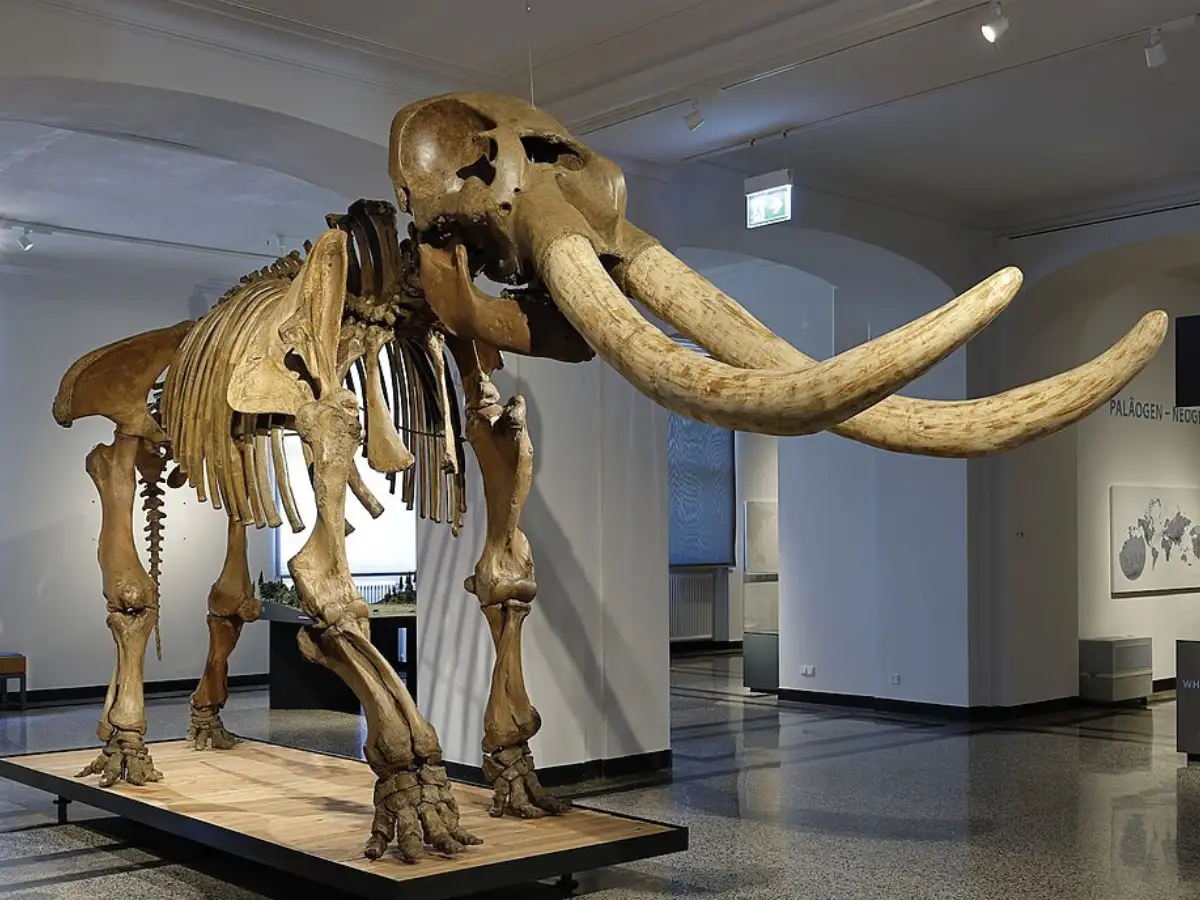
It was 1798, and a group of farm workers digging through wet soil on a Hudson Valley farm had discovered something that would rock the world of early American science: giant, ancient bones buried in the muck. No one had a clean read. No one had seen anything like this, but what started as a haphazard dig on a farm near Newburgh, New York, would eventually change the way a young nation saw itself and its place in natural history.
The bones that started it all
The farm belonged to a farmer named John Masten, and he had already collected some odd bits from his bog before the workers struck the real motherlode. What they eventually dug out of the ground was later identified as a mastodon, a huge Ice Age mammal distantly related to elephants that roamed North America thousands of years before humans built cities or kept farms.
Word spread fast. News of the bones traveled fast to Philadelphia, the intellectual capital of the early United States. That's when it got serious.
Enter Charles Willson Peale, painter, museum founder, and one of early America’s most inquisitive men. Peale reportedly bought the bones from Masten for $200 and a gun, then returned in August to dig up more of the site. His team used a water wheel to drain the swamp and a pulley system to lower workers into the muck. The Smithsonian American Art Museum says the specimen recovered by Peale came to be known as the Peale Mastodon, one of the most significant fossil discoveries in American history.
Why Americans celebrate a dead giant
The thing to understand about 1798 America is that the country was just over two decades old. It was still finding its feet.
A prehistoric giant buried in American soil? That made a point. This land, it said, had a deep, dramatic history, one that rivaled anything the Old World could offer.
Peale didn't just gather the bones. He assembled them into a complete skeleton and displayed it to the public, thus making it one of the earliest mounted fossil skeletons ever. The museum built around the specimen was the world’s first to display the bones of what was then called a “mammoth,” but was later correctly identified as a mastodon, according to the Smithsonian Libraries and Archives. It was more than a natural history exhibition. It was a statement.
Peale even commissioned a history painting of the dig, Exhumation of the Mastodon, linking the whole event to the ideals of the young republic. Science and art, coming together, saying: we found something, and it matters.
Ice Age New York was weirder than you think
So why was a mastodon in a New York bog in the first place? The answer is 10,000 years old.
New York was on the southern edge of the Laurentide ice sheet, the vast glacier that covered much of North America during the last Ice Age. As the climate warmed and the ice retreated, the landscape changed dramatically, leaving behind remains of animals that had lived and died during the colder times.
A peer-reviewed study of Late Quaternary extinctions shows mastodon fossils are common in these deglaciated regions, including southern Ontario and New York. The Hudson Valley was not just a lucky spot, but geologically suited to such a discovery.
What a muddy farm taught a nation
he Newburgh mastodon mattered because it showed that great things can come from the humblest of places: some laborers and spades, a marshy field, and some great mystery in the ground.
And then there was a series of decisions, to study, to dig, to protect, to display, that would help shape what American science and American museums might become. The mastodon straddled a deep prehistory and a new country still writing its own story.
This story is grounding for millennials and young adults living in a world that seems to be sprinting forward without looking back. The past is never as far away as you think, sometimes only a spade's depth.








.png?w=600)




