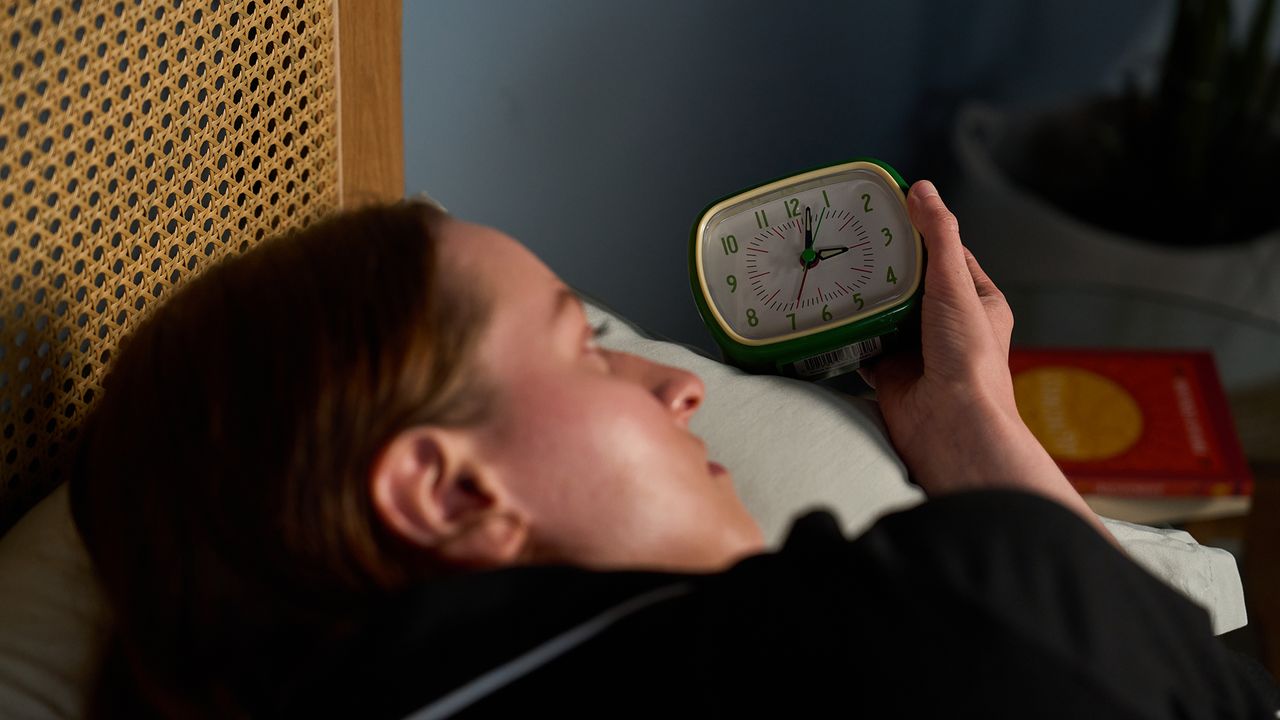
Just when I think I’ve got my sleep issues sorted, nighttime anxiety comes knocking — and usually at the inconvenient time of 3 a.m. Waking up at night is a recurrent sleep problem for me and I’ll never tire of trying to get to the root cause of the issue.
In my search for answers, I’ve spoken to Dr. Joshua Roland, a Board-Certified Sleep Medicine Physician, and Dr. Matthew Walker, a leading sleep scientist. According to Dr. Roland, a ‘temporary second wind of energy’ is causing my wake ups — and falling asleep in front of the TV is one of the biggest culprits.
Evidence suggests that ignoring sleep cues and staying up later than your body need triggers the production of hormones associated with wakefulness, which contributes to 3 a.m. wake-ups. Below, I dig into the sleep cues I’m missing plus the every day habits that are causing my 'middle insomnia'.
Key takeaways: At a glance
- Research suggests that ignoring your natural sleep cues and instead staying awake can contribute to 3 a.m. wake-ups
- Overriding our body’s sleep signals to stay awake for one last scroll / chapter / episode etc. triggers the production of 'wakeful' hormones, including cortisol
- Elevated cortisol before bed means that, when cortisol levels naturally rise in the early hours of the morning, you’re susceptible to waking up
- Experts say one of the key sleep cues we ignore is feeling sleepy as opposed to tired
- Habits that give a temporary ‘second wind’ of energy include working late into the evening and falling asleep in front of the TV, something 61% of us do
Why pushing past your bedtime causes a cortisol spike
The 3 a.m. club isn’t exclusive and no one wants to be in it. And yet, my sleep over the past decade has been blighted by instances where I’m white-knuckling my way through the early hours of the morning, heart hammering in my chest.
I've recently learnt that my habits in the lead up to bedtime (most crucially, staying awake later than I should) can influence how anxious I feel or how often I'm awoken. Without realizing it, daily habits like like drifting off in front of the television is sabotaging my sleep. And it’s all down to the the release of hormones associated with wakefulness.

"When we push past our natural bedtime, we create a tug-of-war inside the body. Sleep pressure has been building all day; natural melatonin is rising, and every signal is telling you it's time to rest," says Dr. Roland, medical director at Dreem Health.
"But if you stay awake anyway, the brain activates its alertness systems, releasing chemicals like norepinephrine, dopamine, and orexin to keep you functional. Cortisol can creep up, too, which is why you get that 'tired but wired' feeling: physically drained but mentally switched on."
Studies also suggest that when we ignore our natural sleep cues and stay up later than our bodies need, our brain assumes there must be an emergency preventing us from sleeping. And this triggers the production of cortisol, the get-up-and-go hormone required for our fight or flight response.
Once you've fallen asleep, this hormonal rollercoaster isn't over. Cortisol levels naturally begin to increase around 3-4 a.m, peaking shortly after you wake. That's called your Cortisol Awakening Response (CAR). However, when your baseline level of cortisol is higher than it should be, this small rise in the middle of the night could be enough to wake you up.
Tired vs. Sleepy: How to identify true sleep pressure
We might use the terms interchangeably, but there's a difference between feeling tired and feeling sleepy. And being able to distinguish between the two can help stay attune to your natural sleep window.
"Adequate sleep pressure is usually signaled by increasing eyelid heaviness, yawning, reduced alertness, impaired sustained attention, and the repeated loss of focus while reading or watching something," explains Dr. Walker, neuroscientist and professor of neuroscience and bioengineering at the University of Texas at Dallas.

Dr. Roland agrees, noting that as you becoming more accustomed to overriding your body's sleep signals, these cues are easily missed. "In general, signs of adequate sleep pressure include feeling sleepy rather than just tired, finding it harder to stay alert, and being less engaged with activities."
However, Dr. Roland adds that it's easy to push through these sleep cues with screen, work, bright lights or caffeine. I often find myself barely able to keep my eyes open earlier in the evening, only to feel wide awake in bed. And that's all down to the second wind of energy that comes from ignoring your sleep signals and staying awake anyway.
3 evening habits that cause middle insomnia
During bouts of waking up at 3 a.m., I often feel as though I'm running on fumes. And yet, when bedtime rolls around, there are habits that I'm unintentionally falling into that are giving me a temporary spike in energy. Not only does that make falling asleep a chore, it also means I'm more likely to wake up again at 3 a.m., which perpetuates the cycle.
1. Working late into the evening
Catching up on work when you should be winding down for sleep is, unsurprisingly, impacting your ability to later switch off.
"Evening light exposure, screens, and mental stimulation can override or obscure the biological drive for sleep," explains Dr. Walker.
At a time when melatonin levels should be peaking in order to prepare us for sleep, the blue light from our devices suppress its production. Add in mental stimulation, and we've created a perfect storm for pushing through our sleep window.
2. An afternoon caffeine fix

When you're not getting enough sleep, caffeine can feel like your friend; the late afternoon pick-me-up you need to get through the rest of your working day. However, Dr. Walker highlights how the 'energy' it provides is just a trick.
"Caffeine does not create biological energy; it primarily blocks adenosine receptors, masking the brain’s perception of accumulating sleep pressure," explains the author of Why We Sleep. "Because caffeine has a long half-life, a coffee consumed in the early afternoon can still exert meaningful effects late into the evening."
3. Falling asleep in front of the TV
This is a question I've been asking myself for years. Why am I always fast asleep on the sofa but wide awake in bed? I'm not alone, an estimated 61% of us fall asleep in front of the TV every night.
But this quick doze can make it hard to fall asleep when you later get into bed. And it all comes down to your sleep pressure, also referred to as your sleep hunger or homeostatic sleep drive. It's essentially your urge for sleep.
Sleep pressure builds from the moment you wake and starts its decline when you fall asleep. However, if you briefly fall asleep before going to bed, your sleep pressure can fall enough to stop you feeling tired.
"[Another] mistake is the brief evening doze, often during television or reading," explains Dr. Walker. "Even twenty minutes of sleep in the evening can partially discharge sleep pressure and make it harder to initiate sleep later."
Sleep products we love right now