India’s domestic tourism market crossed $23.8 billion in 2025 . The fastest-growing segment within it is not leisure travel, but organised, institutional group movement, specifically, pilgrimages, corporate incentive programmes, educational tours, spiritual gatherings, and association conventions.
Of the three billion domestic tourists recorded in India as of August 2025, an estimated 60% ( pdf ) were linked to religious travel. On the corporate side, India’s MICE market is projected to grow from $37.75 billion in 2025 to $74.12 billion by 2031. Companies are investing more than ever in group travel as a measurable tool for engagement, retention, and culture-building.
What this growth is exposing is a gap. The demand for professional, accountable, end-to-end group travel management has grown faster than the supply of operators built to deliver it. Organisations increasingly require specialised group travel management India solutions capable of handling every aspect of large-scale travel programmes.
Beyond the booking: What institutions need
The old model of one vendor for transport, another for hotels, a third for local transfers, one for food, and hope holding it all together no longer works at an institutional scale.
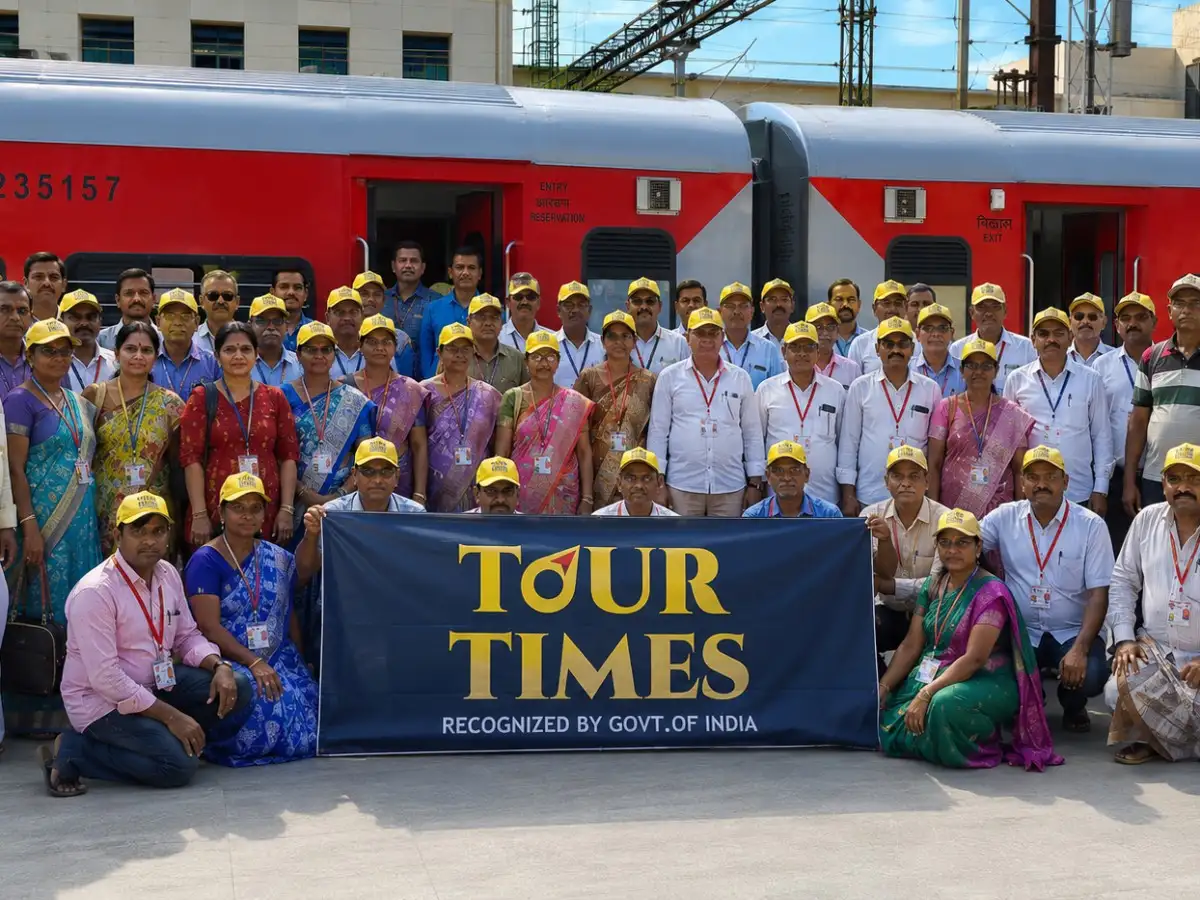
When a spiritual organisation is moving hundreds of devotees across multiple cities for a satsang programme, the journey itself is part of the experience. When a company is taking 500 employees on an incentive trip, the quality of every moment reflects on the organisation that designed it. When a school sends students on an industrial visit, the responsibility exceeds mere logistics.
These are not travel bookings. They are managed experiences. And they require a fundamentally different kind of operator.