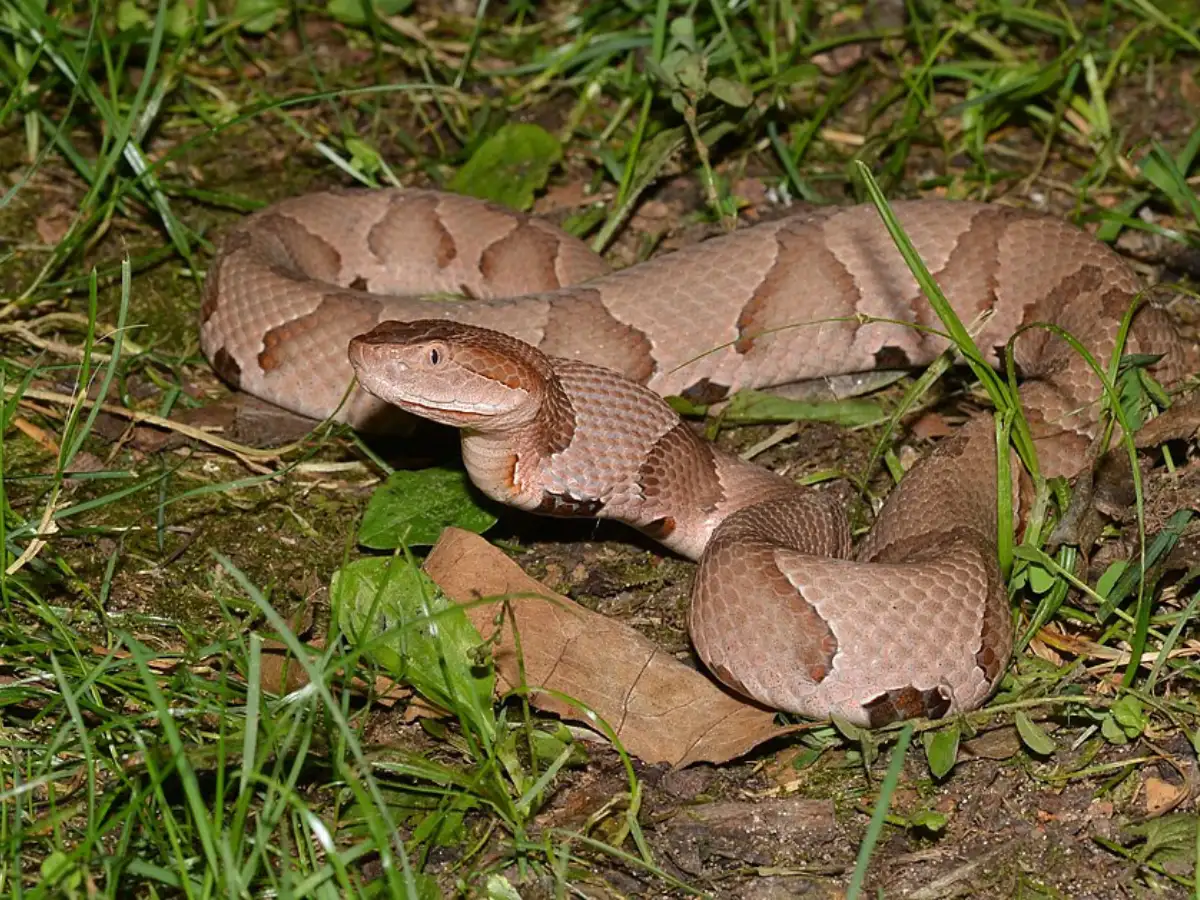
Part of what makes Copperhead snakes so deceptive within suburban yards and gardens has to do with their visual disguise. Indeed, according to wildlife experts, copperheads are characterized as having large bodies that allow reddish-brown crossbands to blend in easily with fallen leaves, mulch, tree bark, and other debris present in late summer or fall as garden beds and woodland areas turn brown with natural ground cover.
In some cases, copperhead snakes may be spotted moving around because it is nearly impossible for someone to catch sight of a copperhead until the animal begins to move. As noted by the Clemson Cooperative Extension, the copperhead has hourglass-shaped chestnut-colored bands running across the body, which are narrow from top to bottom while widening towards the sides of the snake.
What this means is that harmless snakes are consistently mistaken for copperheads in the home garden because reddish-brown colored snakes cannot be easily identified based on color alone. Indeed, wildlife agencies consistently emphasize that the key to properly identifying such a snake relies on multiple environmental factors.