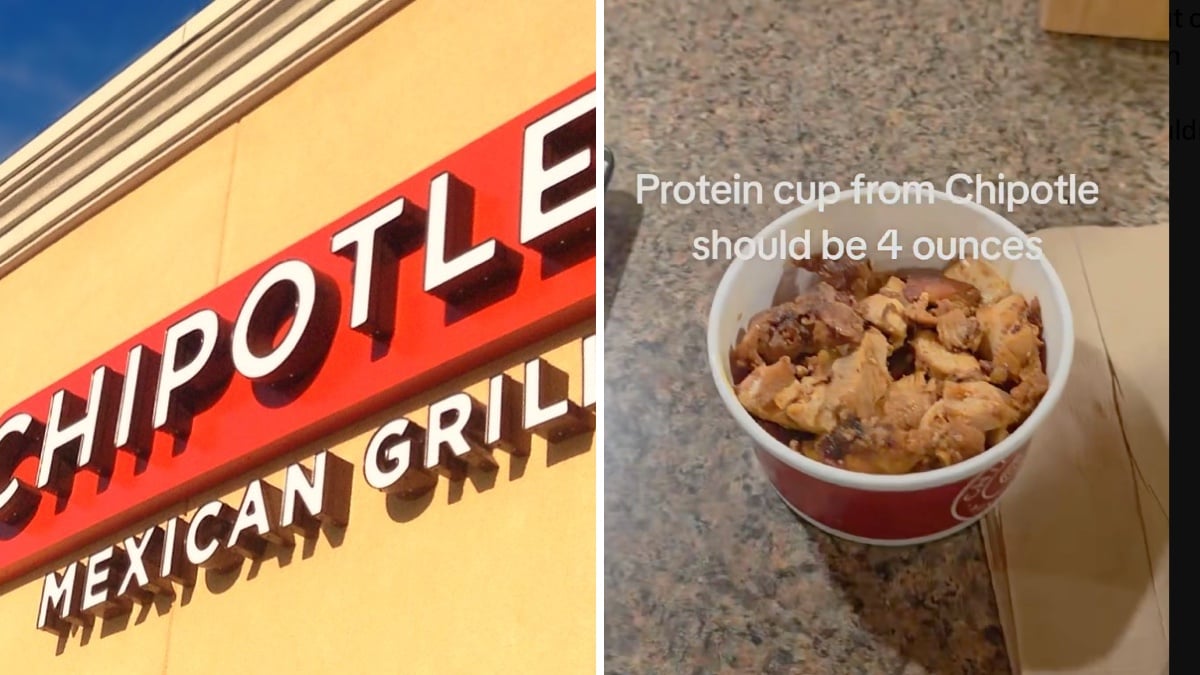
A new social media video has reignited a familiar debate over Chipotle portion sizes. In the post, a customer claimed the chain’s High Protein Cup contained far less meat than advertised. The video, shared on X by Wall Street Apes in July 2026, shows a woman placing the contents of a Chipotle protein cup on a scale. She does so after removing the packaging.
According to the video, the chicken weighed about 2.7 ounces, even though Chipotle’s marketing says it’s a 4-ounce serving. Wall Street Apes wrote that the product is “supposed to be 4 ounces of chicken or steak.” The video shows the scale reading.
The account also argued that the container appeared full. This made it difficult for customers to tell whether the serving might weigh less without putting it on a scale.
Chipotle’s protein-cup weight: A topic of controversy
The Wall Street Ape’s video sparked debate in the comments. One viewer wrote, “omg this is wild I thought Chipotle was already overcharging me.” Others questioned whether the comparison reflected how restaurants typically measure meat.
One commenter responded, “All proteins are advertised at raw weight. Every single restaurant tells you the weight of the food before you cook it. There’s no way to tell you what it’s going to weigh after it’s cooked.”
This is the new protein cup at Chipotle
— Wall Street Apes (@WallStreetApes) July 19, 2026
It is supposed to be 4 ounces of chicken or steak
Here’s how much it actually weighs when it’s put on the scale… This is weighed without the packaging, just the chicken
You can see the container is pretty full, you wouldn’t think it’s… pic.twitter.com/Vnm9q9lhaR
In the food service industry, under USDA labeling guidelines, advertised meat weights universally reflect pre-cooked weight unless explicitly specified otherwise. This means cooked portions naturally weigh less due to moisture loss.
While the customer removed the chicken from the packaging before weighing, standard consumer digital kitchen scales can have a margin of error when measuring small weights under 5 ounces, especially if uncalibrated. This could easily account for a portion of the recorded discrepancy.
The Wall Street Apes video does not establish whether the chicken shown represented an incorrectly portioned serving, whether moisture loss during cooking affected the final weight, or whether the scale measurement reflected Chipotle’s serving standard. Even so, the discussion mirrors ongoing conversations among Chipotle customers on Reddit, where users have debated the new protein cups since they launched.
In one recent thread, a customer asked whether employees actually weigh protein cups before serving them. Several self-identified employees replied that practices vary by restaurant, with one saying managers sometimes require workers to remove pieces of meat if the serving exceeds four ounces
Another discussion centered on a customer who received a protein cup that looked only half full but reportedly weighed four ounces on a scale. Several commenters argued that weighing portions could help settle long-running disputes over inconsistent servings.
Other Reddit users have also noted that the red protein cup itself holds more than four ounces by volume. One commenter identifying as a service lead wrote that the correct serving is four ounces, which fills most, but not all, of the container. Another user said Chipotle’s promotional images can make the cup appear fuller than an actual four-ounce serving.
Portion sizes have remained a recurring topic for Chipotle well before the High Protein Cup debuted. In 2024, analysts at Wells Fargo purchased and weighed 75 nearly identical Chipotle bowls from multiple New York City locations, CBS News reported.
Their analysis found that serving sizes varied significantly between restaurants. Some bowls weighed roughly one-third more than others despite containing the same order, analysts found.
Chipotle has previously acknowledged customer concerns about portion consistency in other products. The chain has said it continues working to improve serving accuracy through employee training and operational adjustments, according to The Wall Street Journal.