
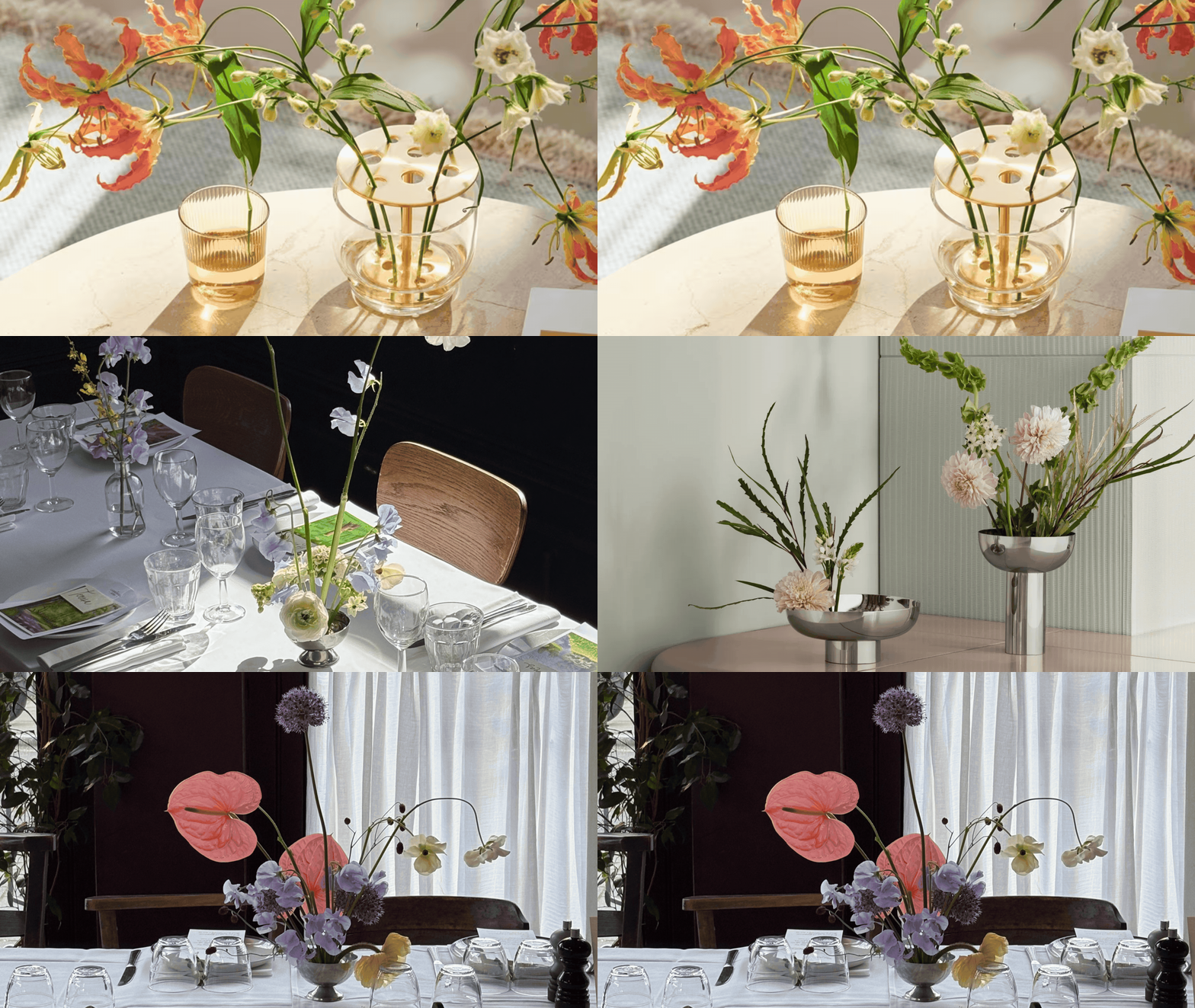
Ikebana, often translated as 'making flowers alive', is the Japanese art of arranging flowers in a considered manner, from foraging to styling. It's more than just putting stems in a vase and calling it a day.
Similar to many Japanese design rituals, the tradition of ikebana is rooted in intention and sometimes even imperfection. Although cut flowers are at the heart of this ritual, there's a deeper meaning to the technique with which these blooms are brought to life.
So, I spoke to some ikebana practitioners to learn more about this art and how to bring it home for spring. Plus, a look at everything you need to fashion a meaningful arrangement that looks beautiful.
What Is Ikebana?
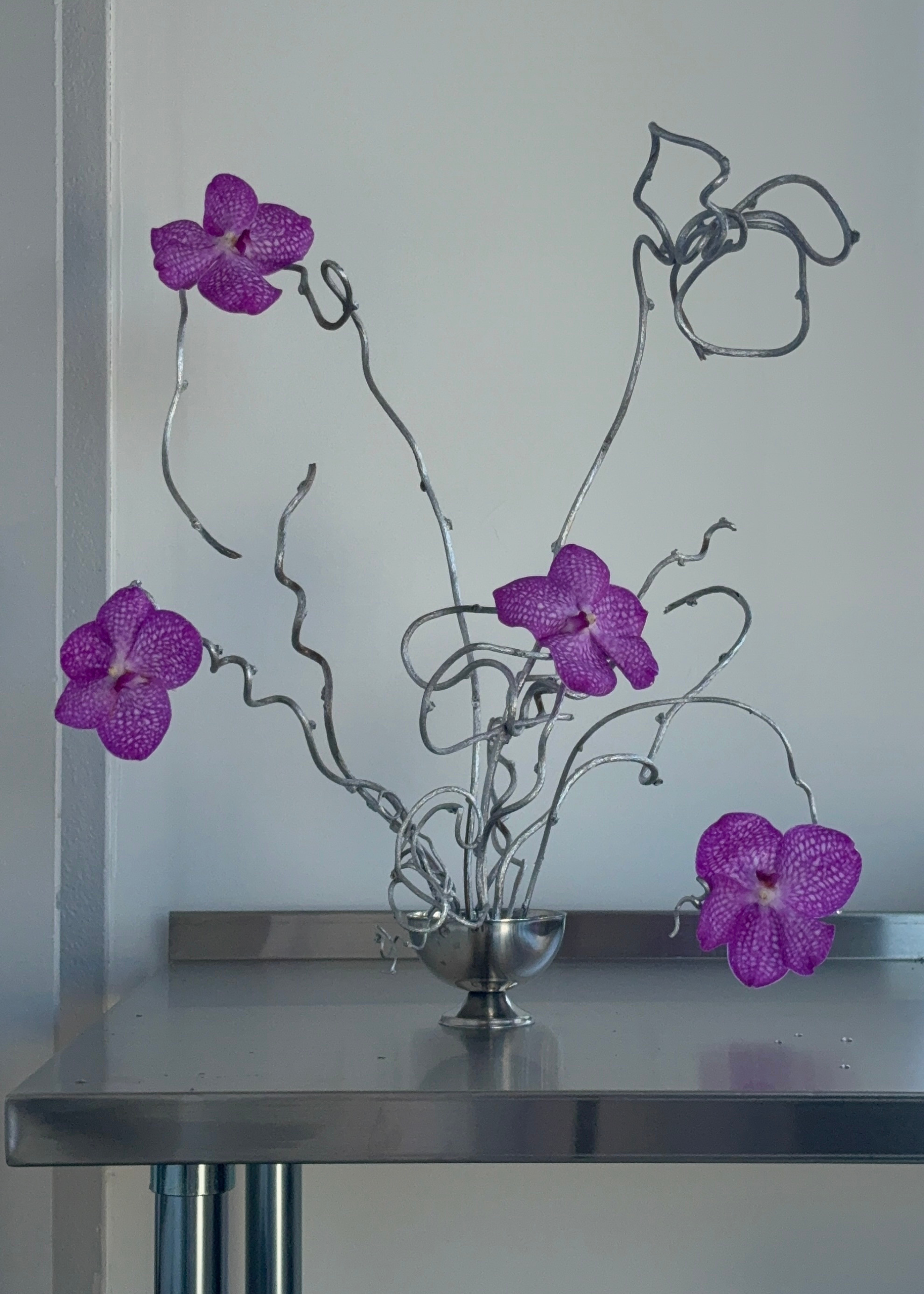
"Ikebana is the Japanese art of flower arranging, inspired by the natural way plants grow," says Priyanka Yoshikawa, founder of Studio 489. "In traditional styles, it reflects how flowers and branches are rooted in the earth and grow upward toward the light, using three main stems arranged in a vessel to create balance and harmony."
At the same time, she explains that ikebana is not only about implementing rules or structure when decorating with flowers. "There are also freer, more modern styles that allow creativity and personal expression," she notes.
"Unlike Western floral design, which often focuses on fullness and filling a space, ikebana values simplicity and the beauty of space itself. The empty space is just as important as the flowers, bringing a sense of calm, balance, and elegance to the arrangement."
Nancy Paul, founder of Octavia Flowers and an ikebana artist, tells me that this style of floral arrangements can elevate the space, without overwhelming it. "Often people think that bigger or fuller is better, but often it's the ikebana style of floral arranging that can catch people's attention," she advises.
"An ikebana arrangement will have you pausing at the spot for a long period of time, exploring the varying heights, textures, empty spaces, and shapes that have been created with just a minimal number of stems."
What are the Principles of Ikebana?
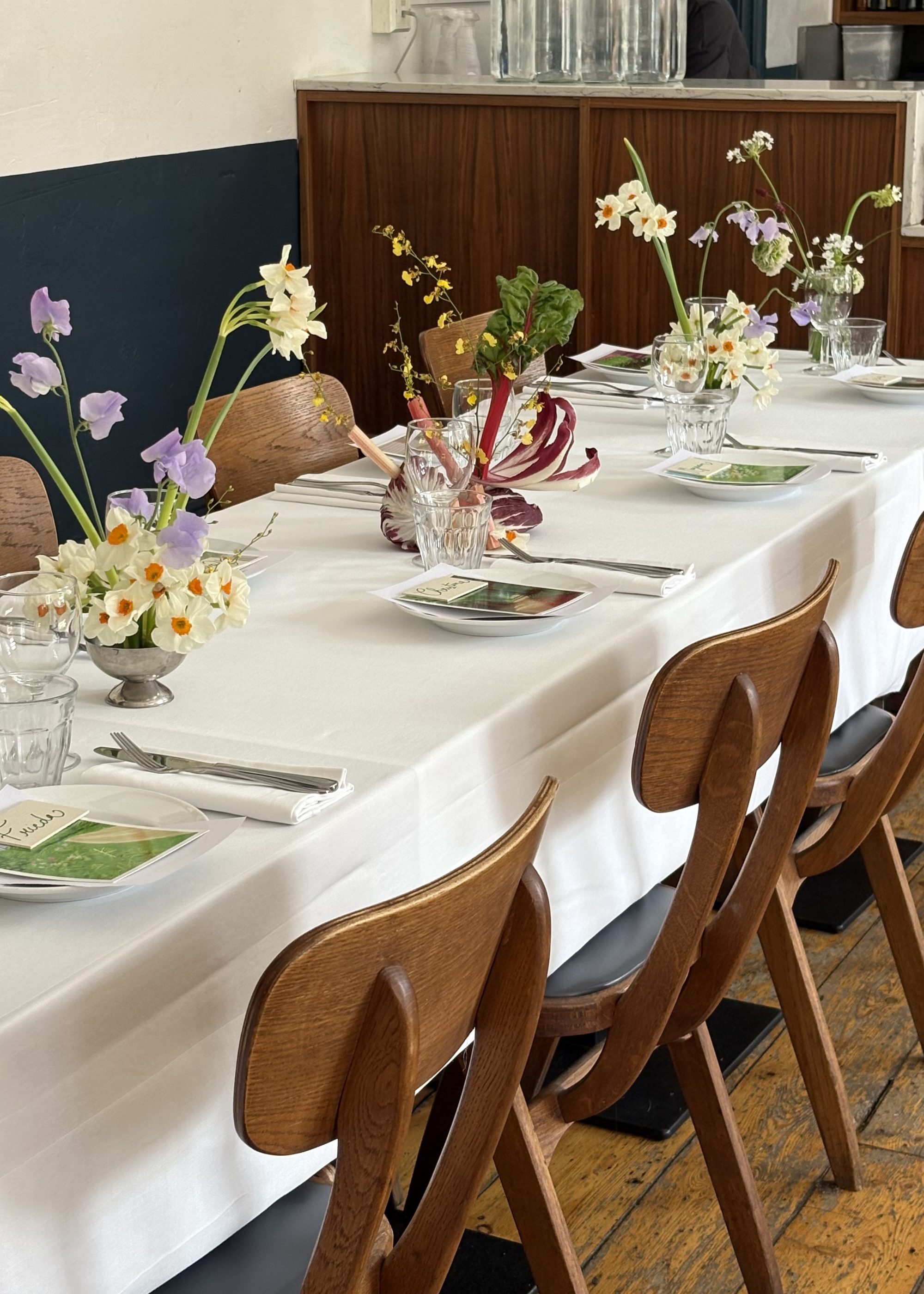
Ikebana brings beauty, calm, and a sense of the season into a room. Using flowers and branches that reflect the time of year helps people feel connected to nature indoors," says Priyanka.
"Because flowers naturally change each day, ikebana also reminds us to appreciate the present moment. Each arrangement is temporary, which is part of its beauty."
To this point, there are three principles of ikebana: Shin, Soe, and Hikae. In a traditional Japanese arrangement, Shin represents heaven and focuses on the tallest line. So, you can use your tallest wood-stemmed flower or a branch as your base.
Soe symbolizes Earth as a supporting line. For this, you can use a slightly shorter flower or a stem of foliage. And Hikae, the shortest line, represents the human line. This could be a leaf, a flower, or even a fruit.
When organizing your flowers through the art of ikebana, you can channel the Japanese concept of Ma to let each bloom shine in its simplicity. Rather than focusing on abundance, choose balance in minimalism.
What's the Purpose of Ikebana?
According to Priyanka, the purpose of ikebana is not simply to make flowers look beautiful. "It is about bringing nature into a space in a thoughtful way, while also expressing the feelings and mindset of the person arranging it," she says.
"The process can feel very calming and meditative. Working quietly with flowers helps you slow down, focus, and be present in the moment. Ikebana also has a long history in Japan, where it was often displayed in the tokonoma, a special space in the home used to welcome guests and celebrate the season."
If you're looking for offline rituals to help you de-stress away from screens, the art of ikebana can be a beautiful outlet. Aside from channeling multiple senses and acting with intention, it also rewards you with a personal arrangement that stands as a reminder of your effort in your home.
What Do You Need for Ikebana?
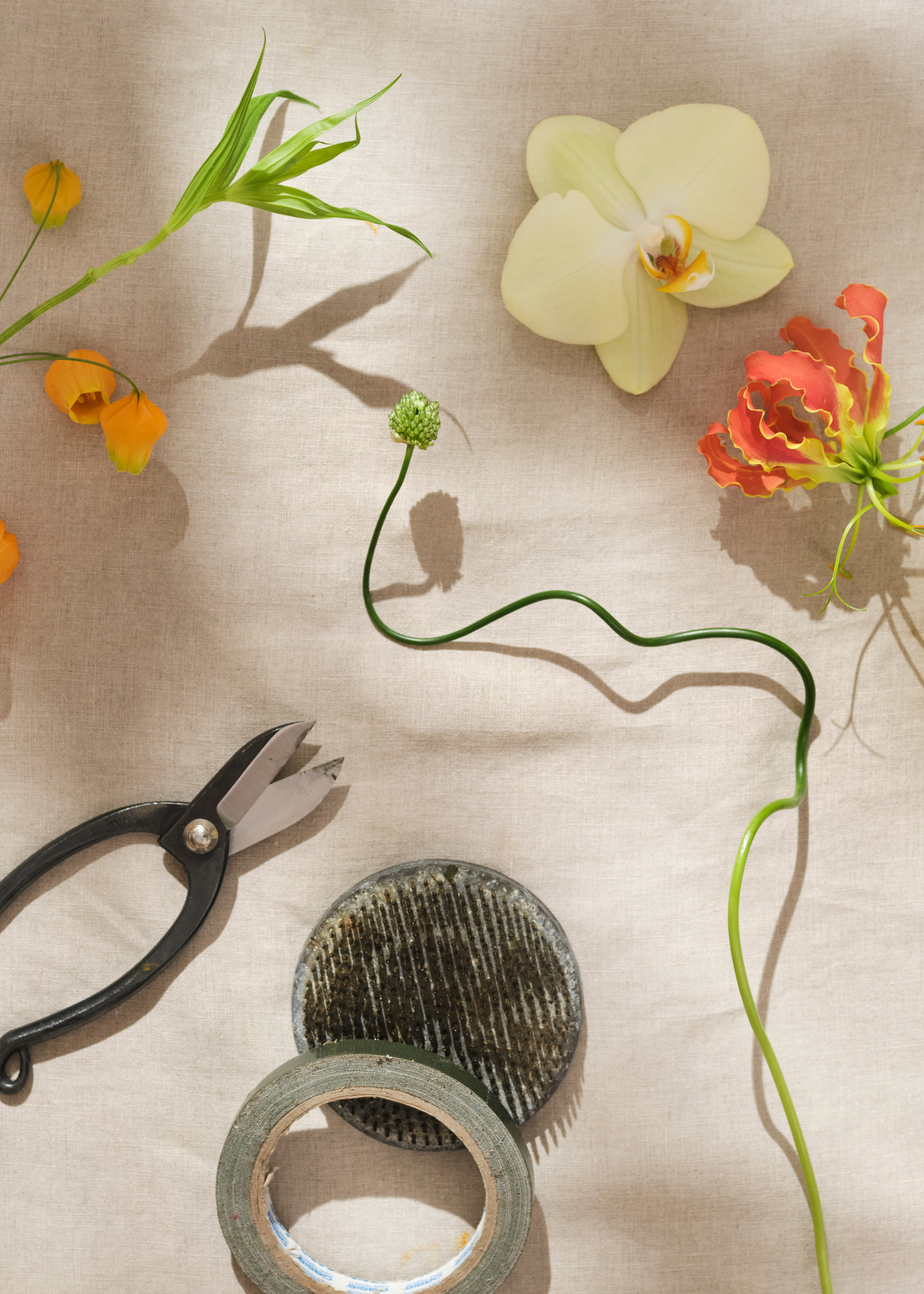
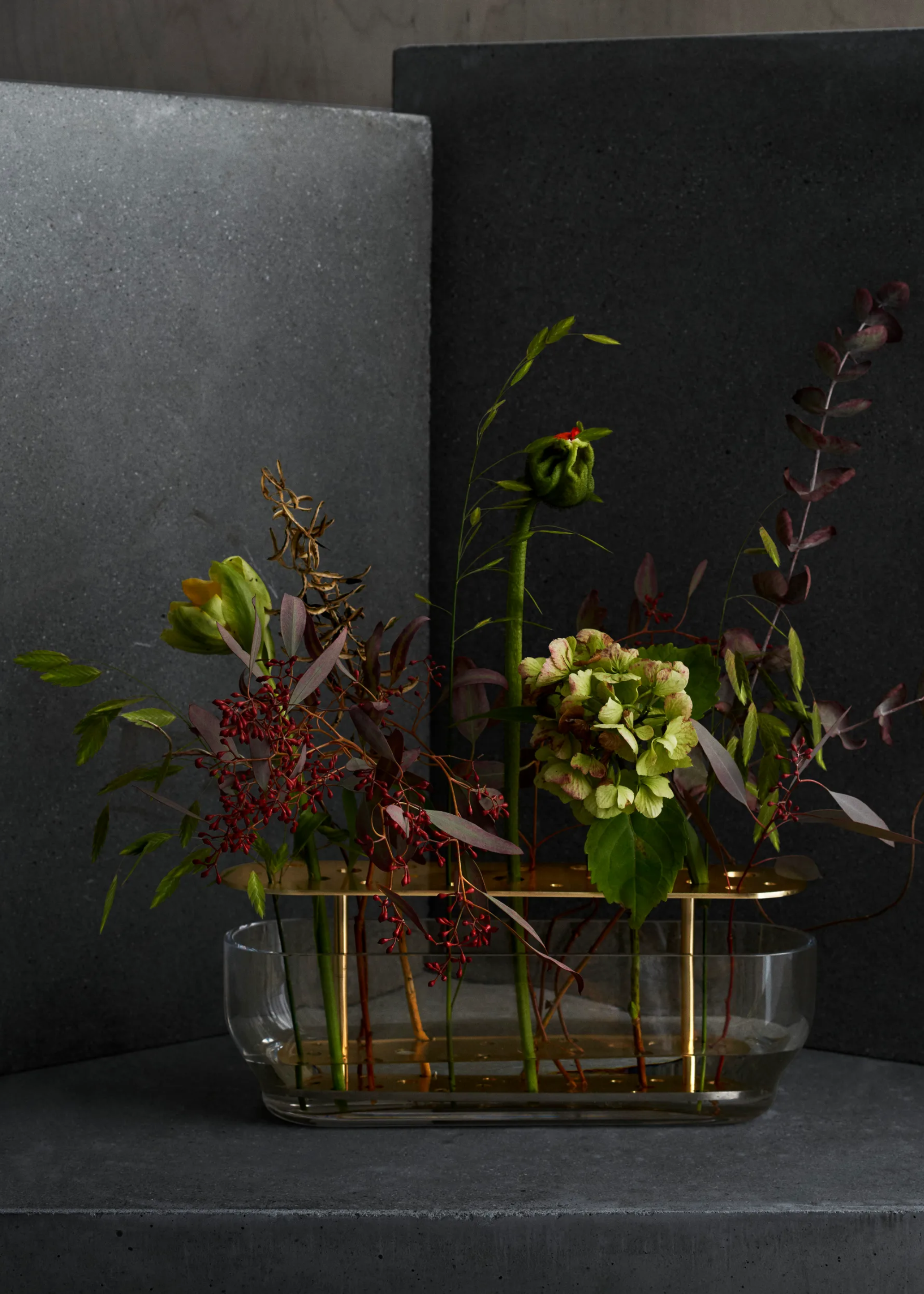
To create an Ikebana arrangement, Nancy explains that you need a shallow vase or vessel, a kenzan (also known as a 'frog'), secateurs, and the stems or branches you would like to use.
"For a typical, traditional ikebana arrangement, you could use as few as three stems, usually including a couple of branches and a flower or foliage. Minimalism is the key," she notes.
"With a more modern ikebana arrangement, you may want to use more florals, branches, or even fruits and vegetables. Remember to still focus on not overcrowding the arrangement, while experimenting with height, color, shape, and space."
If you're as enchanted by ikebana as I am, here are some things you'll need to bring your vision to life.
Color: Transparent / Silver
This small Glass Ikebana Vase from H&M is ideal for pockets of floral bliss.
Size: 33.5 cm (L) x 9.5 cm (W) x 13 cm (H)
On the other hand, something like this will sort your spring table centerpiece.
Color: Matte Black
In place of chrome and glass, you can opt for a more minimalist base like this Vase Miyabi from blomus.
Length: 35 m
At an ikebana workshop, I learned that florist wire is a brilliant way to manipulate floral stems for some added scaling.
Includes: Floral Secateurs + Flower Frog
Wazakura's Japanese Ikebana Floral Tool Set comes with the only technical tools you need to snip and center your arrangement.
Quantity: 4 Pieces
And if you already have a pair of secateurs, then try this Mini Kenzan Set from Niwaki to pepper ikebana stylings around your home.
Bouquets to Experiment With
Includes: 1 Yellow Cymbidium Orchid, 2 Heliconias, 2 Red Guzmania, Mix Cordyline Foliage
This bouquet from Moyses Stevens has plenty of stems to fold and coil into a beautiful ikebana arrangement.
Includes: Pink Lilies, Pink Santini, Blue Statice, Yellow Antirrhinums, Yellow Roses, Pistache Foliage
Arena Flowers is so generous with their blooms, I'm often left with a couple of stems to spare. And this particular bouquet will be my next buy for ikebana styling.
Includes: 7x Eustoma, 7x Anthurium, 3x Hydrangeas, 10x Phlox
Although foraging is a nice way to immerse yourself in the art of ikebana, I don't have a sprawling spring garden. So I have my eye on this Alice Flower Bouquet for now.
FAQs
Which Flowers are Best for Ikebana?
Depending on which element of ikebana you're focusing on (shin, soe, or hikae), you can use a flower with a woody branch (roses, hydrangeas, forsythia), a more tender stem (tulips, calla lilies, orchids), and other filler foliage to add wispiness.
However, Priyanka points out that ikebana can be created with many different materials, aside from flowers. "Branches, leaves, grasses, and seasonal blooms are all commonly used, with each stem chosen for its shape, line, and natural beauty," she explains.
"In more modern styles, artists may also use materials such as metal, wire, or plastic to create sculptural and creative arrangements. This mix of nature, design, and freedom is part of what makes ikebana so special."
Having recently attended an ikebana workshop hosted by Golden Goose and Octavia Flowers, I have grown to truly respect the art of ikebana. And with home wellness trends leaning towards concepts like friction-maxxing, now's as good a time as ever to stop doomscrolling and start being more hands-on.
It'll influence the way you shop for flowers and guide you towards taking on a more considered approach to decorating your home. So, sign up for the Livingetc newsletter for more ideas like this. And in the meantime, discover things in a Japanese home that make so much sense.