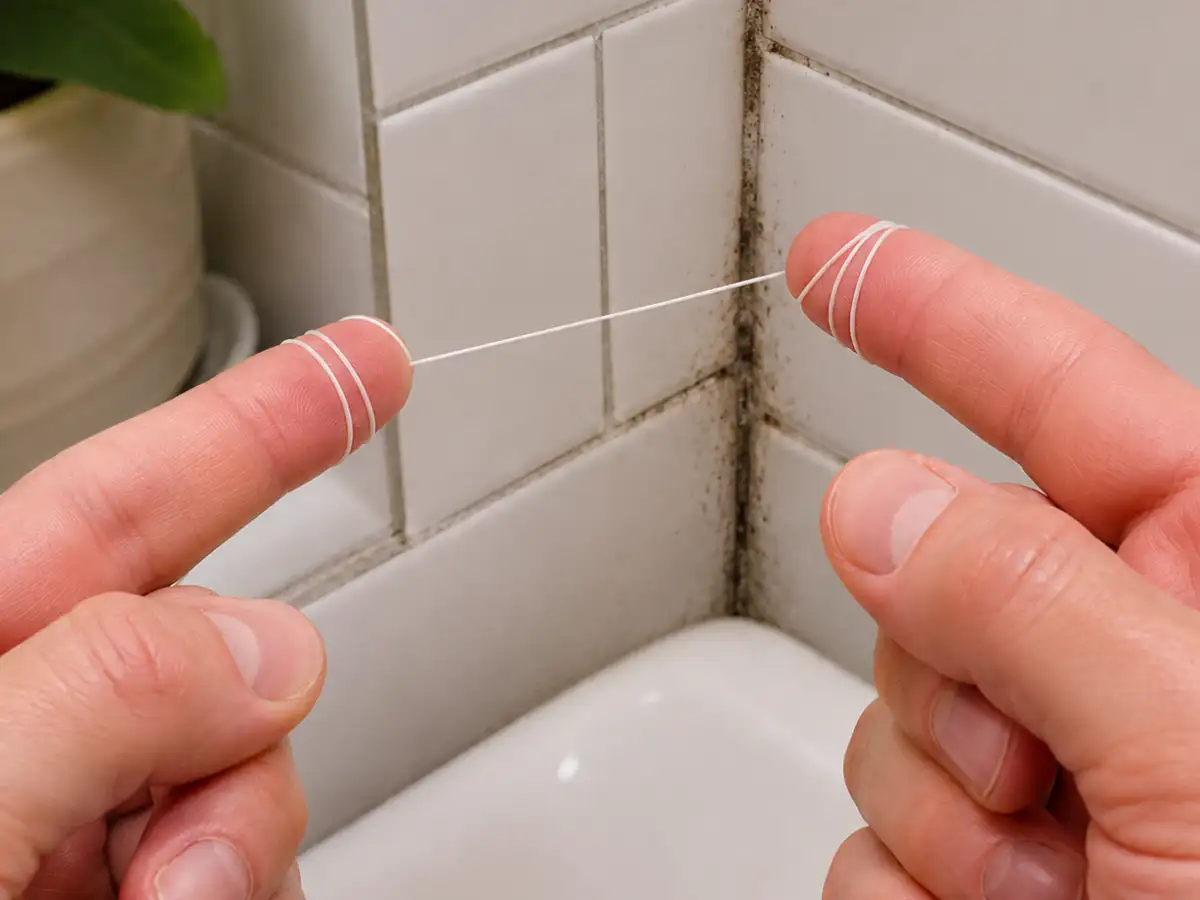
It’s Sunday, and you’ve probably wiped the counters, scrubbed the tub, and sprayed the mirror until it squeaks. Then you squat down for one last look and spot it: the thin, dirty line where the tile meets the wall. You’ve probably tried a toothbrush on it before and given up halfway because it just won’t fit. It turns out that there’s a fix in your medicine cabinet right now, and it’s not a cleaning product at all. It’s dental floss.
Most of us assume the bathroom is the germiest room in the house, but according to the NSF International Household Germ Study, that's actually a misconception. The 2011 study, which saw 22 families swab 30 common household items, found that the kitchen had more bacteria overall than the bathroom. The bathroom still wasn’t clean. The same study found coliform bacteria on 27 percent of toothbrush holders and 9 percent of bathroom faucet handles, showing that damp, tight, less-visible spots collect more grime than the surfaces you actually scrub.
Why are the corners the worst offenders
Grout corners and seams are essentially the bathroom's version of a toothbrush holder. They stay damp long after your shower, get little airflow, and are too narrow for a sponge or toothbrush bristle to reach fully. Soap scum, shampoo residue and hard water minerals get into that gap and sit there, and over time, this can turn into mold or mildew.