The 2026 Formula 1 regulations do not only represent a major shake-up for all designers and engineers behind the scenes - in fact, the work of recent months on the new generation of cars has only been part of the story. An equally important aspect is how drivers must deal with the new tools at their disposal on track.
Much attention has gone to active aerodynamics and overtake mode, but at least as important is what F1 has called ‘boost mode’. One can debate how appropriate that name really is, since overtake mode in a way resembles push-to-pass and in that sense is actually a boost. Boost mode itself is primarily about how drivers manage the 350 kW of electrical power available to them.
It requires tactical thinking, both over a single lap and in battles, and that is precisely why Andrea Kimi Antonelli used the metaphor of F1 as a game of chess during Mercedes' season launch.
“With all this energy management, the way you race, and the way you have to use your energy while fighting others, that is a very big step,” said the 19-year-old. “And I think this year you have to come into the season very open-minded and in some way, you need to be very creative as well, because you can play so much with the energy, especially when fighting other people. It's like playing chess, but like a kind of speed chess.”
In that respect, it is not only important what a driver does behind the wheel, but also how the deployment has been mapped out with the team ahead of a race weekend, or even a session.
“Especially with HPP, it's going to be very important to really maximise the software, and the deployment for each track because that can really make the difference,” added Antonelli.
“When I talk about deployment, I mean race and qualifying as well. So being able to have the right deployment and a consistent deployment, every lap and every run. You can really make the difference there because with this new regulation, it's such a big change, even on the software side. It's going to be a whole different thing.”
Energy management in qualifying: not just pushing flat out?
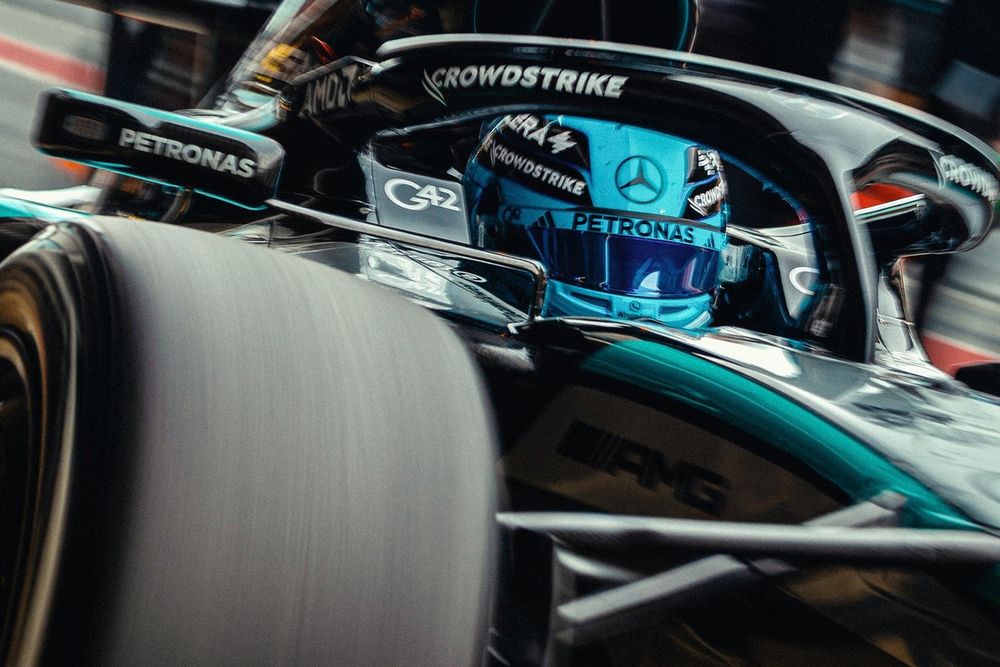
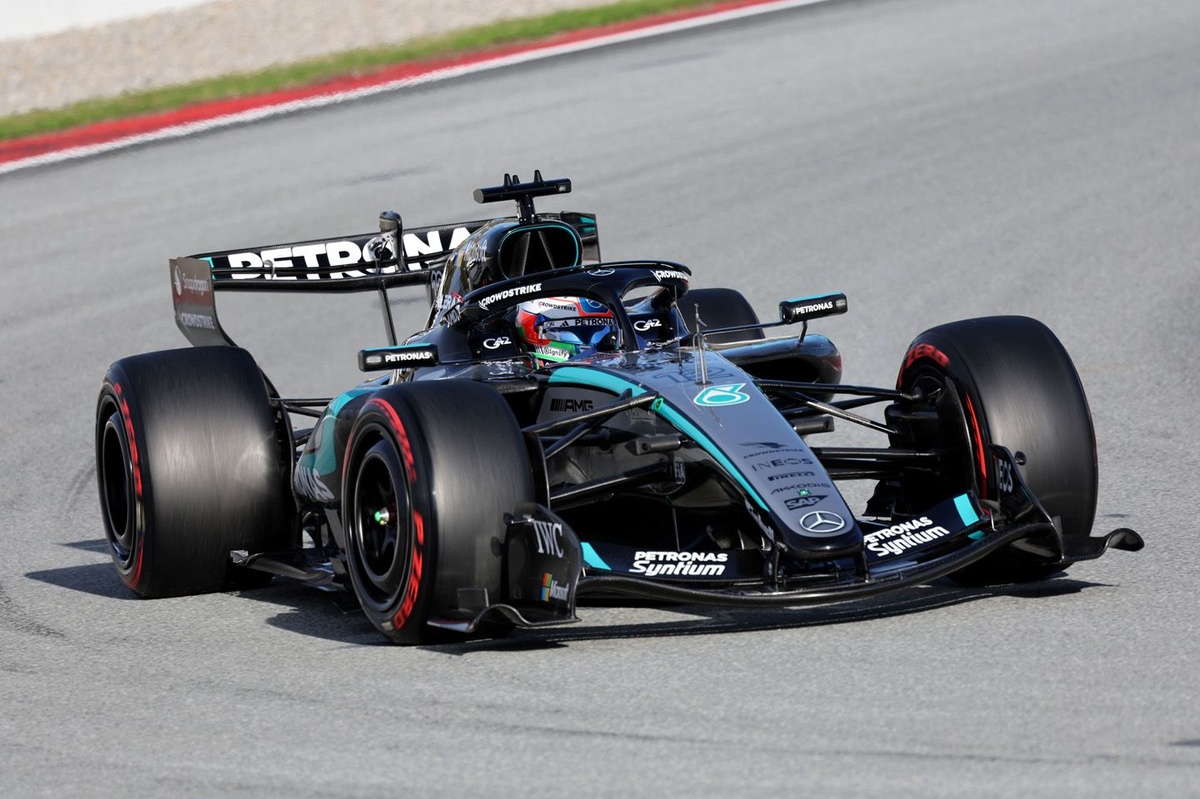
It is no coincidence that Antonelli distinguishes between managing the electrical power over a single lap and battles during the race. They require slightly different things, and that is exactly what Antonelli’s team-mate George Russell referred to when discussing Mercedes’ run plan during the Barcelona shakedown.
On the second day of running, Antonelli completed a full race simulation, after which Russell added that the final day would focus more on qualifying runs. Logically, that had nothing to do with outright performance yet - that was not the aim in Barcelona - but rather with discovering how the team and driver could extract the maximum from the power unit over short runs, especially the 350 kW coming from the MGU-K.
Russell makes it clear that it is no longer just a matter of braking as late as possible and carrying as much speed as possible through the corners. There are some scenarios in which taking a corner in the fastest possible way costs more energy, leaving the driver with less to deploy on the straights. It is exactly there that teams and drivers must find the right balance.
“It's definitely challenging for the drivers and you have instances where when you go around the corners faster, you're spending more energy and you're harvesting less,” said Russell. “So you end up over the course of the lap having less energy to spend. You may gain a few tenths into corners, but you may lose a couple of tenths on the straight. That takes a little bit of time just to get your head around it.”
Naturally, it differs from track to track, depending on the layout. That’s why preparation - which Antonelli referred to by mentioning Mercedes HPP - is crucially important, a view shared by Ocon.
“I think we are going to have more input prior to the session to put the deployment where we want and where it's exactly important to do it, and more efficiently and how we feel quicker with that,” said the Haas driver. “Once the session is starting, it's all up to the engineers to make it work, really. So I would say it’s 20-80, 20% on us, 80% on the engineers.”
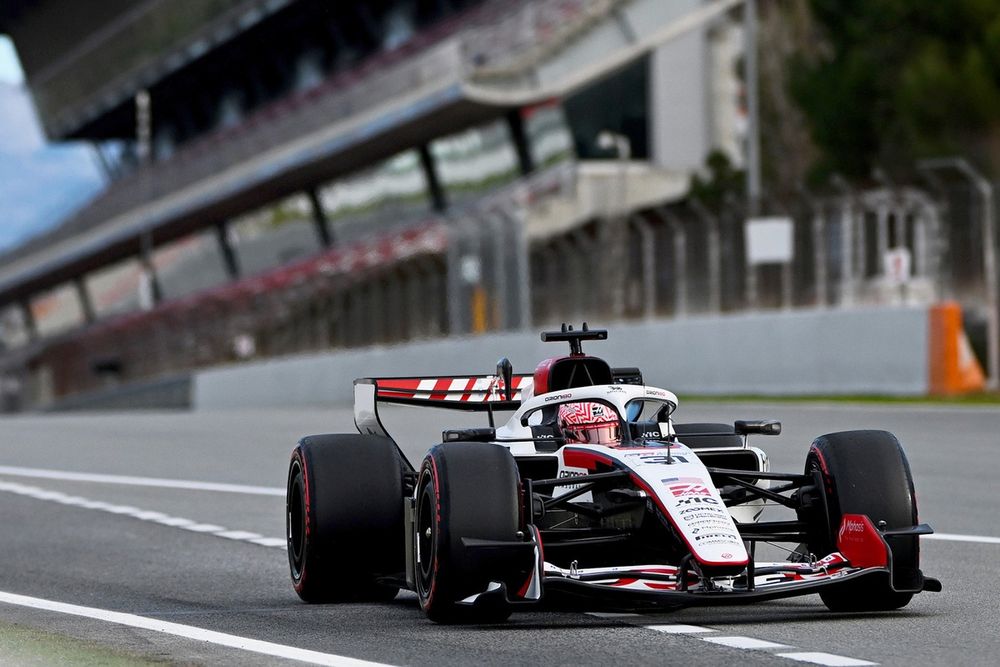
Behind the wheel, the Frenchman says a certain level of discipline is required to stick to what is the fastest way to complete a lap, even if it feels somewhat unnatural. “To drive, you need to respect it,” Ocon added. “But we are having such very good tools at the moment, to respect everything that we have to do, that it's not that complicated to follow.”
That point is underlined by Russell, who adds that ultimately it becomes second nature to drivers.
“Once you do get your head around it, that would just be the normal way of driving,” said the Mercedes driver. “It was far simpler than I anticipated, to be honest, and it was far more intuitive to drive.
“The power unit, the gear choices, all the teams are having to use quite low gears through the corners to maximise the harvesting, all of which we had question marks around. But it just feels like a race car, to be honest.”
Energy management in wheel-to-wheel battles: trying to read an opponent
While the above concerns maximising performance over a single lap, racing is naturally more complex than that. This is where ‘speed chess’ really comes into play, to use Antonelli’s words.
On Sunday, there is an additional variable: the driver you are fighting. It’s not just about the theoretically fastest lap time, but more about maximising overtaking opportunities. It means a driver must think tactically in order to be in the right position at the right parts of the circuit - combined with overtake mode - also to surprise an opponent.
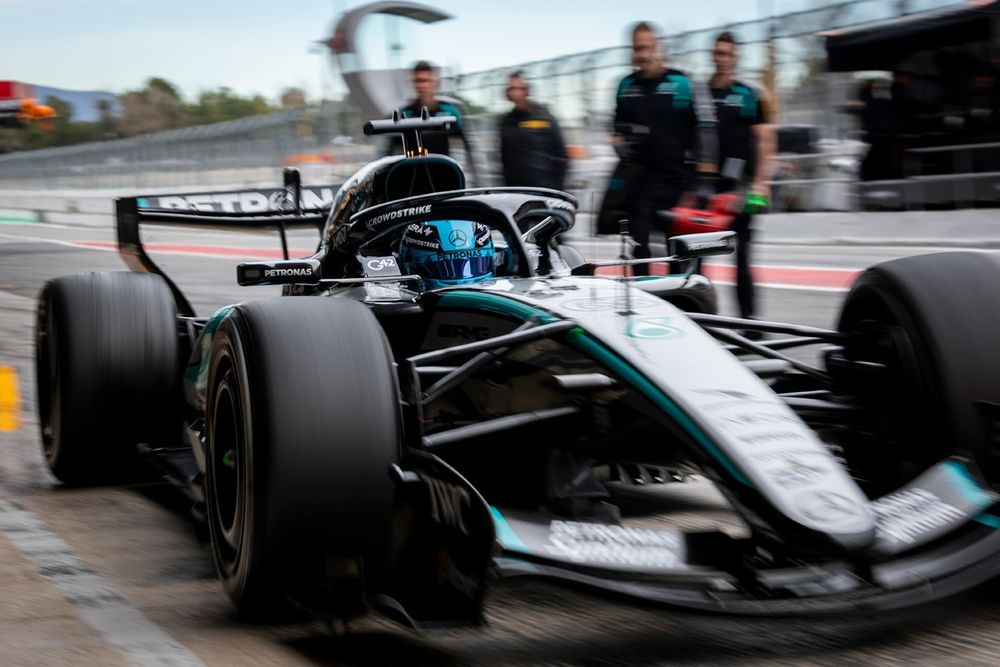
“Obviously you don't have as much time to think for every move, but this year you always have to try and be two steps ahead of the others, especially when fighting,” Antonelli explained. “When you're planning an overtake or when you're defending, you always have to try and be two steps ahead of the other and trying to predict him, or force him to do something.”
With that, the Italian indicates that drivers must read their opponents and, based on that, use their energy tactically. It is precisely for that reason Mercedes boss Toto Wolff expects overtaking moves in unusual places, although the FIA has somewhat tempered that expectation.
Single-seater director Nikolas Tombazis believes most teams will converge towards similar strategies in order not to be vulnerable at key parts of the track, saying: “I think once people know how to use them, they will be able to make sure they're not like a sitting duck on the straight.”
Whether this new way of racing will be appealing to all F1 fans and drivers remains to be seen. The Mercedes pairing and Wolff were enthusiastic about the early signs on Monday, while Haas man Oliver Bearman described the energy management as ‘annoying’.
The upcoming weeks will reveal the overall perception across the grid, but F1 drivers at least have many more tools to play with and more to think about while driving than before. In that sense, it really is chess at high speed now - exactly as Antonelli described.
Additional reporting by Filip Cleeren and Ben Vinel