
The math seems simple: buying in bulk always saves money. Warehouse clubs and the “Family Size” box have trained us to believe that a bigger package equals a better deal. But this grocery-saving “truth” is often just a marketing illusion. Stores know that shoppers associate bulk with value and will buy a large item without checking the math. This assumption can backfire, costing you more money, creating food waste, and cluttering your pantry. Before you haul that giant 5-gallon jug of olive oil to the checkout, let’s look at how bulk buying can go wrong.
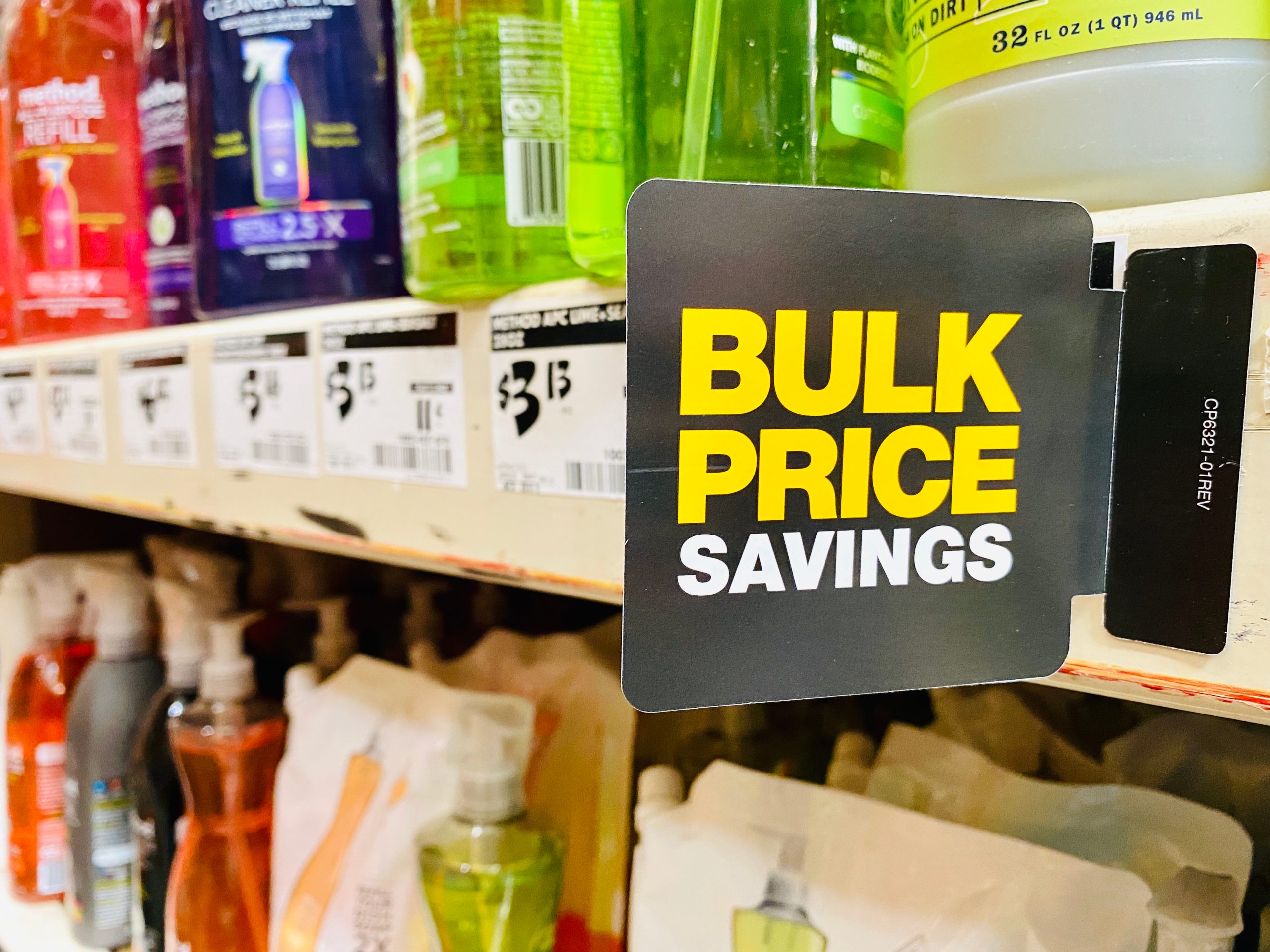
The Unit Price Deception
The single most important tool for a savvy shopper is the unit price, which is the small tag on the shelf showing the cost per ounce, per pound, or per 100-count. We assume the bulk version must have the lowest unit price, but that’s not always true. A regular grocery store running a good “Buy One, Get One” sale on a smaller, 16-ounce bag of coffee can often beat the warehouse club’s 40-ounce bag price. Stores bet that you won’t pull out your calculator. Always compare the unit price, not the sticker price
The “Family Size” Trap
Don’t be fooled by marketing words like “Jumbo,” “Value Size,” or “Family Size.” These labels mean nothing and are not regulated. In a common grocery store, these larger packages are often more expensive per unit than the standard-sized item. Why? They’re banking on convenience. You grab the one big bag of chips, thinking it’s a better deal for your family, but the two smaller bags on sale right next to it would have given you more for your money. Never trust the label; always trust the math.
The Myth of the Warehouse Club
Warehouse clubs are not charities. Their business model is built on the perception of savings. While they offer fantastic deals on some items (like electronics or tires), their grocery section is a minefield. That giant jar of mayonnaise might be a good deal, but the 2-pound bag of “organic” quinoa next to it could be 50% more per ounce than the same product at a regular grocery store. They lure you in with a few famous “loss leaders” and count on you filling the rest of your cart with overpriced bulk goods, assuming everything is a bargain.
The High Cost of Food Waste
It doesn’t matter if you got that 3-pound tub of spinach for 30% less per ounce if you throw half of it away. Waste is the biggest hidden cost of bulk buying. Unless you have a large family that you know will consume the item, buying perishables in bulk is a gamble. That goes for spices that lose their flavor, cooking oils that go rancid, and giant bags of flour that sit in your pantry for two years. If you don’t use it all, you didn’t save any money. You just paid to rent out your pantry space.
The Storage and Spoilage Problem
That 48-pack of paper towels is only a deal if you have a place to put it. For many people, the “cost” of bulk buying comes in the form of lost living space. But for food, the problem is spoilage. Once you open a massive container, the clock starts ticking. Air, light, and moisture begin to degrade the product. Those “value” crackers go stale, the giant box of cereal loses its crunch, and the coffee beans lose their flavor. You may have saved a dollar upfront, but you’re guaranteeing yourself a lower-quality experience for weeks to come.
How to Buy Bulk the Smart Way
This doesn’t mean you should never buy in bulk. You just have to be strategic.
- Rule 1: Always check the unit price. Compare it against the regular store’s sale price.
- Rule 2: Only buy non-perishables. Stick to things with a near-infinite shelf life, like paper goods, trash bags, canned goods, and cleaning supplies.
- Rule 3: Be honest about your consumption. Don’t buy a year’s supply of ketchup unless you are 100% certain you will use it before it expires.
- Rule 4: Never buy a “club” membership unless you’ve done the math and are certain the annual fee won’t erase all your potential savings.
The “bulk price” is a powerful marketing tool, but it’s not a guarantee. The only guaranteed way to save is to be a smarter shopper, do the math, and buy only what you truly need.
What to Read Next
- 6 Household Products That Last Longer in Bulk Packaging
- 10 Seasonal Fruits That Save When Bought in Bulk
- 8 Items People Buy in Bulk Just to Annoy Their Roommates
- 7 Bulk Buys That Are Always Worth the Storage Space
- Why Manufacturers Want You to Avoid Bulk Bins
The post How Bulk Buying Backfires: When the “Bulk Price” Isn’t Better appeared first on Grocery Coupon Guide.