Loganair will operate a fleet of at least five electric planes from 2029.
The planes will support passenger and cargo operations, the regional airline said.
It will be the first commercial airline in Europe to operate an electric aircraft fleet, it added, following the successful trial of a plane earlier in 2026.
The Scottish airline agreed the purchase of the Beta Alia CX300 all-electric planes, with an option of a further five, on the first day of the Farnborough Airshow, which runs from 20-24 July.
Loganair said that most of its flights are within 100 miles, which suits the CX300’s range of 336 nautical miles.
The electric planes will operate from existing runways and can recharge in 20 to 40 minutes.
Loganair chief executive Luke Farajallah said: “This is a truly historic moment for Loganair and for European aviation.
“Our demonstration programme earlier this year proved that electric aviation is no longer a future concept, it is a viable commercial opportunity.
“The aircraft demonstrated the potential to reduce operating costs by up to 80 per cent while maintaining the reliable regional connectivity our customers and communities depend on.
“Signing this agreement is the natural next step in that journey.
“It reflects our confidence in the technology, our partnership with Beta, and our ambition to remain at the forefront of sustainable regional aviation.
“We look forward to working together as we prepare to bring these aircraft into commercial service.”
Kyle Clark, founder and chief executive of Beta Technologies, said: “Loganair has spent six decades connecting communities that rely on air travel, so their standard for new technology is appropriately high.
“We met that standard the only way it can be met, by flying more than a thousand nautical miles across their network, on their routes, and in their conditions.”
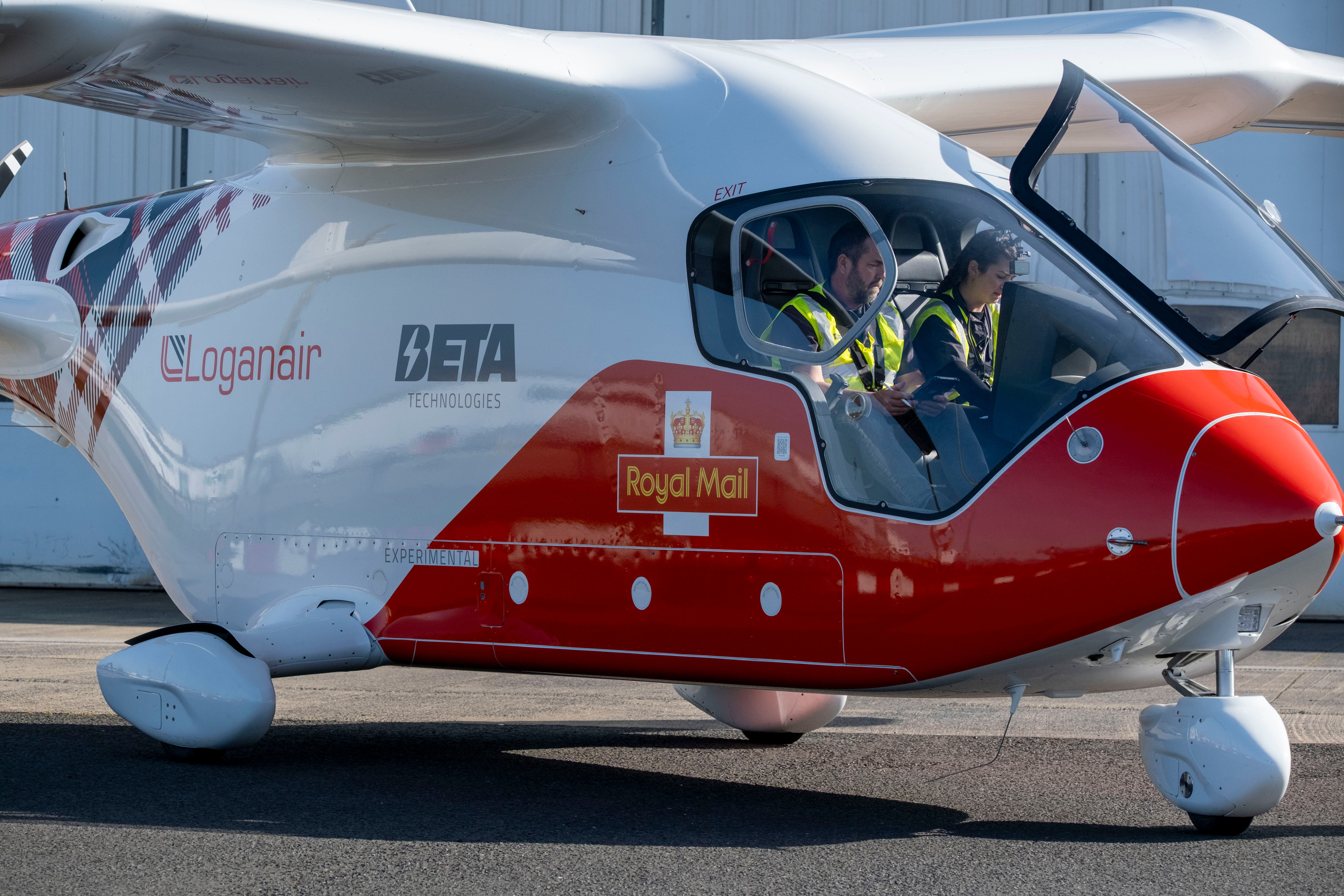
A trial of the electric plane, which took place in March, saw Loganair and Beta Technologies partner with the Royal Mail to carry out a number of flights across Scotland’s mail routes.
It is hoped that this will prove instrumental in helping Scots in more isolated communities with less infrastructure.
Chris Paxton, strategic insight and innovation manager at Royal Mail, said at the time: “This is an important step towards making electric mail flights a reality for some of the UK’s most remote communities.”