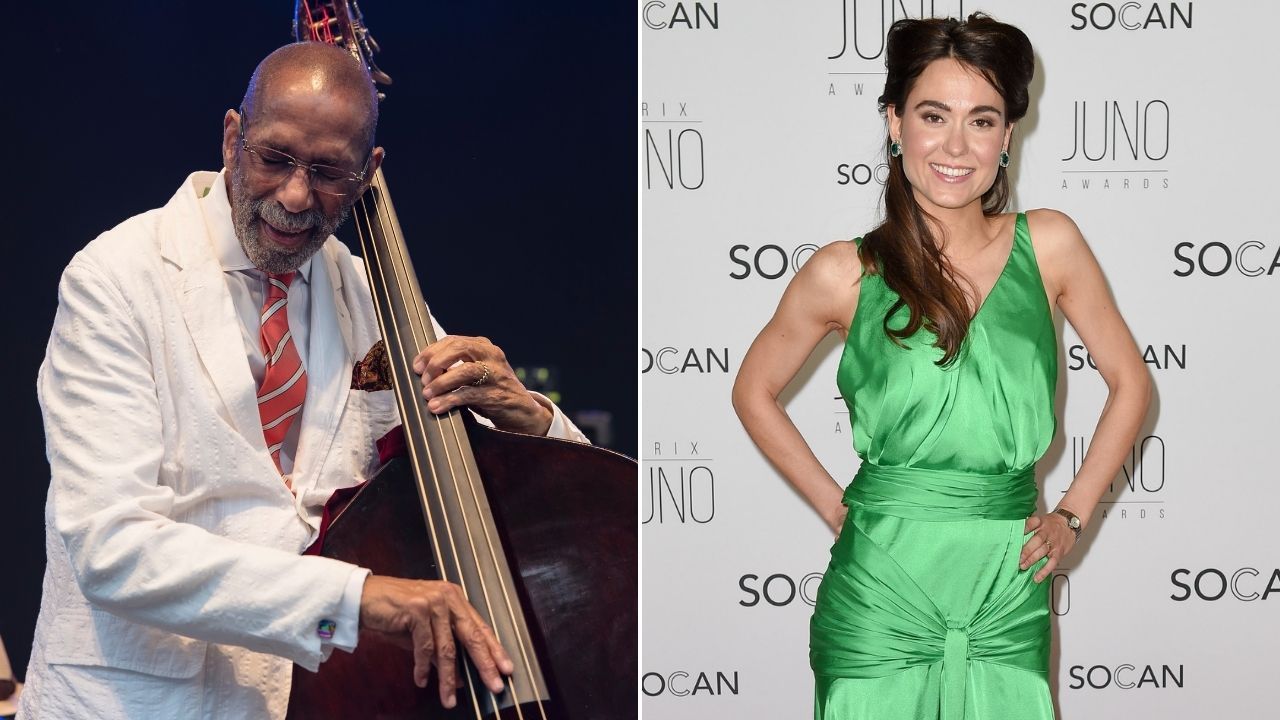
“My concept changes every few months," said New York jazzer Brandi Disterheft in the May 2017 issue of Bass Player. “Sometimes I'm craving gut strings, other times low-action metal strings with a growly sustain. Sometimes the music calls for a hard-hitting aggressive attack, and other times, the opposite.”
The North Vancouver native found her musical footing early in life, soaking up the jazz keyboards played by her mother and observing the disciplines that go along with the craft. Disterheft followed suit and studied piano at the Royal Conservatory at age five, eventually switching to upright bass at 13 and later receiving a B.A. in jazz performance from Toronto's Humber College.
Pursuing classical bass, as well, she was hired for Canada's Pops Orchestra when she was just 18. In 2000 she made the biggest move of her career when she relocated to New York to study with jazz legend Ron Carter.
“Many of my favorite bassists I had met over the years advised me how Mr. Carter was also revered as a serious teacher, known for getting rid of the ‘iron fist.’ Having grown up playing road hockey with my brother, l felt I had to hit the bass as hard as I could to produce a powerful thump, or perhaps to prove to the boys I was a serious player. Mr. Carter really taught me to refine my sound.
“He would teach me concepts about time, touch, sound, conception of walking lines, focus. His attention to detail surpasses anyone I have ever met.”
Disterheft went on to bring her newly found approach to her solo recordings as well, most recently Surfboard, her fifth solo release.
“On that album I play with the tenor saxophonist George Coleman and also the Brazilian drummer Portinho. You know, he has a way of uplifting the beat. It’s so funky, with such an infectious groove, and he has so much dynamic range.
“He has strict rules, but once you learn them, he wants you to break away. He’s always anticipating, turning around the phrases. It’s so much fun. And George loves to keep people on their toes. He’ll change harmony at the drop of a hat.”
Disterheft’s previous solo outing, Blue Canvas, mixed obscure standards and creative originals, uptempo swing and moody ballads, instrumental improvs and lyrical vocals that highlight her smoky, ethereal voice.
“My goal with Blue Canvas was to make a trio album, and to showcase the bass first and foremost, and complete the trio with the great Harold Mabern and drummer Joe Farnsworth.
“I knew I wanted to include a few Bobby Timmons and Phineas Newborn hits, and quickly a collective was formed of obscure standards we all enjoyed playing. I also had a writing spree and composed 40 tunes in three months, whereas the year prior I seemed to suffer from writer's block.
“Part of the block, I found, was when I would put parameters on what was naturally expelling out of my subconscious. Now, I write down anything that comes to me with no inner criticism, and fine-tune after the fact.”
Asked how she got into jazz, Disterheft recalls that her mother – a B3 organist and jazz pianist from Chicago – was her earliest influence.
“My mother went on the road in the '60s opening up for acts including the Supremes and Antonio Carlos Jobim. She has romantic stories of her early years in Las Vegas: intimate cabaret rooms with pink flamingo wallpaper, carrying her wig bags and wearing sequin dresses, exchanging chord voicing ideas with Jobim before soundcheck.
“Playing upright bass in my mother's trio as a teenager, I learned how to navigate through chord changes quickly by ear, subsequently learning many songs from the American songbook early on.
“I witnessed her dedication transcribing the great jazz pianists, including Bill Evans and Wynton Kelly, relentlessly for hours and hours.”