The 2026 NFL draft is still a little over a month away, and draft season is entering its next phase for teams as they shuffle across the country to evaluate pro days and begin hosting prospects for 30 visits.
As draft boards coalesce as a result of getting additional eyes on players—to say nothing of getting to know them better behind the scenes—it’s a particularly critical five weeks for the quarterbacks who are jockeying with each other to find a franchise willing to take a chance on them. It seems pretty set in stone at this point that Indiana’s Fernando Mendoza will have his name called by commissioner Roger Goodell with the first pick in Pittsburgh, but when might other signal-callers get the phone call they’ve been waiting years for?
Here’s a look at all the QBs aside from the Heisman Trophy winner and handicapping what rounds they might be taken in this year’s draft:
Ty Simpson, Alabama
Draft range: Rounds 1–2
The greatest beneficiary of there not being a ton of highly graded quarterbacks this year, the need at the position could very well push Simpson into the first round as the second player off the board in 2026. Teams will need to be comfortable with his injury history and subpar conclusion to his lone season as a starter, but he has a chance to be a long-term answer for a franchise with his ability to process defenses and get the ball out quickly.
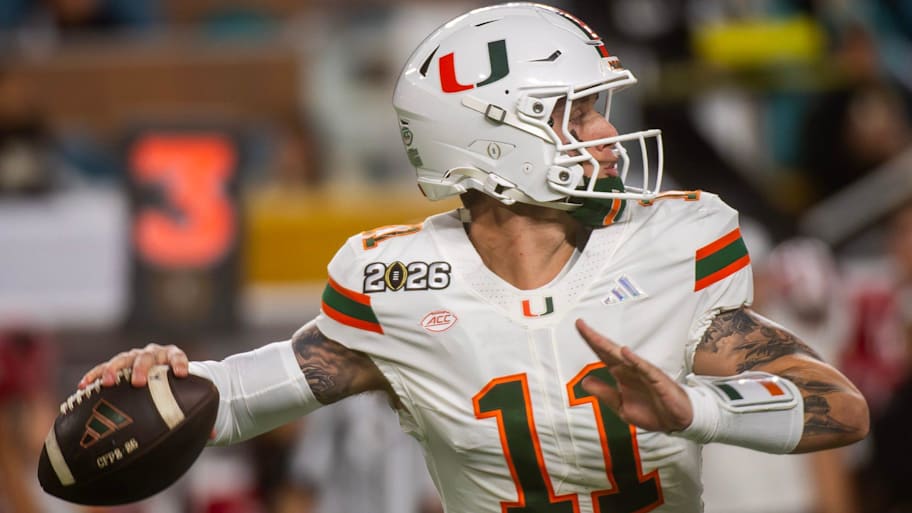
Carson Beck, Miami
Draft range: Rounds 3–5
Beck checks a lot of boxes, from the number of starts under his belt, to his size to how he manages the game every time he takes the field. His arm still isn’t where it was before having UCL surgery, which may limit how high he’s ultimately drafted, but he may be a high-upside version of New Orleans starter Tyler Shough, who sneaks into the conversation for teams late on Day 2.
Garrett Nussmeier, LSU
Draft range: Rounds 3–5
The son of Saints OC Doug Nussmeier, teams will feel quite comfortable with the young signal-caller stepping in right away as a low-cost backup as a rookie. He needs to convince front offices that he’s healthy and has an upside closer to what he flashed two years ago at LSU. But more than one coaching staff might pound the table to draft him in the middle rounds, knowing his aggressiveness could be an asset if they need to force him into action early in his career.
Taylen Green, Arkansas
Draft range: Rounds 3–6
After a strong showing at the NFL combine and a quality week at the Senior Bowl, Green might be everybody’s favorite project quarterback this year. It’s not hard to see why, given his athleticism and the way he threw the ball for the Razorbacks. But when teams look to select him will likely be all over the map. Seattle did draft Jalen Milroe inside the top 100 picks in 2025, and that is probably the very high ceiling for Green this year.
Drew Allar, Penn State
Draft range: Rounds 4–6
Allar has been out of sight and out of mind due to the devastating leg injury he sustained at Penn State. But a year ago, there were scouts wondering if he might declare early for the draft as a potential Day 1 pick, thanks to his prototypical size and arm strength. No doubt a team will want to take a chance at unlocking his potential, and could find some excellent value in bringing him along as a middle-round choice.
Sawyer Robertson, Baylor
Draft range: Rounds 4–7
There’s no doubt that Robertson has the size and arm to become a quality QB in the NFL, but he still is a little rough around the edges for somebody who saw plenty of playing time in college. Because of those physical traits, he could go a little earlier than expected on Day 3.
Cade Klubnik, Clemson
Draft range: Rounds 5–7
Numerous mock drafts last year had Klubnik in the conversation to be a first-rounder, but he’s likely a Day 3 pick in the upcoming draft. Teams thinking he can be a solid backup will appreciate his high floor as a four-year starter at Clemson, but will likely have to be convinced he can be more than just that at the next level.
Haynes King, Georgia Tech
Draft range: Round 6–7 or UDFA
A straight-up battering ram when he’s running the ball, it will be interesting to see if any teams might look at finding some goal-line packages to build around King, given his dual-threat nature. He needs to improve his accuracy to make it long-term in the NFL, but there’s no questioning his toughness, and he could wind up as an intriguing choice late in the draft.
Luke Altmyer, Illinois
Draft range: Round 6–7 or UDFA
A veteran who has a variety of experiences at the college level, Altmyer doesn’t wow you with his size or arm strength, but he is very much capable of executing whatever is needed of him. He’ll need to speed up how quickly he goes through his progressions in the NFL, but could find a home as a backup or third option on the depth chart.
Behren Morton, Texas Tech
Draft range: Round 6–7 or UDFA
The medicals will likely be the primary factor in whether Morton gets drafted, given the injuries he sustained every season he was with the Red Raiders. It doesn’t help that he’s an Air Raid guy that may need some seasoning as a backup or on the practice squad, but there are enough flashes on tape that some team may be willing to spend a late pick on him.
Joey Aguilar, Tennessee
Draft range: Round 6–7 or UDFA
A late addition to the draft process after initially pursuing another season with the Vols, Aguilar has the size and arm strength to find a home on a roster in the pros. He doesn’t have a ton of tape that translates to the pro game, but he can make every throw and wows with his ability to get the ball downfield. Some teams may not have him on their board, given his age (25), but he can find a spot on a practice squad at worst.
Cole Payton, North Dakota State
Draft range: Round 6–7 or UDFA
It wouldn’t be shocking if Payton turned into a draft darling during Day 3 and some team overdrafts him after falling in love with his size and dual-threat abilities. His ceiling is probably stretching it in the fifth round as a one-year starter at the FCS level, but don’t be surprised if you start to hear about Payton trending toward getting drafted the closer we get to Pittsburgh.
Joe Fagano, Connecticut
Draft range: Round 7 or UDFA
Fagano gets off the bus and has the measurables of an NFL quarterback, but will need a franchise to really believe in him to spend a late pick here. He was a quality passer in college and doesn’t lack experience, but may not quite have the accuracy to be more than a practice squad guy in the league.
Diego Pavia, Vanderbilt
Draft range: UDFA
His insistence on being a quarterback in the NFL may limit where he winds up at the next level, and his personality is going to automatically turn off some teams, just as much as some coaches won’t be overjoyed with his brashness. Pavia’s got the heart of an incredible competitor, and that should serve him well, even if his height (6' 0") makes his name unlikely to be called during the draft.
More NFL from Sports Illustrated
- 2026 NFL Draft Needs for Every AFC Team After Free Agency
- Tom Brady Has Explored the Idea of an NFL Return
- MLB Opening Day: Building a Lineup of NFL Stars Who Could Have Played Baseball
- UFL 2026 Season Primer: Teams, Schedules and Top Players to Watch
This article was originally published on www.si.com as Handicapping What Rounds QBs Might Be Selected in the 2026 NFL Draft.