Large, invasive reptiles are on the loose in Georgia — and wildlife officials are urging residents to kill the creepy creatures if they come across them.
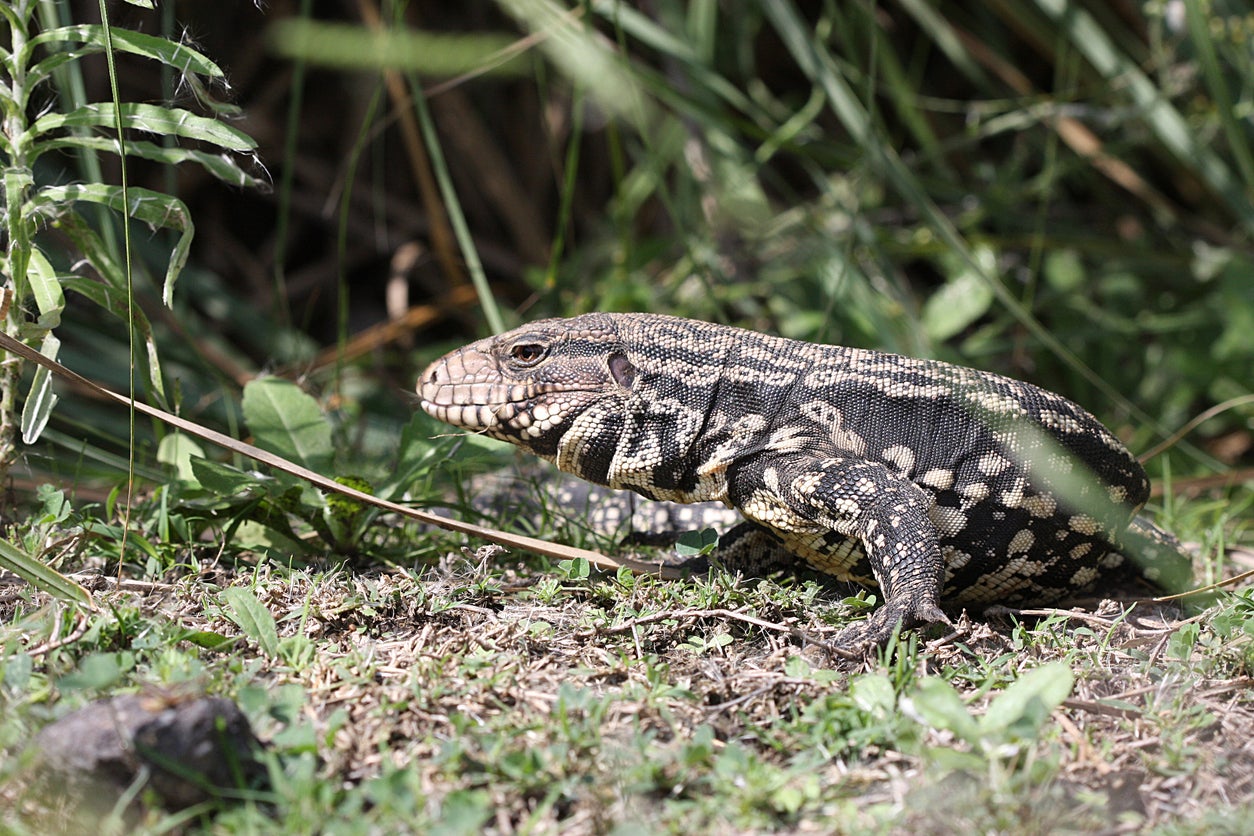
Residents of the Peach State are being urged to be on the lookout for the Argentine black and white tegu, a massive, four-foot-long lizard that can weigh more than 10 pounds.
The tegus threaten native wildlife and can spread disease, wildlife officials said. They have been spotted in Toombs and Tattnall counties, according to Fox Weather.
The Georgia Department of Natural Resources is urging residents to report sightings of the species — or to trap and kill them.
The species, which is native to Brazil, Paraguay, Uruguay and Argentina, has become a nuisance in the state due to its resiliency — the tugus can prey on a wide range of animals and reproduce quickly.
The lizards eat the eggs of alligators, ground-nesting birds like quail and wild turkeys and have even eaten threatened species like the hatchling gopher tortoise.
Georgia wildlife officials are concerned that the invasive reptiles could spread exotic parasites to native wildlife or contaminate crops with bacteria, since many tegus carry salmonella.
State officials began investigating reports of the Argentine black and white tegu in Georgia in 2018, though it was unclear how the species was brought to the state.
In addition to being a threat to native wildlife, experts are warning of a potential boom in population since they lack predators. Female tegus can lay up to 35 eggs each year. These typically hatch during the summer months, between June and July, meaning residents of southern Georgia may see some baby tegus soon.
Since many more tegus may be infiltrating Georgia soon, wildlife officials are working with the U.S. Geological Survey and Georgia Southern University to try as many tegus in Toombs and Tattnall counties as possible.
Since tegus are a non-native “wild” species, it is legal to trap and hunt them year-round in Georgia, PopSci reported.
Still, wildlife experts urge hunters to remain cautious if coming into contact with the lizard. While they are not necessarily aggressive or dangerous, they may carry harmful parasites or bacteria.